
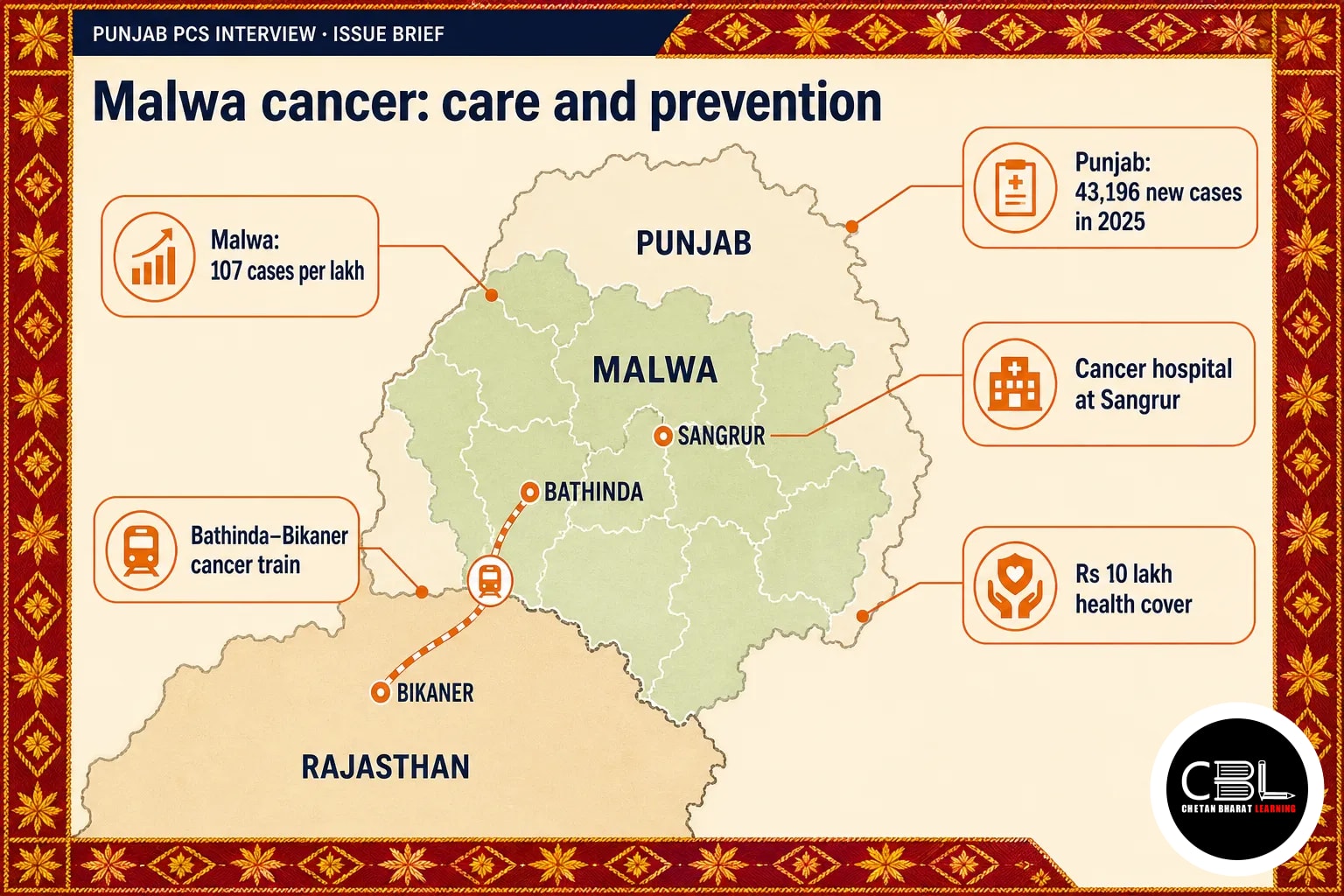
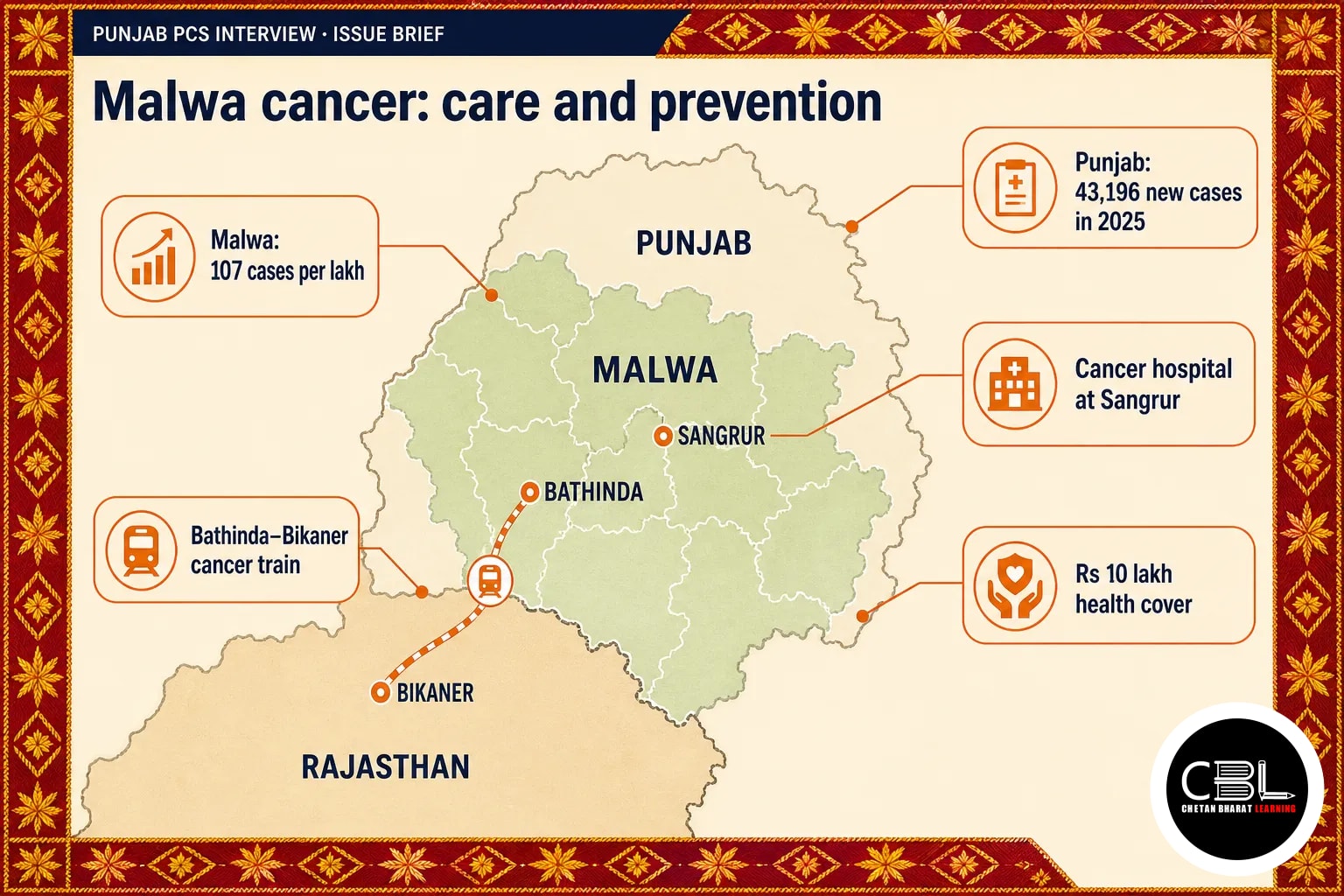
Punjab recorded an estimated 43,196 new cancer cases in 2025, according to information given to Parliament in August 2026. An earlier survey reported a higher cancer rate in Malwa than in Doaba and Majha, though some officials dispute that Malwa is worst affected. Patients have travelled from Bathinda to Bikaner for cheaper treatment. Punjab’s response includes financial support and cancer facilities. Suspected environmental factors need careful investigation, not assumptions of causation.
Timeline: From relief to rising estimates
- 2011Relief fundSupport
The Mukh Mantri Punjab Cancer Raahat Kosh began providing a state cancer relief fund.
- 2023Punjab estimateBaseline
Estimated new cancer cases in Punjab were 41,337.
- 2024Punjab estimateIncrease
Estimated new cases rose to 42,288.
- 2025Punjab estimateEstimate
Estimated new cases reached 43,196.
- 11 Aug2026Disclosure
The Union Health Ministry provided these estimates to the Rajya Sabha.
Why is Malwa associated with cancer?
An earlier state-wide survey recorded 107 cancer cases per lakh population in Malwa, compared with 88 in Doaba and 64 in Majha. Some officials dispute that Malwa is the worst-hit region. These survey figures should not be confused with annual estimates of new cases across Punjab.
The Bathinda–Bikaner train became known as the cancer train because many patients travel to Bikaner for cheaper treatment. Suspected factors include pesticide use, groundwater contamination and industrial effluents, including those associated with Buddha Nullah. A suspected exposure does not establish the cause of an individual cancer.
The two sides
Addressing access and treatment
- Patients need timely diagnosis, affordable care and help with travel.
- The state cancer relief fund and Mukh Mantri Sehat Yojana offer financial support.
- Cancer facilities at Sangrur and Bathinda provide treatment infrastructure within Punjab.
Investigating risk and evidence
- Survey differences draw attention to Malwa, although its relative position is disputed.
- Pesticides, groundwater contaminants and industrial effluents are suspected factors, not proven explanations for every case.
- Environmental assessment and reliable cancer data can guide prevention alongside treatment.
Key data
| Point | Details |
|---|---|
| Punjab estimates | 41,337 new cases in 2023; 42,288 in 2024; 43,196 in 2025. |
| Earlier regional survey | Cases per lakh: Malwa 107, Doaba 88 and Majha 64. |
| Survey comparison | State average: 90 cases per lakh; national figure: 80. |
| Health cover | Mukh Mantri Sehat Yojana provides Rs 10 lakh cover. |
| Cancer relief | Mukh Mantri Punjab Cancer Raahat Kosh is a state cancer relief fund established in 2011. |
| Facilities | Homi Bhabha Cancer Hospital at Sangrur and Advanced Cancer Institute at Bathinda. |
Way forward
- Improve early detection: Strengthen referral pathways and public awareness of symptoms requiring medical attention.
- Support patients: Help eligible families navigate financial assistance and reach appropriate treatment facilities.
- Investigate exposure: Test drinking water and assess environmental risks without presuming a single cause.
- Strengthen data: Improve cancer registration and compare regional patterns using consistent measures.
- Coordinate action: Bring health, water, agriculture and pollution-control agencies together for prevention and follow-up.
Likely interview questions
What is the cancer train associated with Punjab?
Answer pointers:
- The Bathinda–Bikaner train acquired this name because many patients travel for cheaper treatment.
- It illustrates the financial and travel burden faced by patients.
- Close by emphasising accessible diagnosis, treatment and patient support.
Do you think pesticides alone explain cancer in Malwa?
Answer pointers:
- Pesticide exposure is one suspected factor deserving investigation.
- Other suspected exposures and differences in survey results caution against a single-cause conclusion.
- Recommend exposure assessment, sound data and preventive action.
Do you think financial health cover is enough to address the cancer burden?
Answer pointers:
- Cover can reduce the financial burden of treatment.
- Patients also need timely diagnosis, accessible facilities and help with travel.
- Combine financial protection with prevention and continuity of care.
As Deputy Commissioner of Bathinda, how would you respond to concerns about cancer and drinking water?
Answer pointers:
- Listen to residents and coordinate water testing with the concerned agencies.
- Communicate results clearly and arrange safe alternatives where water is unsafe.
- Link patients to care and review both health and environmental action regularly.
How does the Malwa cancer issue connect public health with groundwater governance?
Answer pointers:
- Groundwater contamination is a suspected risk that merits investigation.
- Health and water agencies have complementary roles in monitoring and response.
- Use shared evidence to protect drinking water while improving cancer care.
Distinguish the earlier regional survey from Punjab’s annual estimates of new cases. Discuss suspected causes cautiously and avoid attributing every case to one exposure.
Prelims Practice Corner
Q1. Which region had 107 cancer cases per lakh in the earlier survey?
(a) Majha (b) Malwa (c) Doaba (d) None of these
Show answer
Answer: (b) because the survey recorded 107 cases per lakh in Malwa.
Q2. What was Punjab’s estimated number of new cancer cases in 2025?
(a) 41,337 (b) 42,288 (c) 43,196 (d) 4,319
Show answer
Answer: (c) because the estimate given to the Rajya Sabha was 43,196.
Q3. The train known as the cancer train connects Bathinda with which city?
(a) Bikaner (b) Sangrur (c) Chandigarh (d) Amritsar
Show answer
Answer: (a) because many patients travel on the Bathinda–Bikaner train for cheaper treatment.
Frequently Asked Questions
Why is Malwa associated with cancer?
An earlier survey reported 107 cancer cases per lakh in Malwa, higher than its figures for Doaba and Majha. Some officials dispute that Malwa is the worst-hit region.
What is the cancer train from Punjab?
It is the Bathinda–Bikaner train, named for the many patients who travel to Bikaner for cheaper treatment. The journey highlights the importance of affordable and accessible care.
What cancer support is available in Punjab?
Punjab’s response includes health cover, a cancer relief fund and cancer treatment facilities. These include the Mukh Mantri Punjab Cancer Raahat Kosh and facilities at Sangrur and Bathinda.
Sources: Down To Earth: Parliament data, Down To Earth: Punjab survey, EastMojo: cancer train
Related Current Affairs
More Punjab interview issues
Preparing for UPSC, PCS or HCS?
Talk to a mentor at Chetan Bharat Learning, Chandigarh. Free guidance on choosing the right exam and building a study plan.
Chat on WhatsAppCall 97793 53345UPSC / IAS / PCS coaching in Chandigarh · Trusted by aspirants across Punjab & Haryana


Leave a Reply
You must be logged in to post a comment.