
Why Renewable Energy Alone Is Not Enough
India is rapidly emerging as one of the world’s leading renewable energy producers. Massive investments in solar and wind energy have strengthened the country’s clean energy transition and reduced dependence on fossil fuels.
However, renewable energy faces a fundamental challenge: it is not always available when electricity is needed.
Solar power generation falls sharply after sunset, while wind energy depends on weather conditions. This mismatch between electricity generation and consumption creates a major challenge for the power sector.
As India expands its renewable energy capacity, energy storage systems are becoming increasingly important for ensuring reliable and uninterrupted power supply.
Students preparing through UPSC Coaching in Chandigarh and IAS Coaching in Chandigarh should closely follow topics like renewable energy, energy security, clean energy transition, and grid stability because these themes are highly important for GS Paper 3, Essay, and UPSC Interview preparation.
What Is Energy Storage?
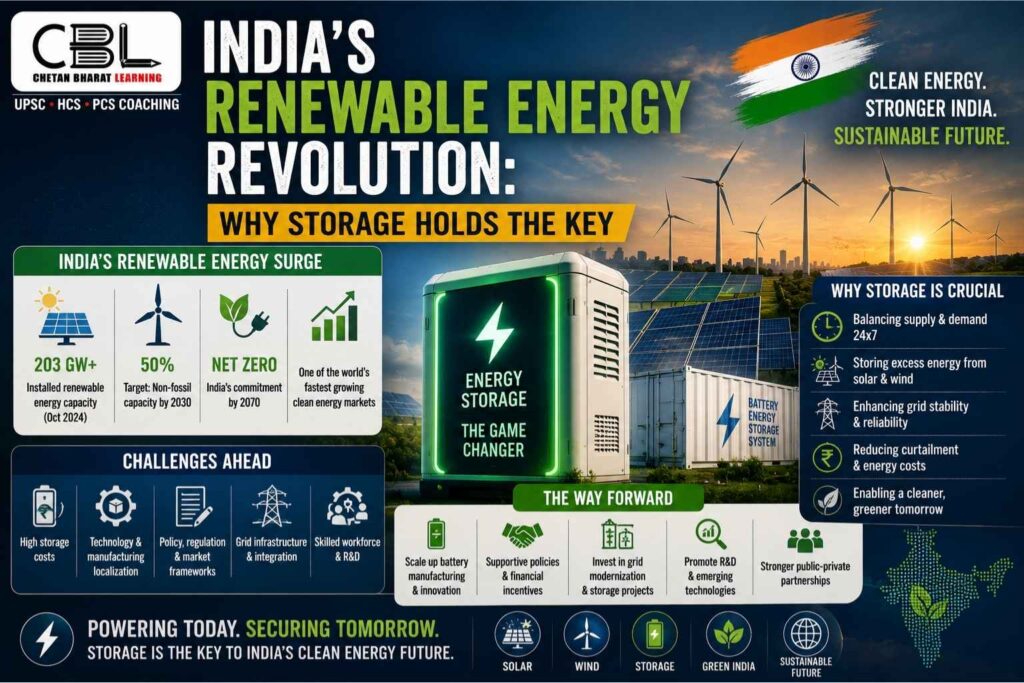
Energy storage refers to technologies that capture electricity when it is generated and store it for later use.
The stored energy can then be released during:
- Peak demand periods
- Power shortages
- Renewable energy fluctuations
- Grid emergencies
Energy storage helps bridge the gap between electricity production and consumption.
Why Energy Storage Matters
Managing Renewable Energy Variability
Unlike conventional power plants, renewable energy sources depend on natural conditions.
For example:
- Solar panels generate electricity only during daylight hours.
- Wind turbines depend on wind availability.
Storage systems ensure that surplus energy generated during high-production periods can be used later when demand rises.
Strengthening Grid Stability
A stable electricity grid requires a continuous balance between power generation and consumption.
Energy storage:
✔ Reduces supply disruptions
✔ Prevents frequency fluctuations
✔ Supports grid reliability
✔ Improves electricity quality
This becomes increasingly important as renewable energy’s share in the power mix grows.
Major Energy Storage Technologies
1. Battery Energy Storage Systems (BESS)
Battery Energy Storage Systems store electricity in large-scale rechargeable batteries.
Advantages
- Fast response time
- Flexible deployment
- Suitable for urban areas
- Supports renewable integration
Challenges
- High upfront costs
- Battery degradation over time
- Dependence on critical minerals
BESS is currently one of the fastest-growing energy storage solutions globally.
2. Pumped Hydro Storage (PHS)
Pumped Hydro Storage is the most widely used energy storage technology worldwide.
How It Works
- Water is pumped to an elevated reservoir when surplus electricity is available.
- During peak demand, water flows back downward through turbines to generate electricity.
Advantages
- Long operational life
- Large storage capacity
- Cost-effective over time
Challenges
- High land requirements
- Environmental concerns
- Long project development timelines
3. Emerging Storage Technologies
Researchers are also exploring:
- Green hydrogen storage
- Thermal energy storage
- Compressed air energy storage
- Gravity-based storage systems
These technologies could complement existing storage solutions in the future.
India’s Growing Energy Storage Capacity
India has begun investing heavily in storage infrastructure to support renewable energy expansion.
Recent policy initiatives focus on:
- Battery manufacturing
- Storage-linked renewable projects
- Domestic energy security
- Grid modernization
The government has introduced schemes to accelerate Battery Energy Storage Systems deployment and strengthen renewable integration.
The Energy Storage Gap
Despite significant progress, India’s current storage capacity remains far below future requirements.
Experts estimate that large-scale renewable energy integration will require:
- Massive battery deployment
- Expansion of pumped hydro projects
- Stronger transmission networks
- Better grid management systems
Without sufficient storage, renewable energy cannot fully replace conventional power generation.
Energy Storage and Energy Security
Storage systems are not only important for renewable energy—they are also critical for national energy security.
Energy storage helps:
✔ Reduce dependence on imported fuels
✔ Improve grid resilience
✔ Strengthen disaster preparedness
✔ Support reliable electricity access
In the long term, storage will become a strategic infrastructure asset.
Global Trends in Energy Storage
Countries around the world are rapidly expanding storage investments.
Major leaders include:
- China
- United States
- European Union members
Falling battery costs and technological innovation are accelerating global adoption of energy storage solutions.
India aims to become an important player in this emerging sector.
Prelims Pointers
Important Technologies
- Battery Energy Storage Systems (BESS)
- Pumped Hydro Storage (PHS)
- Green Hydrogen Storage
Why Storage Is Needed
- Renewable energy variability
- Grid stability
- Peak demand management
Important Concept
Energy storage allows electricity generated at one time to be used at another time.
Mains Perspective
Possible Question
“Energy storage systems are essential for achieving India’s renewable energy ambitions.” Discuss.
Key Dimensions to Include
- Renewable energy integration
- Grid stability
- Energy security
- Battery technologies
- Clean energy transition
- Sustainable development
Frequently Asked Questions (FAQ)
Why is energy storage important?
Energy storage helps balance electricity generation and consumption, especially when renewable energy output fluctuates.
What is Battery Energy Storage System (BESS)?
BESS stores electricity in rechargeable batteries and releases it when needed to support the power grid.
What is Pumped Hydro Storage?
Pumped Hydro Storage uses elevated water reservoirs to store and generate electricity during peak demand periods.
Why is storage important for renewable energy?
Renewable energy sources such as solar and wind are intermittent. Storage ensures electricity remains available even when generation falls.
Conclusion: Storage Is the Backbone of the Clean Energy Transition
India’s renewable energy journey cannot succeed through generation capacity alone. The next phase of the clean energy transition will depend on the country’s ability to store electricity efficiently and deploy it when needed.
As renewable energy expands, energy storage will become the backbone of:
- Grid stability
- Energy security
- Decarbonization
- Sustainable economic growth
“The future of clean energy is not just about generating electricity—it is about storing it intelligently and delivering it reliably.”
Related Current Affairs
Preparing for UPSC, PCS or HCS?
Talk to a mentor at Chetan Bharat Learning, Chandigarh. Free guidance on choosing the right exam and building a study plan.
Chat on WhatsAppCall 97793 53345UPSC / IAS / PCS coaching in Chandigarh · Trusted by aspirants across Punjab & Haryana
Leave a Reply
You must be logged in to post a comment.