
Tag: renewable energy
-
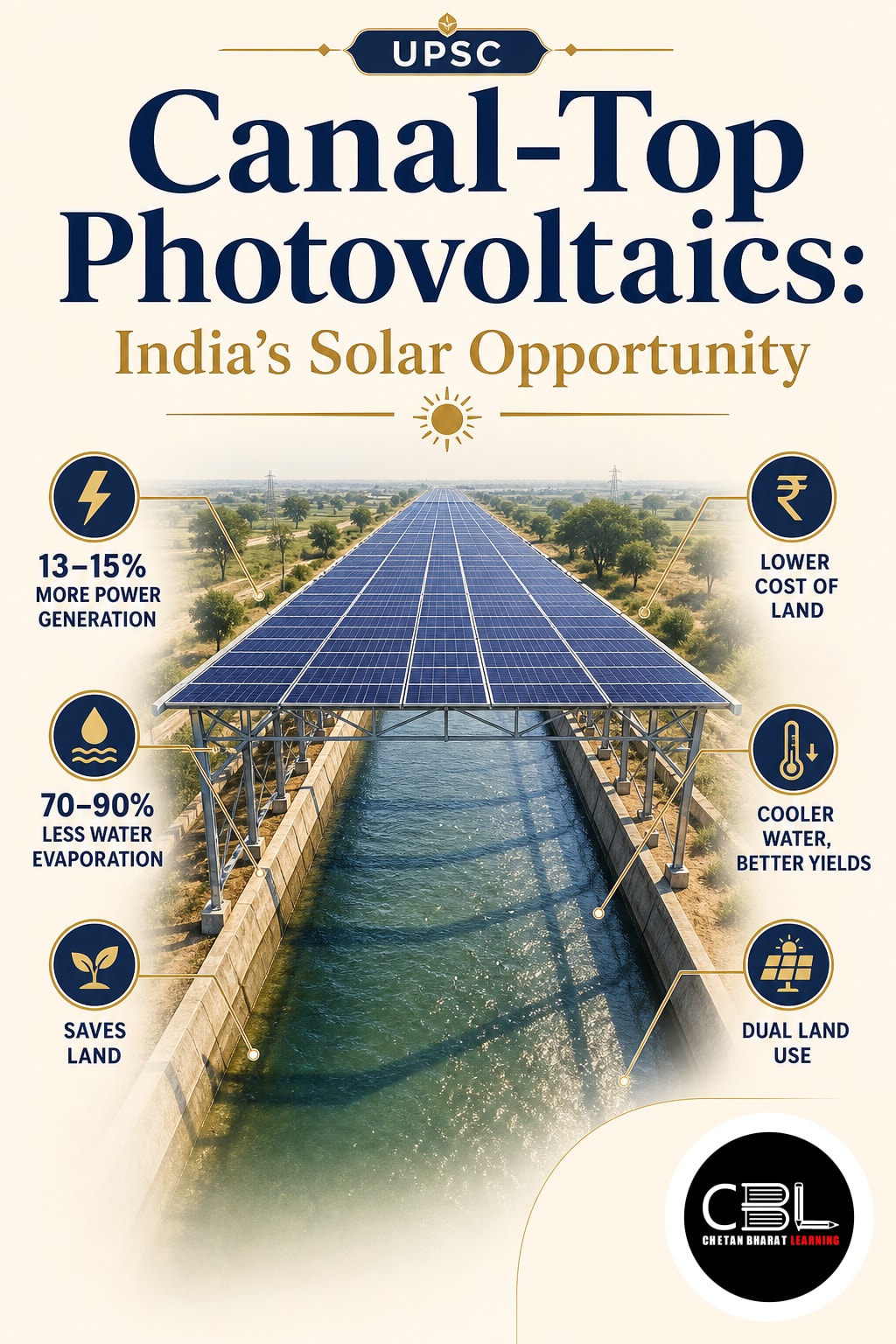
Canal-Top Photovoltaics: India’s Solar Opportunity
Canal-Top Photovoltaics can expand solar power without acquiring additional land by utilizing the canal corridor, offering clean energy generation while conserving land and reducing water evaporation.
-
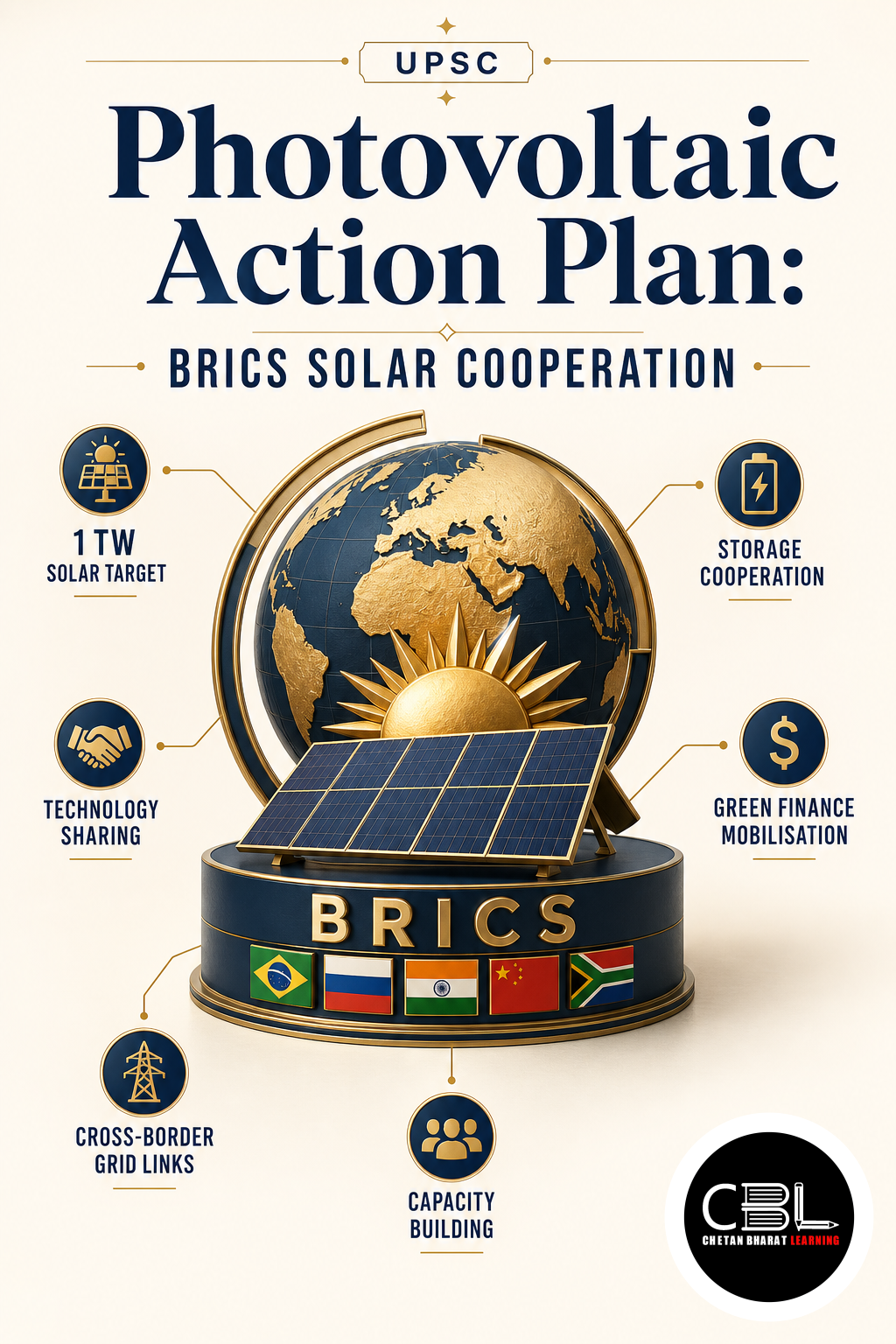
Photovoltaic Action Plan: BRICS Solar Cooperation
The Photovoltaic Action Plan places solar manufacturing at the centre of industrial cooperation among BRICS members, linking the energy transition with technology sharing, affordable finance and skilled human resources.
-

PM Surya Ghar: Transforming India’s Rooftop Solar Sector
An overview of the PM Surya Ghar scheme, its features, challenges, and implications for India’s renewable energy targets.
-
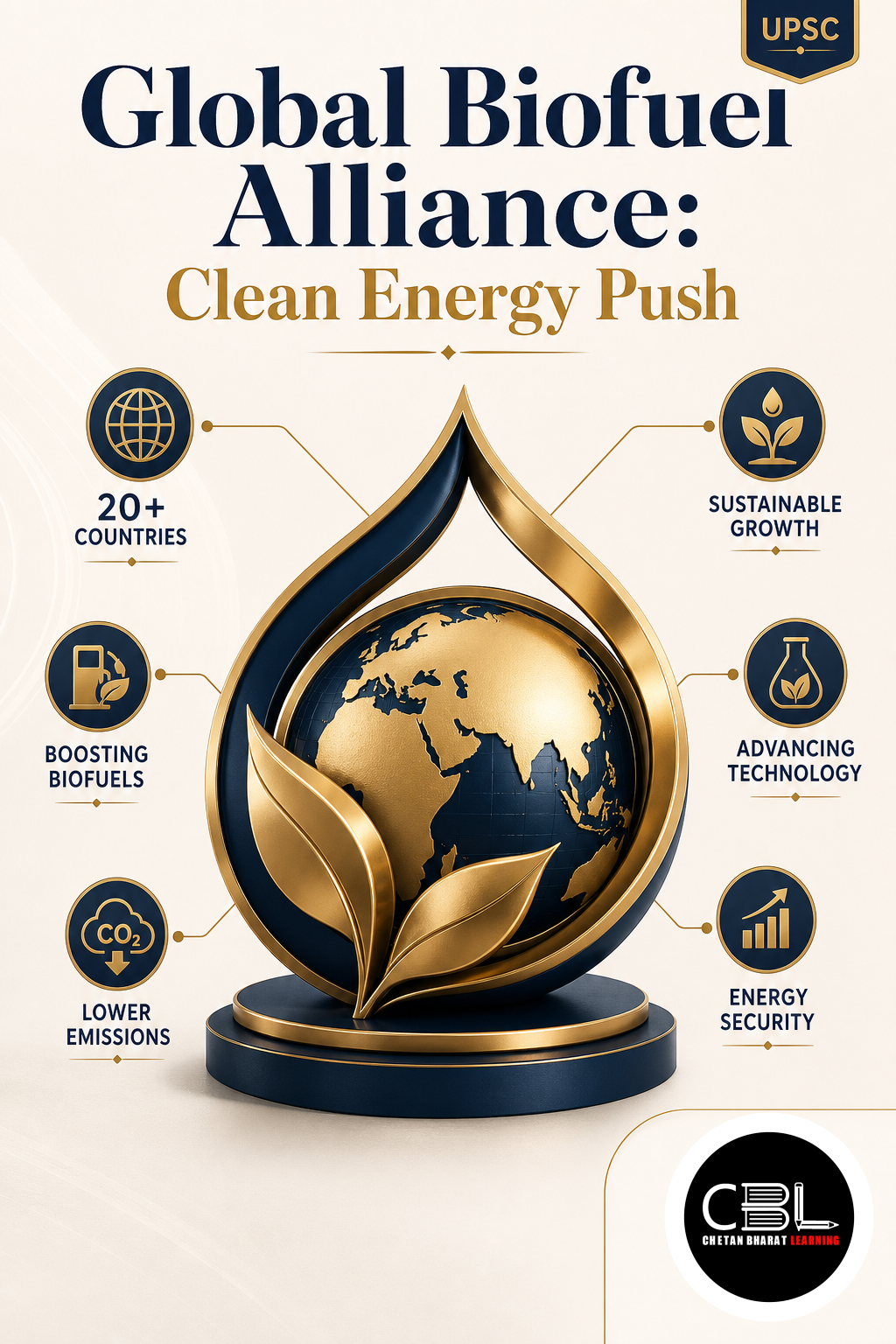
Global Biofuel Alliance: Clean Energy Push
The government championed the Global Biofuel Alliance recently to accelerate worldwide sustainable energy transitions.
-
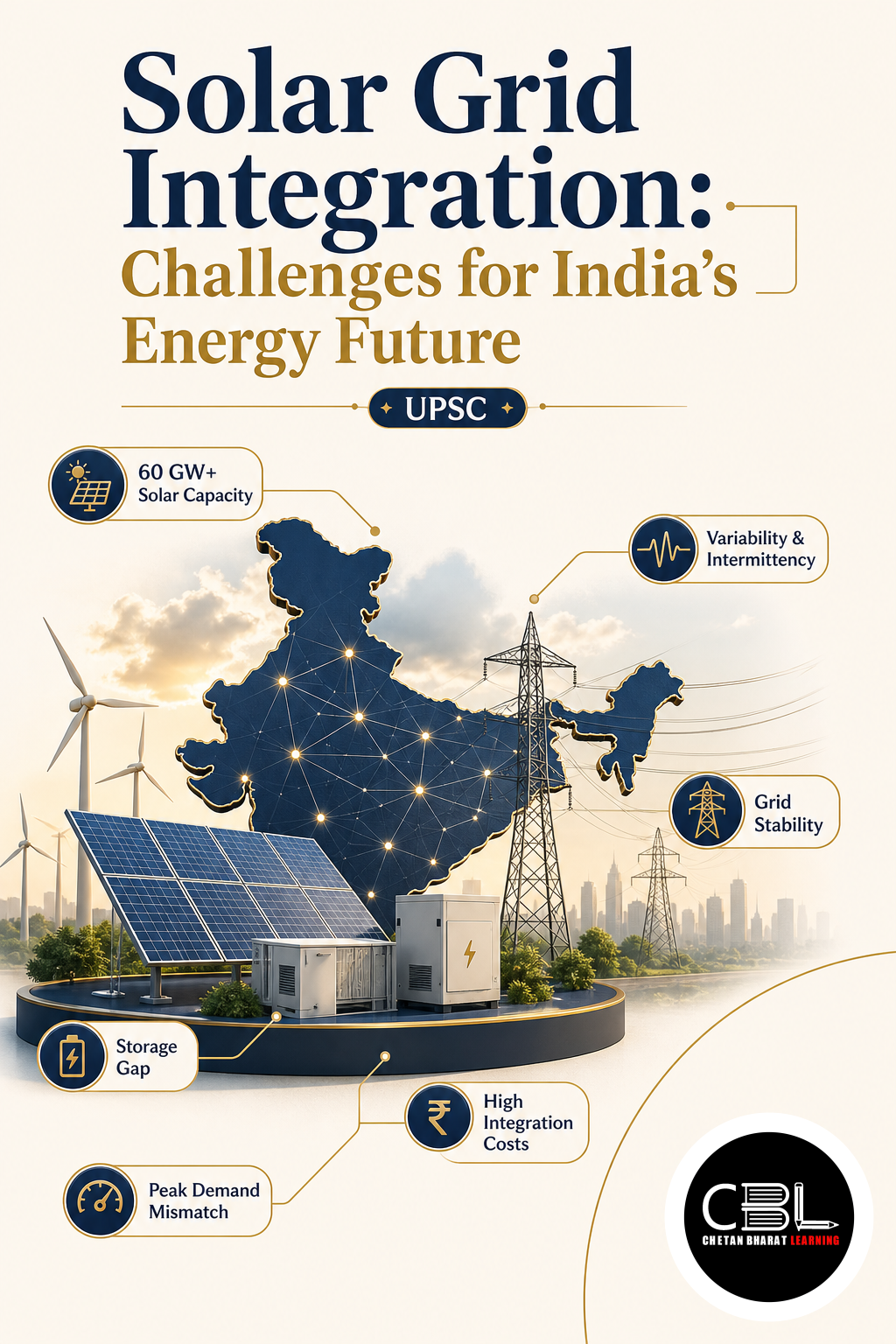
Solar Grid Integration: Challenges for India’s Energy Future
Solar grid integration challenges emerge as India scales renewable energy. Learn about curtailment, storage, and policy solutions. Read the full UPSC analysis by Chetan Bharat Learning.
-
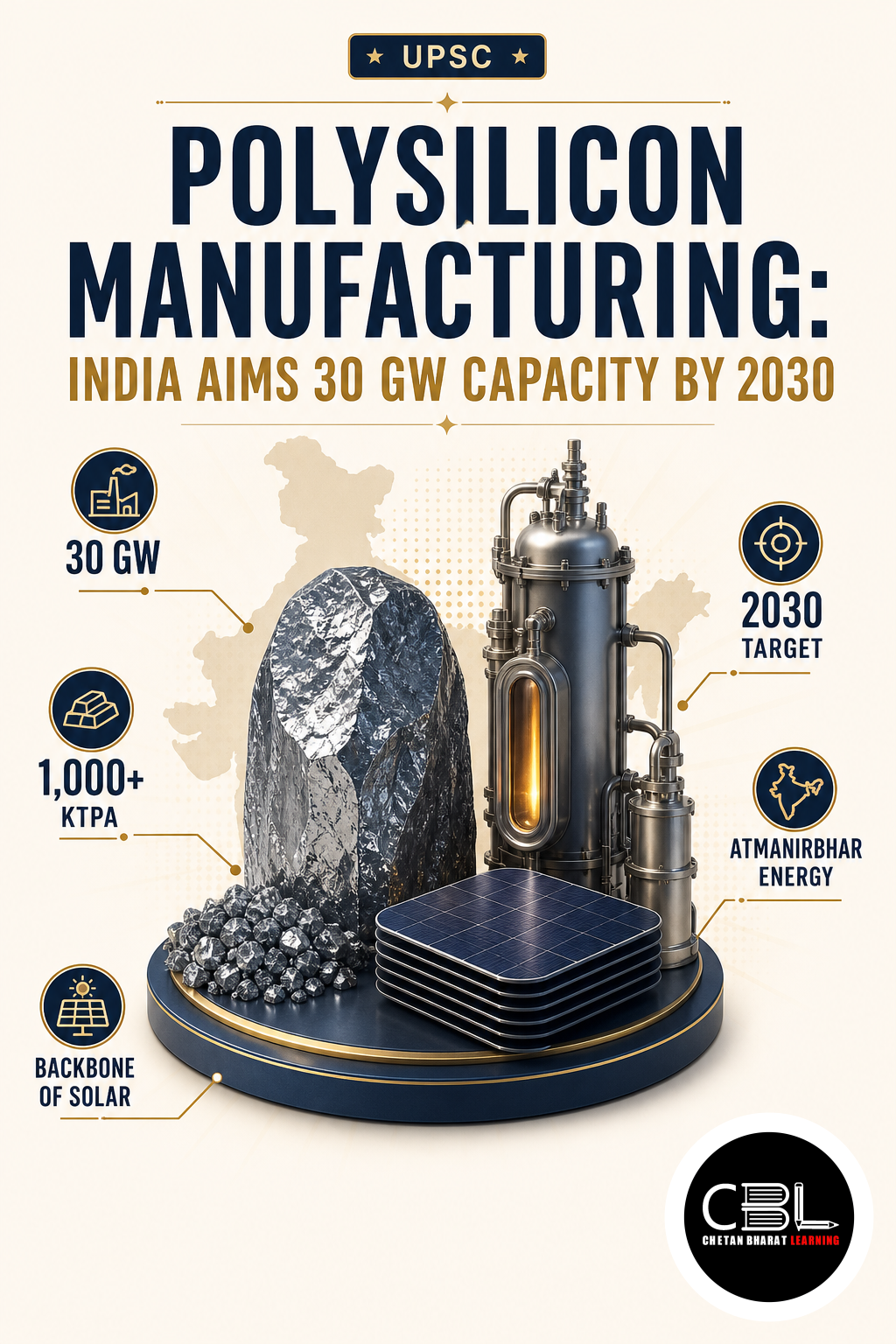
Polysilicon Manufacturing: India Aims 30 GW Capacity by 2030
The Indian government is working towards adding 30 GW of domestic polysilicon manufacturing capacity by 2030 and exploring a subsidy scheme to support indigenous production.
-
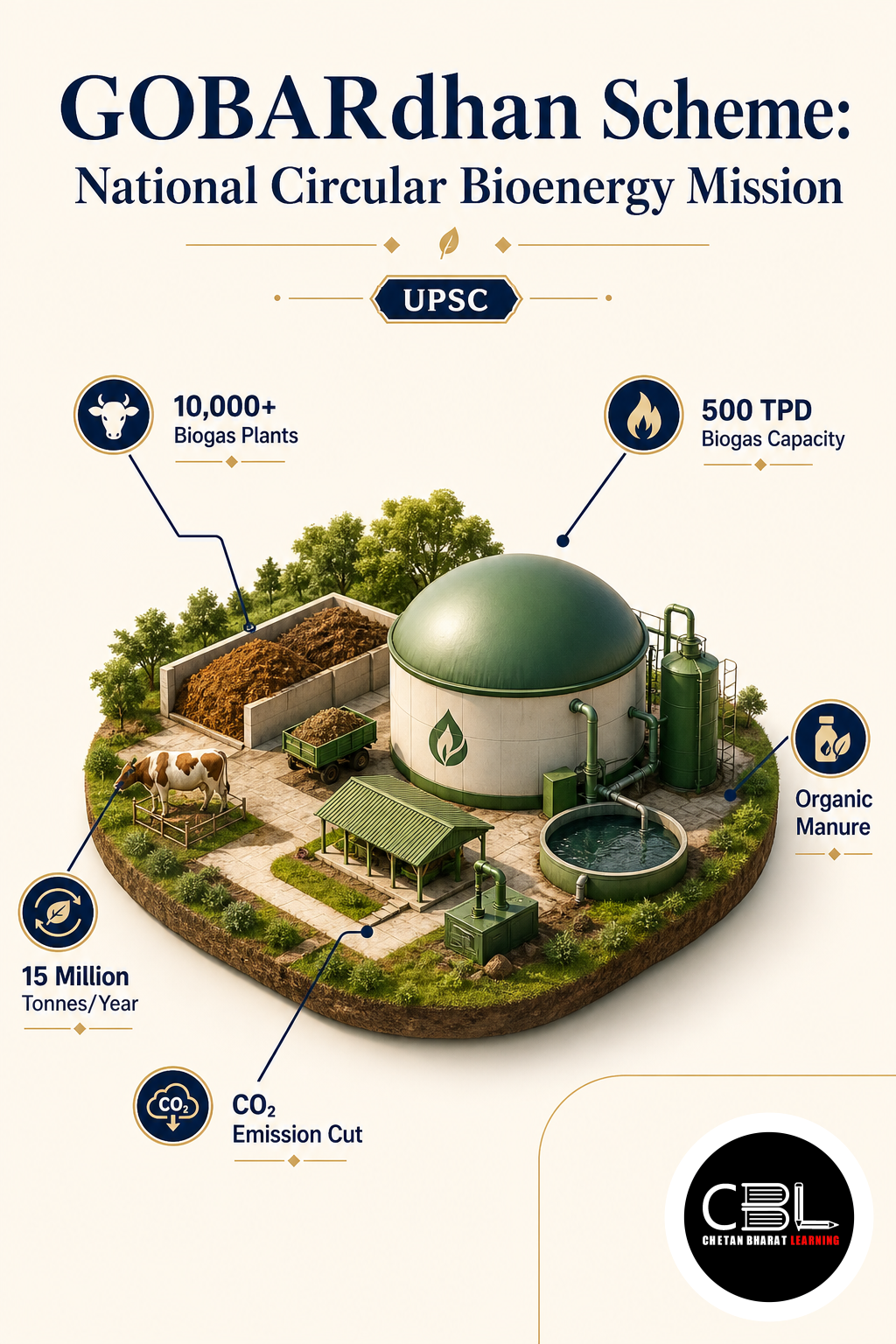
GOBARdhan Scheme: National Circular Bioenergy Mission
GOBARdhan Scheme is in focus after the Union Cabinet approved the National Circular Bioenergy Scheme with a total outlay of ₹23,731 crore for FY 2026-27 to FY 2035-36.
-
Polysilicon Production: India’s Solar Manufacturing Push
Understand Polysilicon Production, India’s proposed PLI support and its importance for solar manufacturing. Read the full UPSC analysis by Chetan Bharat Learning.
-
India’s EV Transition: Why It Is Time to Shift Gears Towards Electric Mobility
Introduction India stands at a critical moment in its transportation and energy journey. Rapid urbanisation, increasing vehicle ownership, and rising fuel consumption have contributed significantly to air pollution, greenhouse gas emissions, and dependence on imported crude oil. As cities struggle with deteriorating air quality and growing traffic congestion, the transition to Electric Vehicles (EVs) is…
-
India’s Renewable Energy Revolution: Why Storage Holds the Key
Why Renewable Energy Alone Is Not Enough India is rapidly emerging as one of the world’s leading renewable energy producers. Massive investments in solar and wind energy have strengthened the country’s clean energy transition and reduced dependence on fossil fuels. However, renewable energy faces a fundamental challenge: it is not always available when electricity is…
Recent Posts
- Puzhal Lake: Location, History and UPSC Analysis
- Exercise AUSTRAHIND 2026: India-Australia Defence Ties
- Rajmargyatra Application: Features and UPSC Analysis
- Cybercrime Coordination Centre (I4C): UPSC Analysis
- Bud Rot Disease in Coconut Palms: UPSC Analysis
- Swavlamban 2026: Naval Innovation and UPSC Analysis
- Agri Welfare Portal 2026: Features and UPSC Analysis
- China Export Controls: AI, Solar Technology and India
- Inland Waterways: India’s Safe and Smart Navigation
- Coir Sector: Exports, Rural Jobs and Sustainable Growth
Related Tags