
UPSC Mapping
Prelims
- Economy & Banking
Mains
- GS Paper 3 (Economy & Banking)
Quick Facts
| Effective Date | January 1, 2027 |
|---|---|
| Overdue Period for Locking | 60 days |
| Restoration Time | Within 1 hour |
Article
What are the Remote Lock Devices Guidelines?
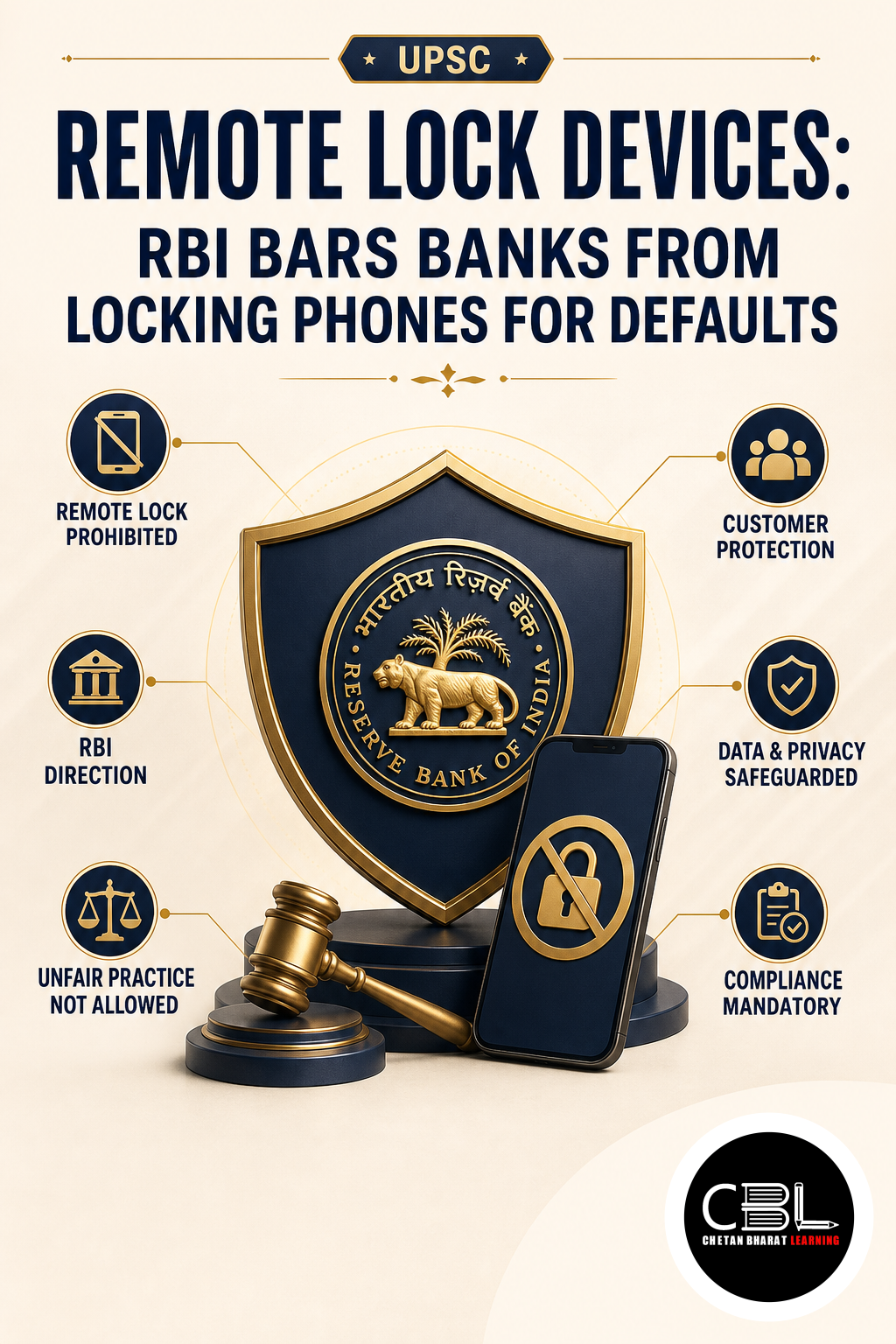
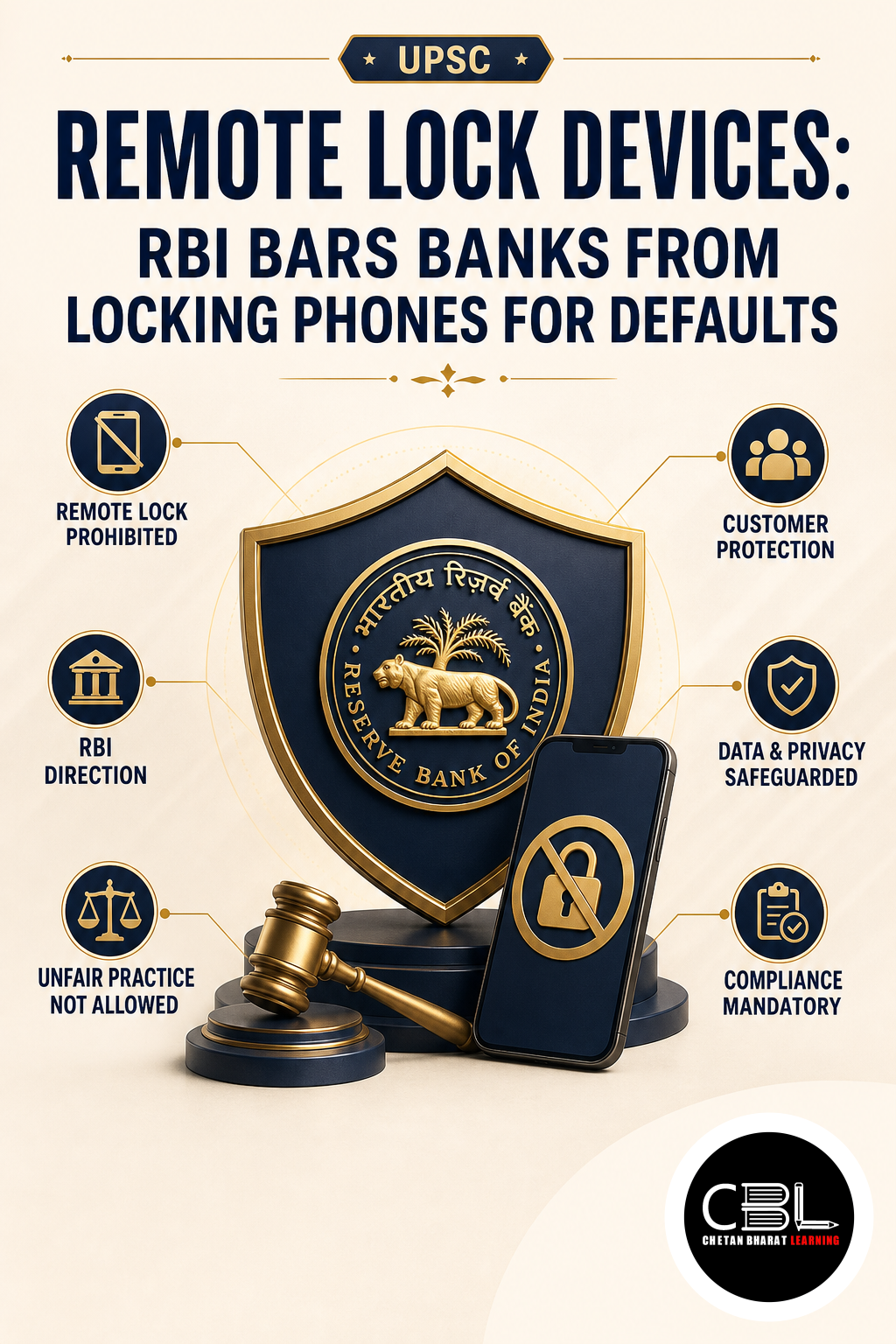
The Remote Lock Devices guidelines are a regulatory framework issued by the RBI that restricts banks and lenders from remotely locking personal devices for defaults on loans, except in specific cases. The rules are designed to protect borrowers from coercive recovery practices that can disrupt their personal and professional lives.
Permitted cases include remote locking only if the credit facility financed the device and the loan agreement disclosed these terms beforehand. No restriction applies until the account stays overdue for 30 days; a full device lockdown requires 60 consecutive days of non-payment.
Why are Remote Lock Devices in News?
The Remote Lock Devices guidelines are in the news because the RBI has set a firm deadline for implementation—January 1, 2027—with strict penalties for non-compliance. The rules also mandate that once dues are paid, functionality must be restored within one hour, with compensation of ₹250 per hour if the bank delays, capped at the loan amount.
Additionally, lenders and their technology providers are barred from harvesting or reviewing a borrower’s contacts, photos, call logs, messages, or location history. This is a significant step toward strengthening borrower privacy and preventing misuse of personal data.
Key Features of Remote Lock Devices Guidelines
- Restriction on Locking: Banks cannot remotely lock personal devices for defaults on personal, auto, or home loans unless the device was financed by the loan.
- Disclosure Requirement: Locking terms must be disclosed in the loan agreement upfront.
- Grace Periods: No locking until 30 days overdue; full lockdown only after 60 days of non-payment.
- Restoration Timelines: Once dues are paid, functionality must be restored within one hour.
- Compensation: Bank delays in restoration attract ₹250 per hour compensation, capped at the loan amount.
- Data Privacy: Lenders cannot harvest or access contacts, photos, call logs, messages, or location history.
Challenges in Remote Lock Devices Implementation
- Compliance Monitoring: Ensuring all lenders and technology providers comply with data privacy and locking restrictions.
- Enforcement: The compensation mechanism requires robust monitoring and grievance redressal.
- Technology Integration: Lenders need to update their systems to comply with restoration timelines and data restrictions.
- Borrower Awareness: Many borrowers may not be aware of their rights under these guidelines.
- Contractual Gaps: Existing loan agreements may not have disclosed locking terms; their transition must be handled carefully.
Way Forward for Remote Lock Devices
To ensure the Remote Lock Devices guidelines are effective, the RBI should conduct periodic audits of lenders to ensure compliance. A centralised grievance portal can help borrowers report violations and claim compensation seamlessly.
Financial literacy campaigns should educate borrowers about their rights, including the grace periods and data privacy protections. Lenders should proactively update their loan agreements and IT systems to align with the new rules. A collaborative approach between the regulator, banks, and consumer rights groups is essential for smooth implementation.
Prelims Practice Corner
- Q1. From which date do the RBI guidelines on remote locking take effect?
- Answer: (b) January 1, 2027
- Q2. When can a bank remotely lock a device for a loan default?
- Answer: (c) After 60 consecutive days of non-payment
- Q3. What is the compensation for delayed restoration of functionality?
- Answer: (b) ₹250 per hour, capped at the loan amount
- Q4. What data can lenders not harvest under the guidelines?
- Answer: (b) Contacts, photos, call logs, messages, or location history
- Q5. In which case is remote locking permitted?
- Answer: (b) If the device was financed by the loan and terms were disclosed upfront
Mains Practice Questions
- Discuss the significance of the RBI’s guidelines on remote locking of devices in the context of borrower protection and data privacy. (250 words, 15 marks)
- What are the challenges in implementing the RBI’s guidelines on remote locking, and how can they be addressed? (150 words, 10 marks)
FAQs on Remote Lock Devices
What are the new RBI guidelines on remote locking?
They restrict banks from remotely locking personal devices for loan defaults, except when the device is financed by the loan, with clear grace periods and data privacy protections.
When can a bank lock a device?
Only if the device was financed by the loan and the agreement disclosed such terms; after 30 days overdue, and full lockdown after 60 days of non-payment.
What happens if restoration is delayed?
The bank must pay ₹250 per hour compensation, capped at the loan amount.
Related Current Affairs
Preparing for UPSC, PCS or HCS?
Talk to a mentor at Chetan Bharat Learning, Chandigarh. Free guidance on choosing the right exam and building a study plan.
Chat on WhatsAppCall 97793 53345UPSC / IAS / PCS coaching in Chandigarh · Trusted by aspirants across Punjab & Haryana
Leave a Reply
You must be logged in to post a comment.