
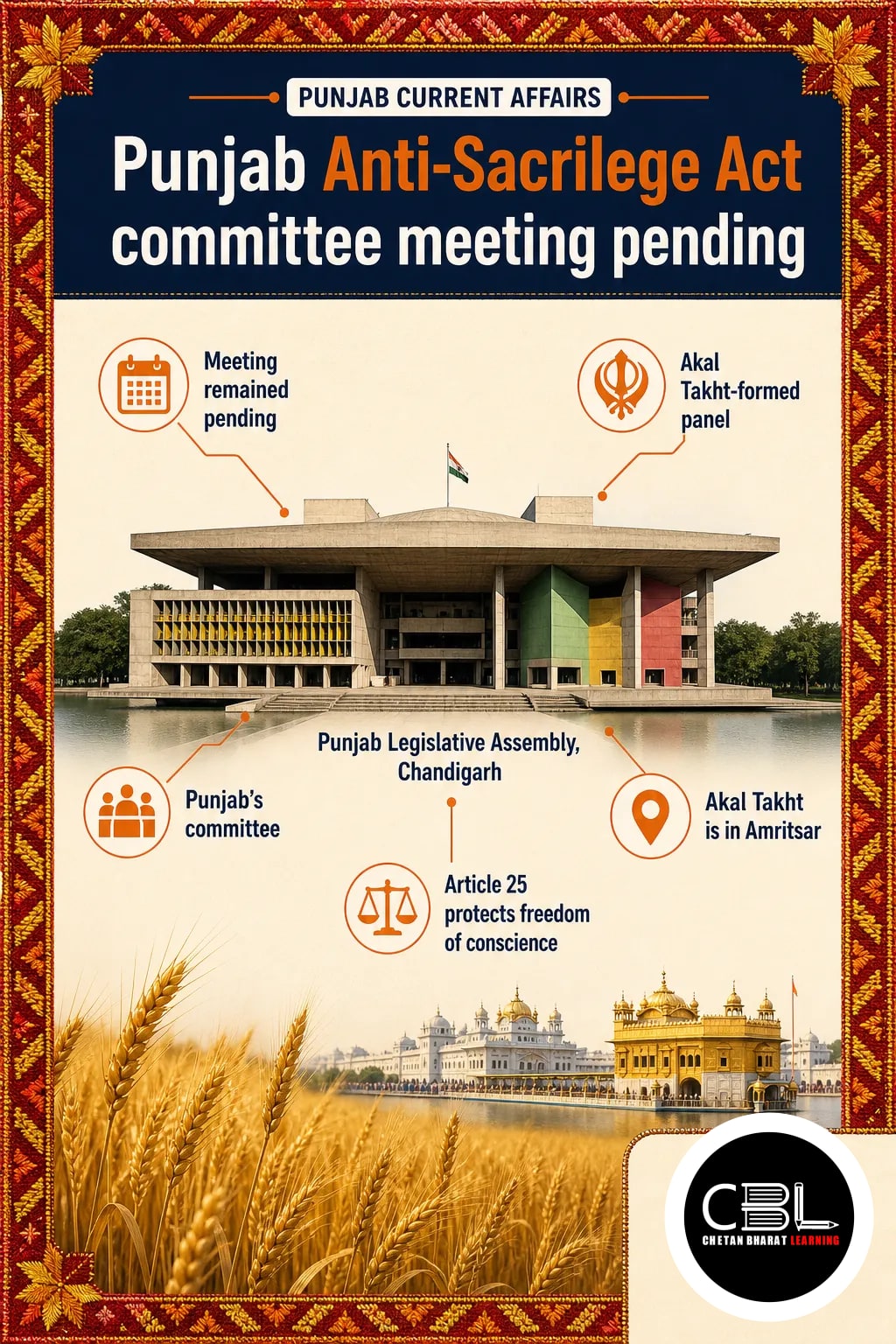
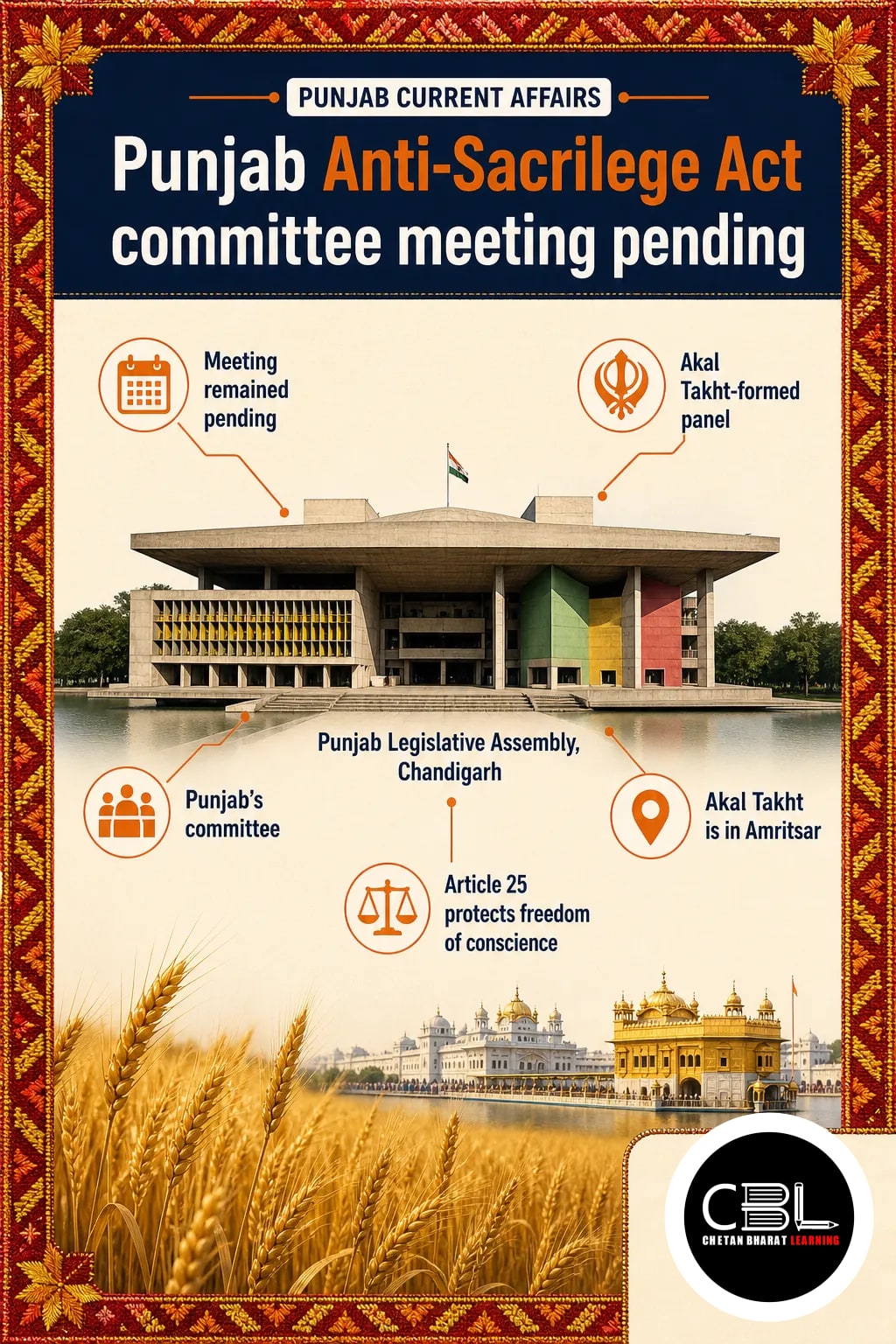
The Anti-Sacrilege Act committee meeting remained pending after the Akal Takht-formed panel did not meet Punjab’s committee. The development is relevant to Punjab current affairs and state polity preparation.
Quick answer: In Punjab, the Akal Takht-formed panel did not meet the state’s Anti-Sacrilege Act committee, leaving the meeting pending. The supplied report does not state a meeting date or location. It identifies two committees but does not give their membership numbers.
| Point | Details |
|---|---|
| State | Punjab |
| Issue | Anti-Sacrilege Act |
| Panels | Akal Takht-formed panel and Punjab’s committee |
| Meeting status | Meeting remained pending |
Why is the committee issue in the news?
The issue is in the news because the Akal Takht-formed panel did not meet Punjab’s committee. The two panels are associated with the Anti-Sacrilege Act issue. As a result, their meeting remained pending.
For exam purposes, distinguish the body that formed the first panel from the state committee. Akal Takht set up the first panel; the other committee is Punjab’s. The reported development concerns a meeting between them, not a stated decision by either panel.
What details are available about the meeting?
The supplied source notes say the meeting remained pending, but do not give a date or venue. They also do not state why the panels did not meet. Therefore, aspirants should not treat a particular reason or schedule as established by this report.
In addition, the notes do not specify committee members, proposed provisions or penalties. They do not establish that an Act was passed or brought into force. The Anti-Sacrilege Act committee issue should therefore be remembered as a pending meeting, not as a confirmed legislative outcome.
What is the constitutional context?
The Constitution protects freedom of religion under Articles 25 and 26, subject to specified limits. Article 25 protects freedom of conscience and the right to profess, practise and propagate religion, subject to public order, morality, health and other provisions of Part III.
Article 26 provides rights to religious denominations to manage religious affairs, subject to public order, morality and health. Meanwhile, Punjab has a Legislative Assembly, and its Governor is part of the state legislature. These are general polity facts; the supplied report does not identify a specific constitutional provision for the pending meeting.
- Akal Takht is in Amritsar.
- Chandigarh is the capital of Punjab.
- Article 25 protects freedom of conscience.
Source: Indian Express Chandigarh, 19 November 2026
Prelims Practice Corner
Frequently Asked Questions
What happened to the Anti-Sacrilege Act committee meeting?
The meeting remained pending. The Akal Takht-formed panel did not meet Punjab’s committee.
Why did the two committees not meet?
The supplied source notes do not state a reason. They also do not give a meeting date or venue.
Which constitutional articles concern freedom of religion?
Articles 25 and 26 concern freedom of religion and religious denominations. Their protections are subject to specified constitutional limits.
Related Current Affairs
Preparing for UPSC, PCS or HCS?
Talk to a mentor at Chetan Bharat Learning, Chandigarh. Free guidance on choosing the right exam and building a study plan.
Chat on WhatsAppCall 97793 53345UPSC / IAS / PCS coaching in Chandigarh · Trusted by aspirants across Punjab & Haryana


Leave a Reply
You must be logged in to post a comment.