
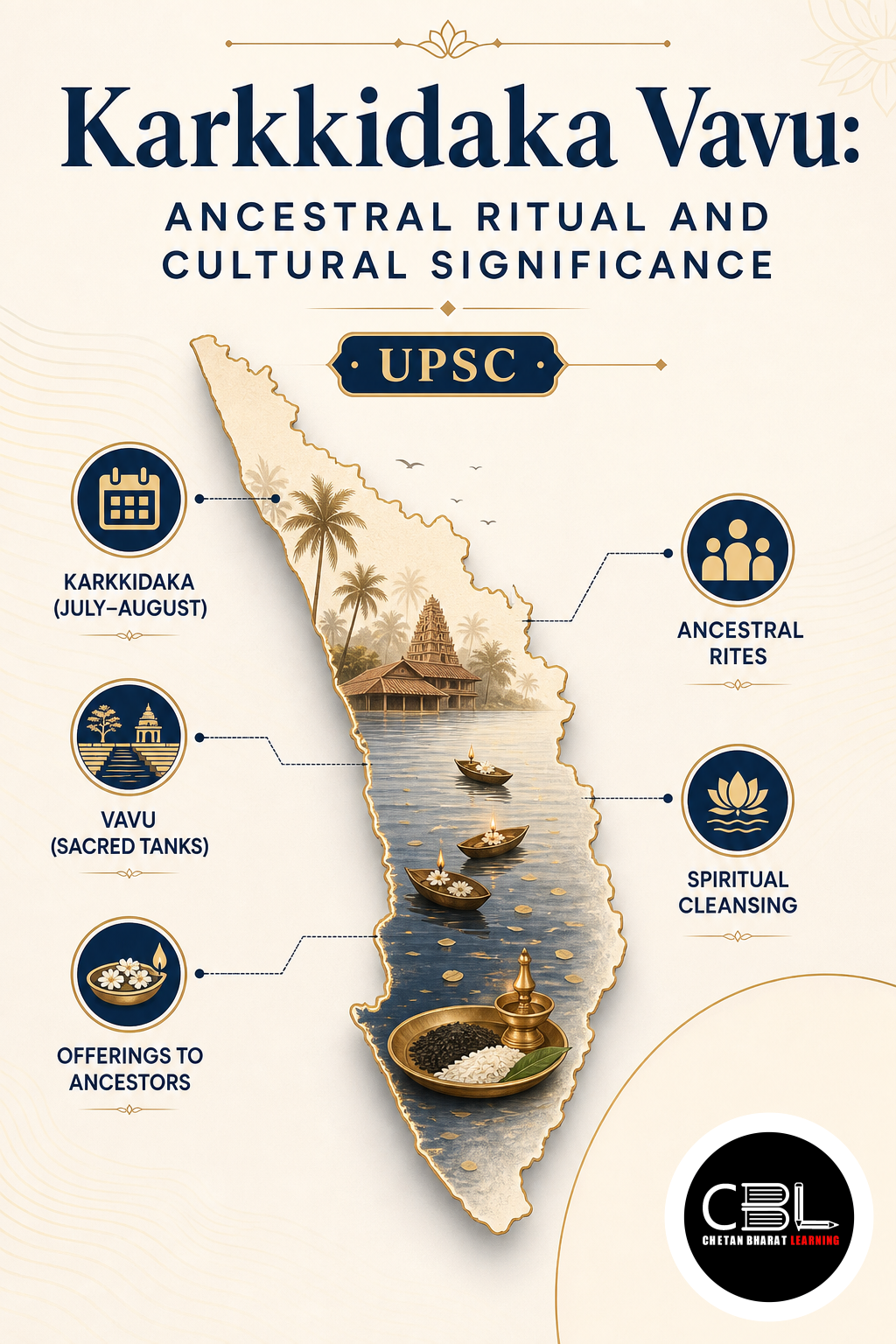

Karkkidaka Vavu: Ancestral Ritual and Cultural Significance
UPSC Mapping
| Prelims | Art & Culture |
|---|---|
| Mains | GS Paper 1 (Indian Culture & Heritage) |
| Month | Karkkidakam (Malayalam) |
| Ritual | Pithru Tharpanam |
What is Karkkidaka Vavu?
Karkkidaka Vavu is a traditional Hindu ritual observed in Kerala on the new moon day (Amavasya) of the Malayalam month of Karkkidakam, which typically falls in July–August. It is a day dedicated to the remembrance of ancestors, where families offer oblations (Pithru Tharpanam) to their departed forefathers.
The ritual involves performing rites at riverbanks, temples, or designated spots, often with the assistance of priests. It is believed that offering prayers on this day helps the souls of ancestors attain peace and blessings, reinforcing the cultural practice of ancestor veneration in Kerala’s Hindu community.
Why is Karkkidaka Vavu in News?
Karkkidaka Vavu has been in the news as thousands of devotees across Kerala performed the rituals, with reports highlighting the observance at prominent locations such as the banks of the Bharathapuzha River, Varkala, and various temples. The event draws media attention annually due to its scale and cultural significance.
The observance also underscores the enduring relevance of traditional rituals in contemporary Kerala society, with families traveling from distant places to perform the rites. For more details, refer to the PIB release at https://pib.gov.in.
Key Features of Karkkidaka Vavu
- New Moon Day: Observed on the Amavasya of the Malayalam month Karkkidakam.
- Ancestor Worship: The ritual is a form of ancestor veneration, seeking peace for departed souls.
- Waterfront Rituals: Typically performed on riverbanks, seashores, or temple tanks.
- Pithru Tharpanam: Involves offering water, sesame seeds, and rice balls to ancestors.
- Community Participation: Families gather, often with priests, to perform the rites together.
Challenges in Preserving Karkkidaka Vavu
- Modernisation: Younger generations may not participate due to urbanisation and changing lifestyles.
- Commercialisation: Some rituals have become commercialised, diluting their spiritual essence.
- Environmental Degradation: Pollution of rivers and water bodies affects the sanctity of water-based rituals.
- Lack of Priests: A shortage of trained priests to conduct rituals in remote areas.
- Competing Events: The same period often sees other cultural events, reducing focus.
Way Forward for Karkkidaka Vavu
To preserve Karkkidaka Vavu, cultural organisations and temple boards should conduct awareness programmes to educate younger generations about its significance. Integrating the ritual into school curricula as part of cultural studies can foster respect.
Eco-friendly practices, such as using biodegradable materials and cleaning up water bodies after rituals, can mitigate environmental impact. Government support for training priests and maintaining ritual sites can ensure the tradition continues.
Prelims Practice Corner
Q1. In which Malayalam month is Karkkidaka Vavu observed?
- (a) Chingam
- (b) Karkkidakam
- (c) Thulam
- (d) Vrischikam
Answer: (b) It is observed in the Malayalam month of Karkkidakam.
Q2. What is the primary ritual performed on Karkkidaka Vavu?
- (a) Temple festival
- (b) Pithru Tharpanam
- (c) Boat race
- (d) Harvest festival
Answer: (b) Pithru Tharpanam, offering oblations to ancestors, is performed.
Q3. On which day does Karkkidaka Vavu fall?
- (a) Full moon day
- (b) New moon day
- (c) Ekadashi
- (d) Purnima
Answer: (b) It falls on the new moon day (Amavasya).
Q4. What is the cultural significance of Karkkidaka Vavu?
- (a) It marks the start of monsoon
- (b) It is a day of ancestor remembrance and worship
- (c) It celebrates the harvest
- (d) It is a fertility festival
Answer: (b) It is a day for remembering and honouring ancestors.
Q5. Where are the rituals typically performed?
- (a) In temples only
- (b) On riverbanks, seashores, or temple tanks
- (c) In homes
- (d) In schools
Answer: (b) They are performed at waterfronts like riverbanks, seashores, or temple tanks.
Mains Practice Questions
Q1. Discuss the importance of ancestor worship rituals like Karkkidaka Vavu in preserving India’s cultural heritage. (250 words, 15 marks)
Answer Structure:
- Intro: Introduce Karkkidaka Vavu as an ancestral ritual.
- Body: Discuss its cultural significance, community bonding, and spiritual value. Analyse challenges: modernisation, commercialisation, environmental impact. Suggest preservation measures.
- Conclusion: Emphasise the need to balance tradition with eco-friendly practices.
Q2. How do rituals like Karkkidaka Vavu reflect the continuity of traditional beliefs in contemporary society? (150 words, 10 marks)
Answer Structure:
- Intro: Frame rituals as anchors of cultural identity.
- Body: Discuss how Karkkidaka Vavu continues to be observed by thousands, demonstrating the enduring relevance of ancestor worship and community gatherings despite modernisation.
- Conclusion: Conclude that such rituals provide continuity and a sense of belonging.
FAQs on Karkkidaka Vavu
What is Karkkidaka Vavu?
It is a traditional Hindu ritual in Kerala observed on the new moon day of the Malayalam month Karkkidakam, dedicated to offering oblations to ancestors.
What is Pithru Tharpanam?
It is the ritual offering of water, sesame seeds, and rice balls to departed ancestors, performed on Karkkidaka Vavu.
Why is Karkkidaka Vavu observed?
It is observed to honour ancestors, seek their blessings, and help their souls attain peace, reinforcing family and cultural bonds.
Related Current Affairs
Preparing for UPSC, PCS or HCS?
Talk to a mentor at Chetan Bharat Learning, Chandigarh. Free guidance on choosing the right exam and building a study plan.
Chat on WhatsAppCall 97793 53345UPSC / IAS / PCS coaching in Chandigarh · Trusted by aspirants across Punjab & Haryana
Leave a Reply
You must be logged in to post a comment.