
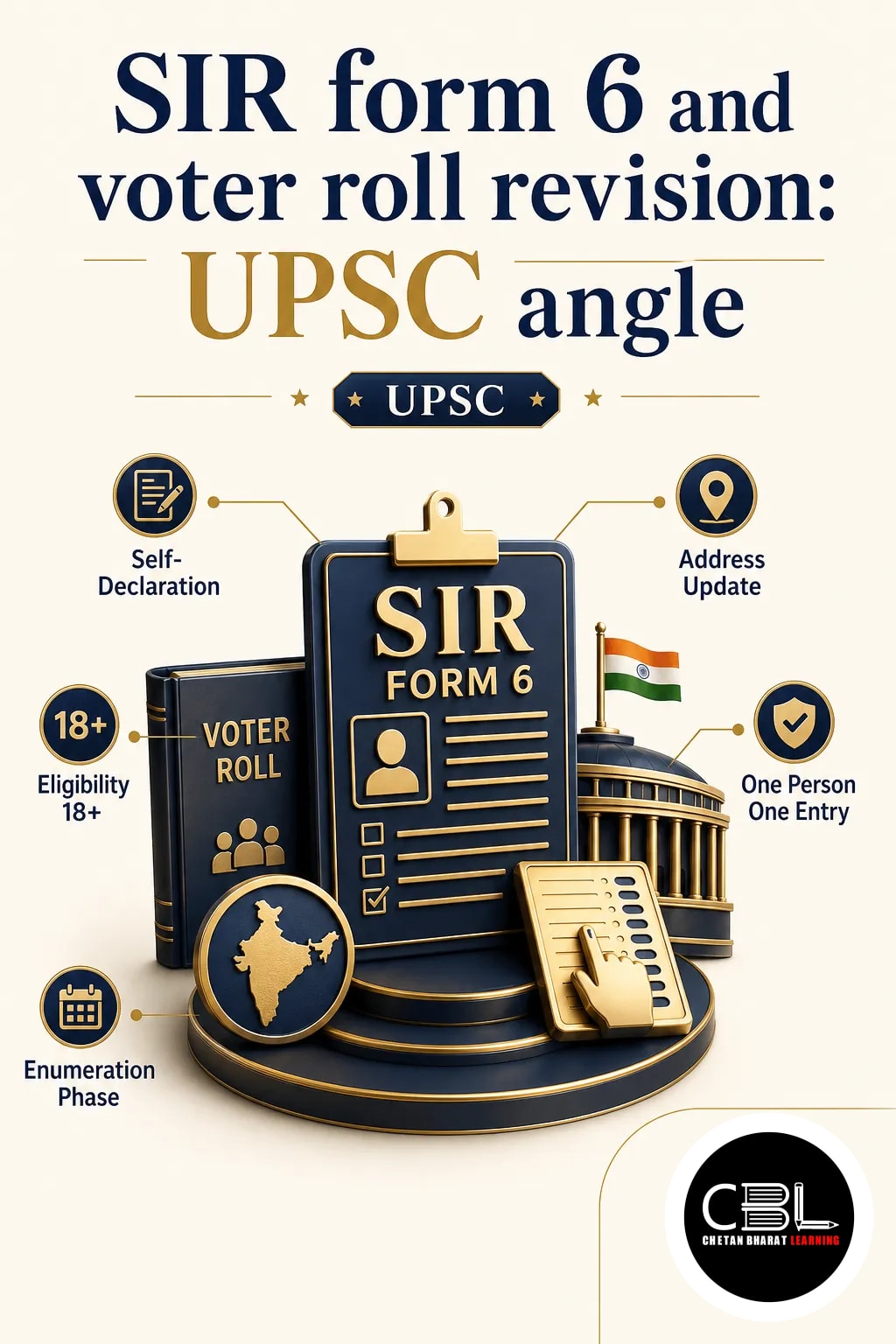
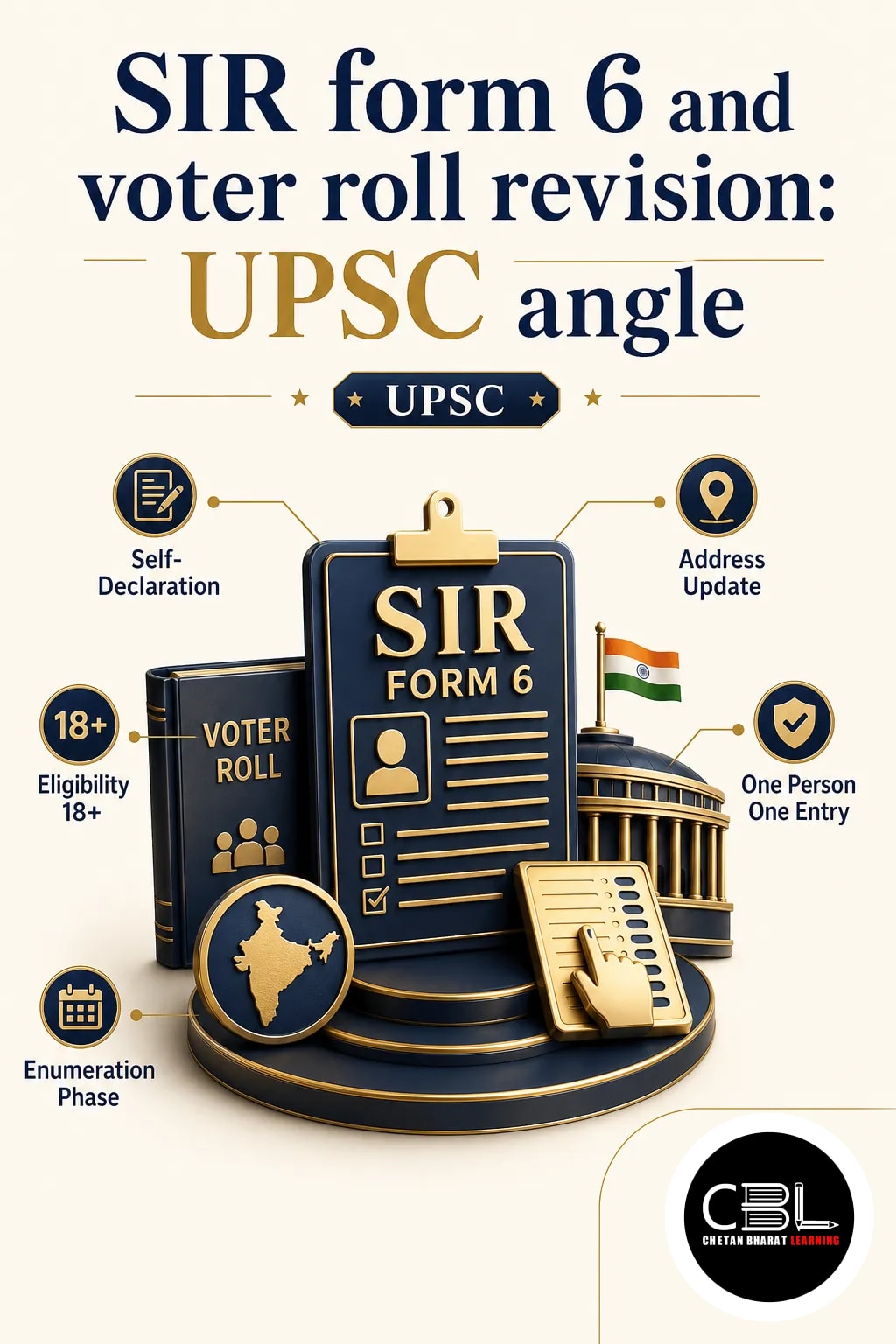
SIR form 6 has drawn attention after a human chain protest in Hyderabad over election roll revision. For UPSC learners, the issue connects voter rights with the Election Commission’s role in keeping rolls accurate.
What is SIR form 6?
SIR form 6 refers to the voter registration form used for inclusion of a name in the electoral roll. It is relevant when a citizen seeks entry as a new elector in a constituency.
In India, electoral rolls sit at the heart of free and fair elections. The Constitution gives the Election Commission of India the responsibility to supervise and control elections, and the Representation of the People Act, 1950 provides the legal framework for electoral rolls.
Why in News?
According to the report, hundreds of people formed a human chain in Hyderabad to protest against the Election Commission and the ongoing SIR exercise. The protest shows that voter list revision can trigger public concern when people fear exclusion or procedural difficulty.
The development matters because the electoral roll decides who can vote. Any perceived gap in updating, deleting, or verifying names can quickly become a political and administrative issue.
Key Features
- Inclusion of eligible voters: Form 6 is the standard route for adding a new name to the voter list.
- Link to the electoral roll: The form helps update the roll so that eligible citizens can exercise the franchise.
- Administrative scrutiny: Election authorities verify details before accepting an application.
- Constitutional basis: The ECI conducts and supervises the preparation of rolls under its constitutional mandate.
- Federal relevance: Clean rolls support elections in both Parliament and state legislatures.
Challenges
- Fear of exclusion: Citizens may worry that revision drives can remove genuine voters.
- Documentation hurdles: Applicants may face difficulty proving eligibility or residence.
- Public trust deficit: Suspicion around roll revision can reduce confidence in the process.
- Operational errors: Mistakes in verification or data entry can affect voter access.
- Communication gap: Poor awareness about procedures often leads to confusion at the local level.
Way Forward
Election authorities should keep voter registration procedures simple, transparent and well-publicised. Clear communication in local languages can reduce panic during roll revision drives.
They should also strengthen grievance redressal and field verification. When citizens understand why a revision happens and how to apply through Form 6, resistance usually falls.
Source: Indian Express India, 2026-10-24
- Election Commission of India: Evolution and Powers (15 Oct 2026)
- Right to Vote in India: Constitutional Status Explained (29 Sep 2026)
- Independent Institutions in Democracy: UPSC Analysis (10 Oct 2026)
This topic is useful for state PCS polity preparation because voter registration and roll revision affect district administration directly. It also helps explain the Election Commission’s role in protecting electoral fairness at the state level.
FAQ
Is Form 6 only for first-time voters?
Form 6 is mainly used for adding a name to the electoral roll. It is commonly associated with first-time registration, but the key point is inclusion of an eligible elector.
Why does electoral roll revision trigger protests?
Roll revision can affect voter inclusion, so people watch it closely. If citizens fear wrongful deletion or procedural hurdles, protests and legal challenges may follow.
Which law governs electoral rolls in India?
The Representation of the People Act, 1950 provides the legal basis for electoral rolls. The Election Commission works within this framework to prepare and revise them.
Related Current Affairs
Preparing for UPSC, PCS or HCS?
Talk to a mentor at Chetan Bharat Learning, Chandigarh. Free guidance on choosing the right exam and building a study plan.
Chat on WhatsAppCall 97793 53345UPSC / IAS / PCS coaching in Chandigarh · Trusted by aspirants across Punjab & Haryana
Leave a Reply
You must be logged in to post a comment.