
Tag: IAS Coaching in Chandigarh
-
Agricultural Subsidies in India: Balancing Farmer Welfare and Economic Sustainability
Why the Subsidy Debate Matters Agriculture remains the backbone of rural livelihoods in India. To support farmers and ensure food security, governments have traditionally provided various subsidies and financial assistance. These include: While these measures have played an important role in protecting farmers, questions are increasingly being raised about their long-term sustainability and effectiveness. The…
-
Why India and Pakistan Don’t Talk Anymore: Looking Back and Ahead
Understanding the Diplomatic Stalemate India and Pakistan share one of the most complex bilateral relationships in the world. While both countries have engaged in dialogue at different points in history, diplomatic engagement has repeatedly been disrupted by security concerns, political tensions, and cross-border terrorism. The debate has gained renewed attention following Operation Sindoor, which has…
-
India’s Proposed Anti-Sanctions Framework: Protecting Economic Sovereignty in a Fragmented World
Why the Debate Has Emerged Recent geopolitical developments have highlighted a growing challenge for countries engaged in global trade: the increasing use of unilateral sanctions as a foreign policy tool. In response, India is exploring legal mechanisms to protect domestic businesses from the impact of foreign sanctions that are not approved under international law. The…
-
India’s Renewable Energy Revolution: Why Storage Holds the Key
Why Renewable Energy Alone Is Not Enough India is rapidly emerging as one of the world’s leading renewable energy producers. Massive investments in solar and wind energy have strengthened the country’s clean energy transition and reduced dependence on fossil fuels. However, renewable energy faces a fundamental challenge: it is not always available when electricity is…
-
The Growing Dominance of Private Vehicles: What It Means for India’s Urban Future
Why India’s Transport Debate Matters India is experiencing rapid urbanisation, rising incomes, and expanding mobility needs. However, one major challenge is becoming increasingly visible: private vehicles are dominating Indian roads while public transport systems struggle to keep pace. This trend is creating multiple urban challenges, including: The issue is no longer only about transportation—it is…
-

Ebola Outbreak in Congo and Uganda: Why Global Health Security Matters More Than Ever
Why the Ebola Outbreak Is a Global Concern The recent Ebola outbreak in the Democratic Republic of Congo (DRC) and Uganda has once again highlighted the vulnerability of the global health system to infectious disease outbreaks. The World Health Organization (WHO) has described the situation as an “emergency of global concern” because of: Although Ebola…
-
Judicial Independence and Institutional Trust: Understanding the Debate Around the Judiciary
Why the Judiciary Matters in a Democracy The judiciary is one of the most important pillars of a constitutional democracy. It acts as: Recently, Chief Justice of India (CJI) B.R. Gavai expressed concern over increasing “attacks” on the judiciary by sections of: The remarks triggered a broader debate on judicial independence, institutional trust, accountability, and…
-
JNIM and the Sahel Crisis: The Expanding Arc of Islamist Extremism in Africa
Why the Sahel Region Matters Globally The Sahel region of Africa has emerged as one of the world’s most unstable geopolitical zones. Stretching across countries such as Mali, Burkina Faso, Niger, and parts of Chad, the region is increasingly witnessing: At the center of this growing instability is Jama’at Nusrat al-Islam wal-Muslimin (JNIM), an Al-Qaeda-linked…
-
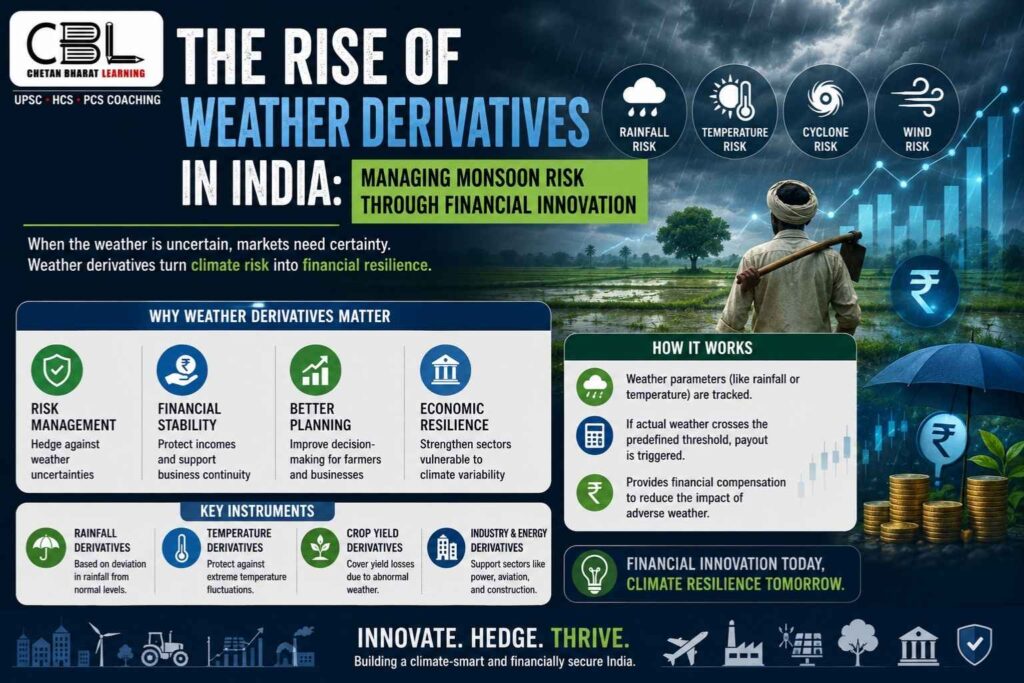
The Rise of Weather Derivatives in India: Managing Monsoon Risk Through Financial Innovation
Why Weather Risk Is Becoming an Economic Challenge India’s economy remains deeply dependent on the monsoon. From agriculture and food inflation to rural consumption and commodity markets, rainfall variability continues to influence multiple sectors of the economy. To address this growing uncertainty, the National Commodity and Derivatives Exchange (NCDEX) is set to launch India’s first…
-
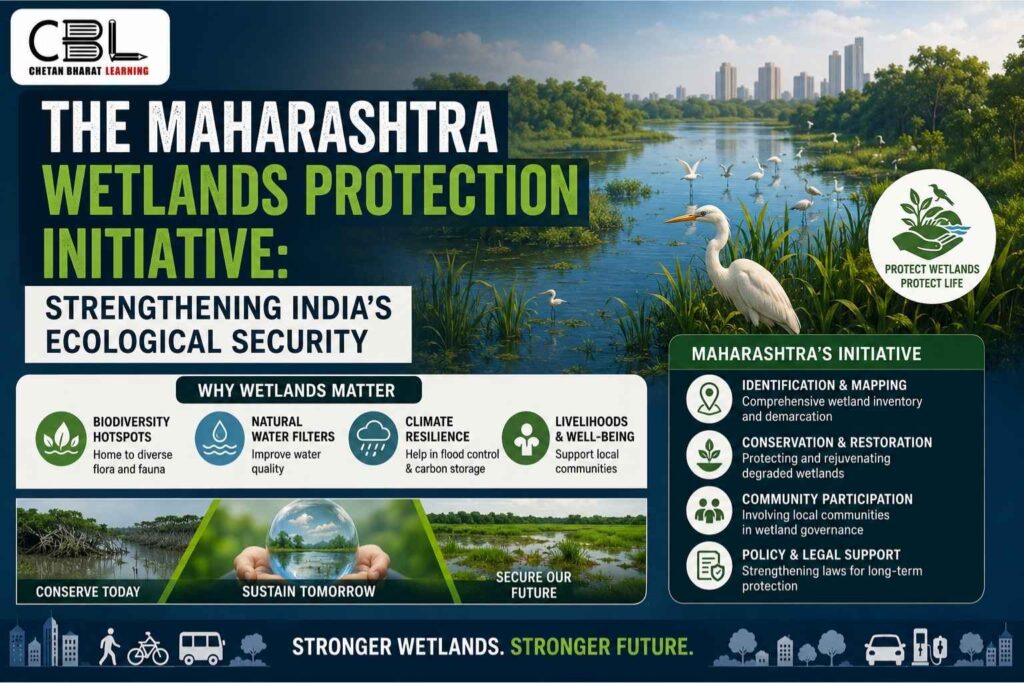
The Maharashtra Wetlands Protection Initiative: Strengthening India’s Ecological Security
Why Wetlands Matter More Than Ever Maharashtra’s decision to complete the documentation of more than 23,000 wetlands marks one of the most important environmental governance initiatives in recent years. The move is expected to strengthen legal protection for wetlands and improve ecological conservation across the state. Wetlands are often called the “kidneys of the ecosystem”…
Recent Posts
- Rajmargyatra Application: Features and UPSC Analysis
- Cybercrime Coordination Centre (I4C): UPSC Analysis
- Bud Rot Disease in Coconut Palms: UPSC Analysis
- Swavlamban 2026: Naval Innovation and UPSC Analysis
- Agri Welfare Portal 2026: Features and UPSC Analysis
- China Export Controls: AI, Solar Technology and India
- Inland Waterways: India’s Safe and Smart Navigation
- Coir Sector: Exports, Rural Jobs and Sustainable Growth
- Smriti Mandhana Named UNICEF India Celebrity Advocate
- RTI Act at 21: Achievements, Challenges and Reforms
Related Tags