Understanding the Diplomatic Stalemate
India and Pakistan share one of the most complex bilateral relationships in the world. While both countries have engaged in dialogue at different points in history, diplomatic engagement has repeatedly been disrupted by security concerns, political tensions, and cross-border terrorism.
The debate has gained renewed attention following Operation Sindoor, which has once again raised questions about whether meaningful engagement between the two neighbours remains possible.
Today, the relationship is largely characterized by limited official communication, restricted diplomatic engagement, and deep strategic mistrust.
Students preparing through UPSC Coaching in Chandigarh and IAS Coaching in Chandigarh should closely follow topics like regional security, diplomacy, cross-border terrorism, and South Asian geopolitics because these themes are highly important for GS Paper 2, Essay, and UPSC Interview preparation.
A History of Engagement and Disruption
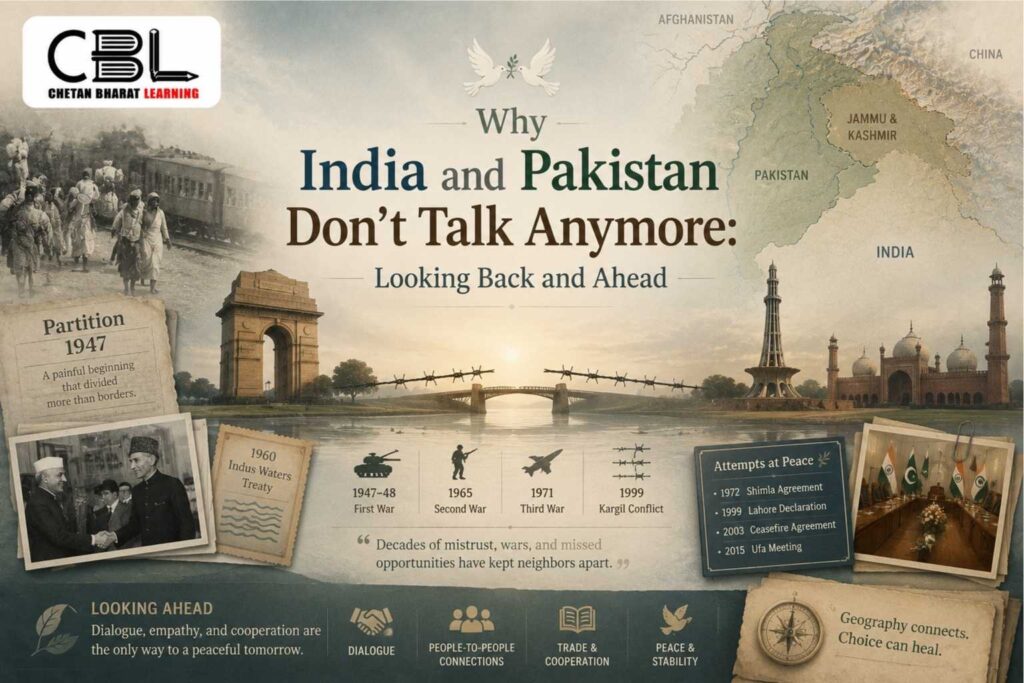
India and Pakistan have attempted multiple rounds of dialogue since independence.
Important initiatives have included:
- Simla Agreement (1972)
- Lahore Declaration (1999)
- Composite Dialogue Process
- Backchannel diplomacy efforts
Despite these initiatives, periods of engagement have frequently been interrupted by:
- Terror attacks
- Border tensions
- Political instability
- Security concerns
This pattern has created a cycle of dialogue, disruption, and renewed mistrust.
The Central Issue: Cross-Border Terrorism
One of the biggest obstacles to sustained dialogue has been India’s concern regarding cross-border terrorism.
India has consistently argued that:
✔ Terrorism and dialogue cannot proceed simultaneously
✔ Security concerns must be addressed first
✔ Terror infrastructure must be dismantled
Major terror incidents have repeatedly affected diplomatic efforts and reduced political space for engagement.
Operation Sindoor and Its Strategic Impact
Operation Sindoor marked another important phase in India’s security response framework.
The operation reinforced India’s emphasis on:
- National security
- Counterterrorism
- Strategic deterrence
- Border security
It also strengthened the perception that security considerations will continue to dominate bilateral relations in the foreseeable future.
Why Dialogue Has Become Increasingly Difficult
1. Trust Deficit
Decades of conflict and recurring crises have created a deep trust deficit between the two countries.
Without mutual confidence, diplomatic initiatives often struggle to survive periods of tension.
2. Domestic Political Constraints
Political leadership in both countries operates within domestic political realities.
Public opinion, electoral considerations, and national security concerns often influence diplomatic flexibility.
3. Security-Centric Policy Approaches
Both countries increasingly view bilateral relations through a security lens.
As a result:
- Military considerations gain prominence
- Diplomatic engagement becomes limited
- Crisis management replaces long-term dialogue
The Role of Backchannel Diplomacy
Historically, several periods of reduced tension were supported by informal or backchannel negotiations.
Backchannel diplomacy allows:
✔ Sensitive discussions
✔ Confidence-building measures
✔ Crisis management
✔ Exploration of policy options
Although often less visible, such channels have sometimes helped prevent escalation.
Regional Security Implications
The absence of sustained dialogue affects broader South Asian stability.
Potential consequences include:
- Increased security tensions
- Reduced regional cooperation
- Economic opportunity costs
- Limited connectivity initiatives
Regional peace and development often require predictable diplomatic engagement.
Can Engagement Return in the Future?
While current conditions remain challenging, diplomatic engagement is rarely permanently closed.
Future dialogue may depend on:
- Security improvements
- Confidence-building measures
- Political willingness
- Regional stability
History suggests that even prolonged periods of tension can eventually give way to renewed engagement when strategic circumstances change.
India’s Current Approach
India’s current position emphasizes:
✔ Zero tolerance for terrorism
✔ National security priorities
✔ Limited engagement without concrete action on security concerns
This reflects a broader shift toward a security-first diplomatic framework.
Prelims Pointers
Important Agreements
- Simla Agreement (1972)
- Lahore Declaration (1999)
Key Concepts
- Cross-border terrorism
- Composite Dialogue
- Backchannel diplomacy
- Confidence-building measures (CBMs)
Mains Perspective
Possible Question
“Cross-border terrorism remains the principal obstacle to the normalization of India-Pakistan relations.” Discuss.
Key Dimensions to Include
- Security concerns
- Terrorism
- Diplomatic engagement
- Regional stability
- Strategic trust
- Confidence-building measures
Frequently Asked Questions (FAQ)
Why has India-Pakistan dialogue stalled?
The dialogue process has been affected by recurring security concerns, terrorism-related issues, and a persistent trust deficit.
What is the main obstacle to bilateral engagement?
Cross-border terrorism remains one of the most significant challenges affecting sustained diplomatic engagement.
What is backchannel diplomacy?
Backchannel diplomacy involves informal and confidential communication between countries outside formal negotiation frameworks.
Can India-Pakistan relations improve in the future?
Future improvement is possible if security concerns are addressed and both sides demonstrate political willingness for engagement.
Conclusion: Between Security and Diplomacy
India-Pakistan relations continue to be shaped by the difficult balance between security concerns and diplomatic engagement.
While dialogue has historically been an important tool for managing tensions, repeated security challenges have narrowed the space for sustained engagement.
The future of bilateral relations will likely depend on whether both countries can address the underlying issues that continue to generate mistrust and instability.
“In South Asia, lasting peace requires not only dialogue, but also the conditions that make dialogue meaningful and sustainable.”
Related Current Affairs
Preparing for UPSC, PCS or HCS?
Talk to a mentor at Chetan Bharat Learning, Chandigarh. Free guidance on choosing the right exam and building a study plan.
Chat on WhatsAppCall 97793 53345UPSC / IAS / PCS coaching in Chandigarh · Trusted by aspirants across Punjab & Haryana
Leave a Reply
You must be logged in to post a comment.