
UPSC Mapping
| Level | Syllabus |
|---|---|
| Prelims | Security & Health |
| Mains | GS Paper 3 (Internal Security & Health) |
Quick Facts
| Organisation | UNODC (HQ: Vienna) |
|---|---|
| Drug Class | Amphetamine-type stimulant (ATS) |
What is Methamphetamine Trafficking?
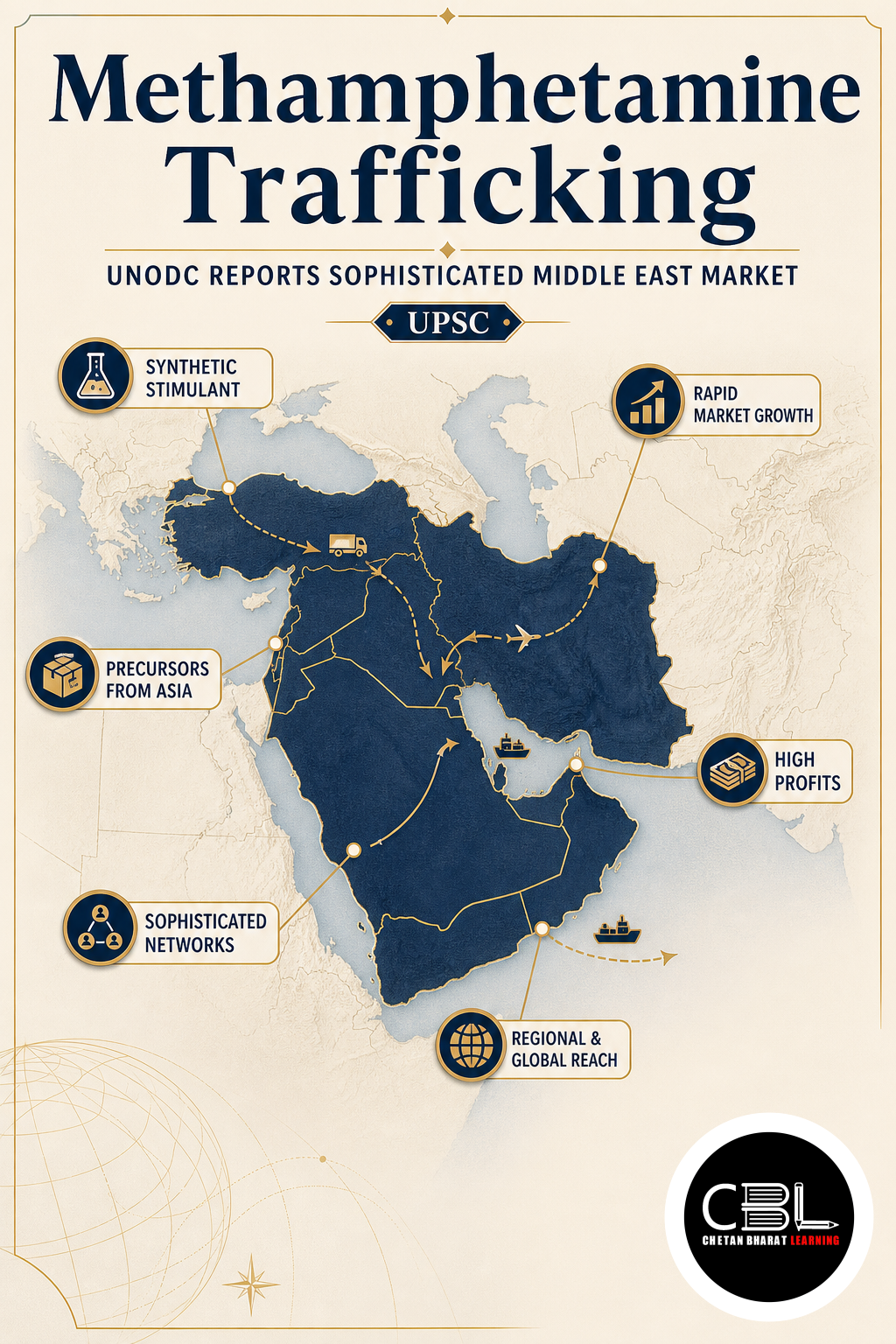
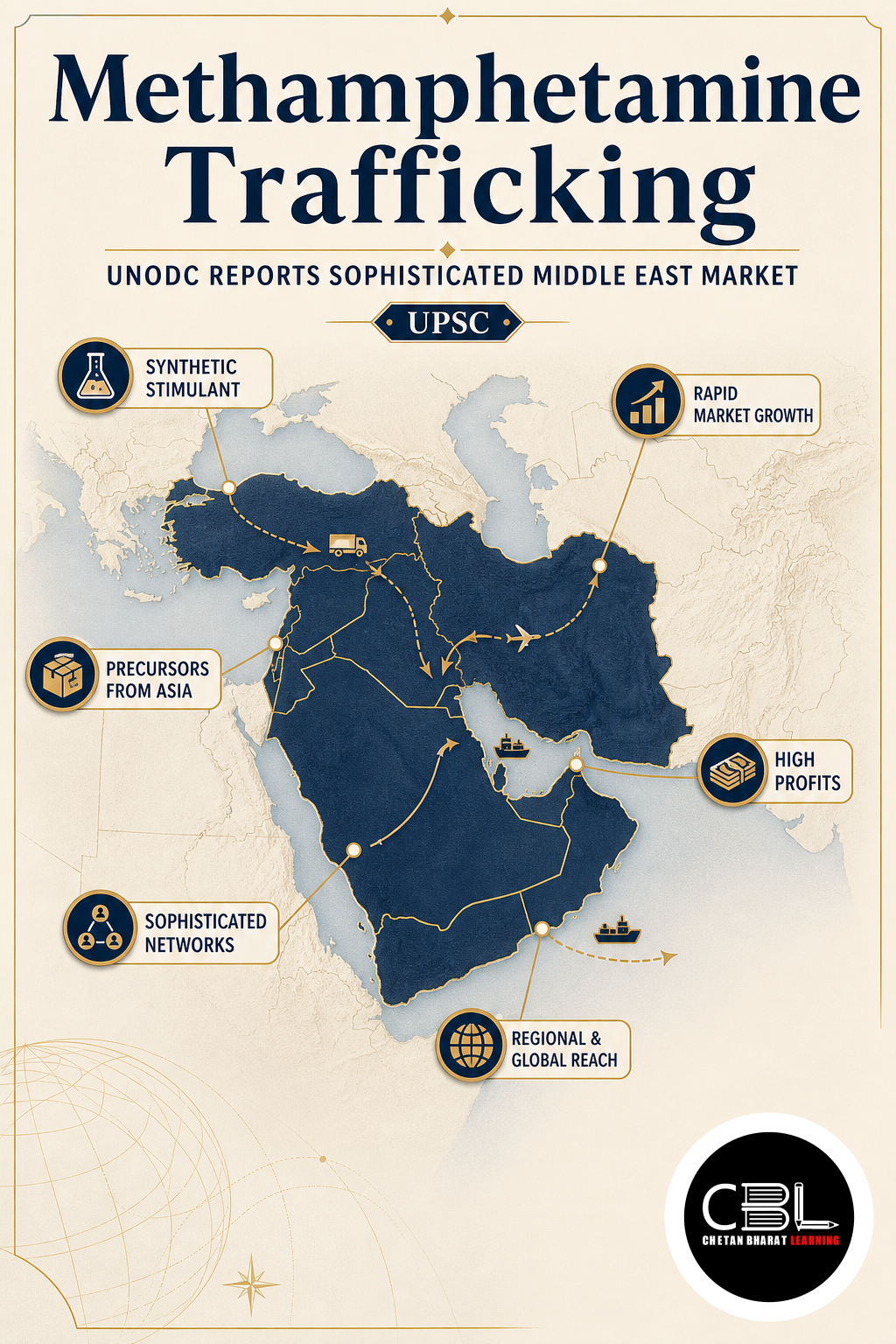
Methamphetamine trafficking refers to the illicit production, distribution, and sale of methamphetamine, a potent synthetic stimulant. The UNODC report indicates that the Middle East is emerging as a sophisticated, organised illicit market for the drug. Methamphetamine rapidly crosses the blood–brain barrier and triggers the release of dopamine, serotonin, and norepinephrine, producing prolonged euphoria, energy, and reduced appetite.
Under strict supervision, it may be prescribed for ADHD and short-term obesity treatment. However, short-term use can cause rapid heart rate, hypertension, and hyperthermia, while long-term use may lead to ‘meth mouth’, severe weight loss, paranoia, hallucinations, brain changes, and fatal overdose.
Why is Methamphetamine Trafficking in News?
Methamphetamine trafficking is in the news following the UNODC report that highlights the growing sophistication of the market in the Middle East. The report underscores the need for enhanced international cooperation and law enforcement measures to combat the illicit trade.
The UNODC, headquartered in Vienna, leads the global fight against illicit drugs, transnational organised crime, corruption, and terrorism. The report is part of the UNODC’s ongoing monitoring of global drug trends. For more details, refer to this PIB release.
Key Features of Methamphetamine Trafficking
- Illicit Market: Middle East is emerging as a sophisticated market.
- Synthetic Drug: Methamphetamine is a synthetic central nervous system stimulant.
- Health Risks: Short-term effects include rapid heart rate and hypertension; long-term effects include paranoia, hallucinations, and brain changes.
- Medical Use: Prescribed for ADHD and obesity under strict supervision.
- Global Concern: The UNODC monitors and combats drug trafficking.
Challenges in Combating Methamphetamine Trafficking
- Sophisticated Networks: Traffickers use advanced methods to evade detection.
- Cross-Border Nature: Trafficking involves multiple countries, requiring international cooperation.
- Demand Reduction: Addressing the root causes of drug demand is challenging.
- Funding: Law enforcement and prevention programmes require significant resources.
- Dark Web: Online platforms facilitate illicit trade. For more on drug policy, visit the security section.
Way Forward for Methamphetamine Trafficking
To combat methamphetamine trafficking, the international community must enhance intelligence sharing and law enforcement coordination. Investing in prevention, treatment, and rehabilitation programmes is essential to reduce demand. Strengthening border controls and disrupting financial flows can curb trafficking.
Public awareness campaigns about the risks of methamphetamine use can deter individuals. The UNODC’s role in providing technical assistance and monitoring is vital. For international best practices, refer to the UNODC.
Prelims Practice Corner
-
Q1. Which UN body reported on methamphetamine trafficking?
(a) WHO (b) UNODC (c) UNDP (d) UNHCR
Answer: (b) UNODC reported on the trafficking.
-
Q2. Where is UNODC headquartered?
(a) New York (b) Geneva (c) Vienna (d) The Hague
Answer: (c) UNODC is headquartered in Vienna.
-
Q3. What class of drugs does methamphetamine belong to?
(a) Opioids (b) Amphetamine-type stimulants (c) Cannabinoids (d) Barbiturates
Answer: (b) It belongs to the amphetamine-type stimulant group.
-
Q4. What is a long-term effect of methamphetamine use?
(a) Improved memory (b) Paranoia and hallucinations (c) Weight gain (d) Reduced heart rate
Answer: (b) Long-term use can cause paranoia and hallucinations.
-
Q5. Which region is emerging as a sophisticated market for methamphetamine?
(a) South Asia (b) Middle East (c) Europe (d) North America
Answer: (b) The Middle East is emerging as a sophisticated market.
Mains Practice Questions
-
Q1. Discuss the challenges posed by the illicit drug trade, particularly methamphetamine trafficking, and the international response to it. (250 words, 15 marks)
Answer Structure:
- Intro: Introduce the UNODC report on methamphetamine trafficking.
- Body: Discuss the health and security impacts, the sophistication of trafficking networks, and the challenges in combating it. Suggest measures: international cooperation, prevention, treatment, and law enforcement.
- Conclusion: Emphasise the need for a comprehensive and coordinated approach.
-
Q2. What is the role of the UNODC in combating illicit drug trafficking? (150 words, 10 marks)
Answer Structure:
- Intro: Define UNODC as the UN office for drugs and crime.
- Body: Explain its role in monitoring drug trends, providing technical assistance, and supporting law enforcement. Mention its work in the Middle East.
- Conclusion: Conclude that UNODC is a key player in global drug control.
FAQs on Methamphetamine Trafficking
- What is methamphetamine?
- It is a potent synthetic central nervous system stimulant of the amphetamine-type stimulant group.
- What are the effects of methamphetamine?
- Short-term: euphoria, energy, reduced appetite; long-term: paranoia, hallucinations, brain damage.
- What is the UNODC’s role?
- It leads the global fight against illicit drugs, organised crime, corruption, and terrorism.
Related Current Affairs
Preparing for UPSC, PCS or HCS?
Talk to a mentor at Chetan Bharat Learning, Chandigarh. Free guidance on choosing the right exam and building a study plan.
Chat on WhatsAppCall 97793 53345UPSC / IAS / PCS coaching in Chandigarh · Trusted by aspirants across Punjab & Haryana
Leave a Reply
You must be logged in to post a comment.