
Why India’s Transport Debate Matters
India is experiencing rapid urbanisation, rising incomes, and expanding mobility needs. However, one major challenge is becoming increasingly visible: private vehicles are dominating Indian roads while public transport systems struggle to keep pace.
This trend is creating multiple urban challenges, including:
- Traffic congestion
- Air pollution
- Energy consumption
- Road safety concerns
- Infrastructure stress
The issue is no longer only about transportation—it is also about sustainable development, economic productivity, and environmental sustainability.
Students preparing through UPSC Coaching in Chandigarh and IAS Coaching in Chandigarh should closely follow topics like urbanisation, sustainable mobility, public infrastructure, and climate-friendly transportation because these themes are highly important for GS Paper 3, Essay, and UPSC Interview preparation.
Why Are Private Vehicles Increasing Rapidly?
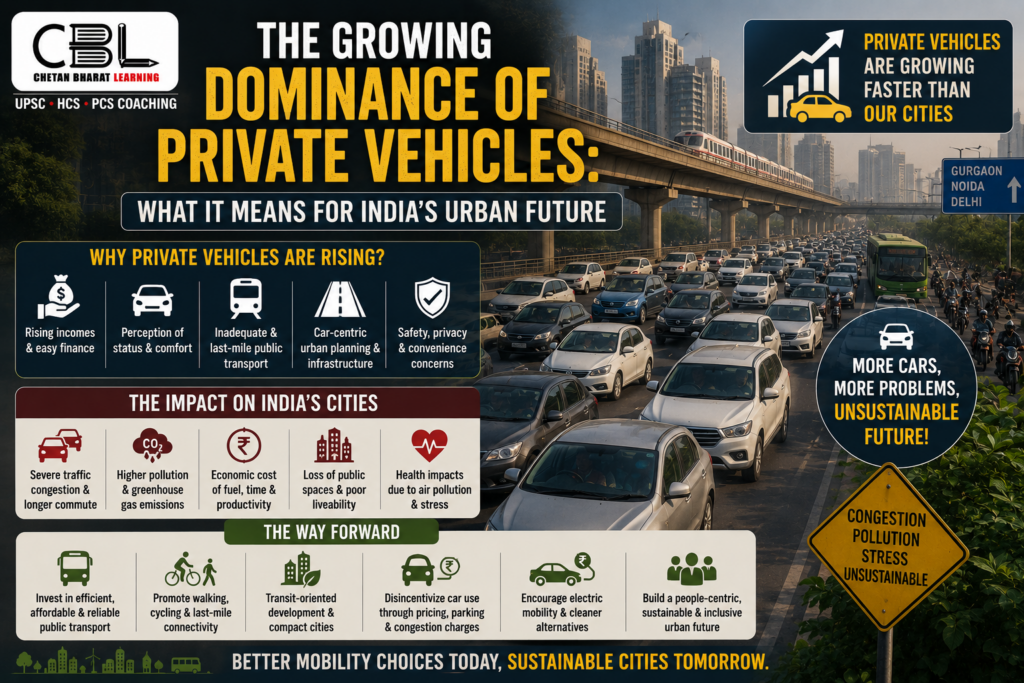
Several factors have contributed to the growing use of private vehicles across India.
1. Rising Incomes and Aspirations
As household incomes increase, vehicle ownership is often viewed as:
- A symbol of convenience
- Greater flexibility
- Improved social mobility
This has accelerated demand for two-wheelers and personal cars.
2. Gaps in Public Transport Systems
Many Indian cities face challenges such as:
- Limited bus networks
- Inadequate last-mile connectivity
- Overcrowded services
- Irregular schedules
As a result, commuters frequently prefer private transport options.
3. Expanding Urban Areas
Cities are spreading outward, increasing travel distances between:
- Residential zones
- Workplaces
- Educational institutions
- Commercial centers
Public transport networks often struggle to expand at the same pace.
The Consequences of Vehicle-Centric Growth
Traffic Congestion
Growing vehicle ownership places significant pressure on urban roads.
Consequences include:
- Longer travel times
- Reduced productivity
- Increased fuel consumption
- Economic losses
Air Pollution and Climate Concerns
Road transport contributes significantly to:
- Carbon emissions
- Urban air pollution
- Fuel consumption
Higher dependence on private vehicles makes achieving climate goals more difficult.
Energy Security Challenges
India imports a large share of its energy requirements.
Greater fuel consumption from private vehicles can:
- Increase oil imports
- Widen energy vulnerabilities
- Affect the current account balance
Why Public Transport Is Essential
Strong public transport systems provide multiple benefits.
Economic Benefits
✔ Reduced congestion
✔ Lower transport costs
✔ Improved productivity
Environmental Benefits
✔ Lower emissions
✔ Better air quality
✔ Reduced fuel usage
Social Benefits
✔ Affordable mobility
✔ Greater accessibility
✔ Inclusive urban development
Public transport plays a critical role in creating equitable and sustainable cities.
The Need for Sustainable Urban Mobility
Urban mobility planning today focuses on moving people rather than simply moving vehicles.
Key solutions include:
- Expanding bus networks
- Metro rail development
- Integrated transport systems
- Non-motorised transport infrastructure
- Electric mobility
Transit-Oriented Development (TOD)
Transit-Oriented Development promotes:
- High-density development near transit hubs
- Reduced travel distances
- Better public transport access
Many cities worldwide have successfully used TOD to reduce vehicle dependence.
Lessons for Indian Cities
Indian cities may need to focus on:
- Improving service quality
- Expanding public transport coverage
- Integrating multiple transport modes
- Strengthening last-mile connectivity
Investments in sustainable mobility can generate long-term economic and environmental benefits.
Prelims Pointers
Key Concepts
- Sustainable Mobility
- Transit-Oriented Development (TOD)
- Last-Mile Connectivity
- Multimodal Transport
Major Urban Challenges
- Congestion
- Pollution
- Energy demand
- Infrastructure stress
Mains Perspective
Possible Question
“Rapid growth in private vehicle ownership poses significant challenges to sustainable urban development in India.” Discuss.
Key Dimensions to Include
- Urbanisation
- Public transport infrastructure
- Environmental sustainability
- Economic productivity
- Climate commitments
- Inclusive mobility
Frequently Asked Questions (FAQ)
Why are private vehicles increasing in India?
Rising incomes, urban expansion, and gaps in public transport systems have encouraged greater vehicle ownership.
Why is public transport important?
Public transport reduces congestion, lowers emissions, improves accessibility, and supports sustainable urban growth.
What is Transit-Oriented Development (TOD)?
TOD is an urban planning approach that promotes development around public transport hubs to reduce vehicle dependence.
How does transportation affect climate goals?
The transport sector contributes significantly to emissions, making sustainable mobility essential for climate action.
Conclusion: Moving People, Not Just Vehicles
India’s transport future will depend on how effectively cities balance private mobility with strong public transportation systems.
While private vehicles offer convenience, long-term urban sustainability requires:
- Efficient public transport
- Integrated mobility systems
- Climate-friendly infrastructure
- Inclusive urban planning
The goal should not simply be building more roads, but creating cities where mobility remains affordable, accessible, and environmentally sustainable.
“The future of urban development lies not in moving more vehicles, but in moving more people efficiently and sustainably.”
Related Current Affairs
Preparing for UPSC, PCS or HCS?
Talk to a mentor at Chetan Bharat Learning, Chandigarh. Free guidance on choosing the right exam and building a study plan.
Chat on WhatsAppCall 97793 53345UPSC / IAS / PCS coaching in Chandigarh · Trusted by aspirants across Punjab & Haryana
Leave a Reply
You must be logged in to post a comment.