
UPSC Mapping
Prelims
- Science & Technology
Mains
- GS Paper 3 (Science & Technology & Health)
Article
| LDL Reduction | ~62% |
|---|---|
| Target | PCSK9 protein |
| Type | In-vivo gene editing |
What is VERVE-102 Gene Therapy?
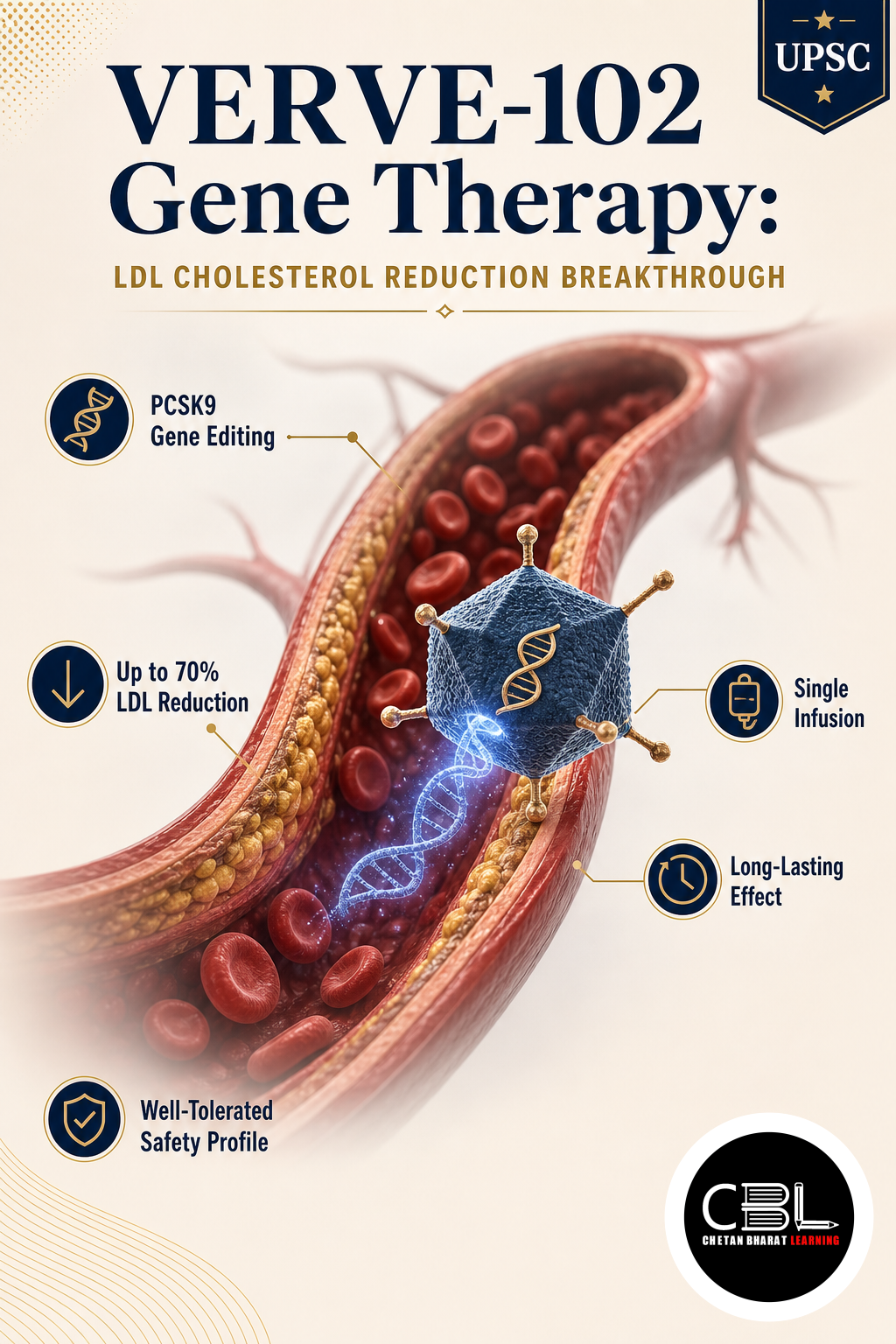
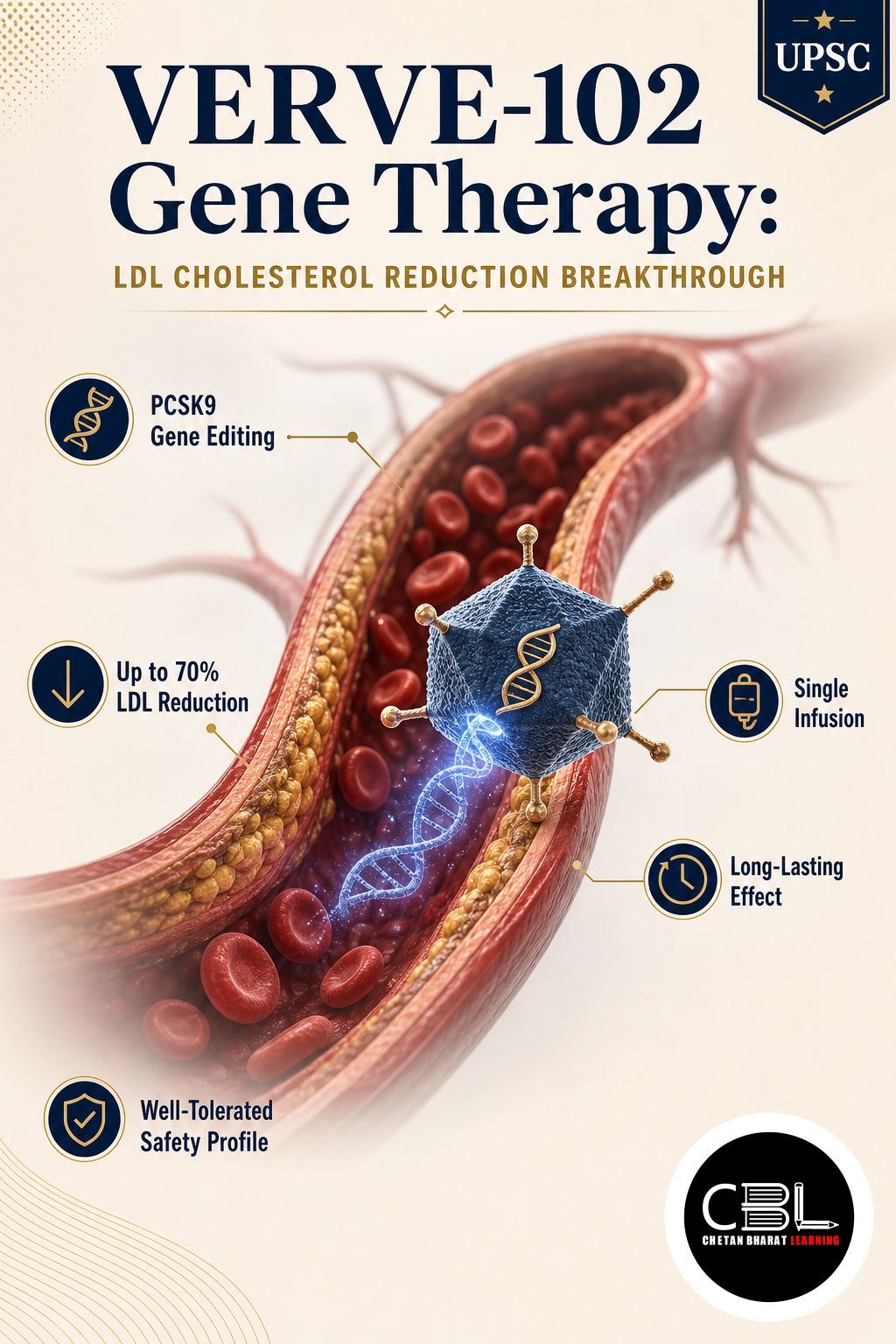
VERVE-102 Gene Therapy is an experimental in-vivo gene-editing therapy designed to permanently reduce LDL cholesterol levels. In an early clinical trial, a single intravenous infusion reduced LDL cholesterol by about 62%. The therapy targets the PCSK9 gene in liver cells, reducing the liver’s ability to produce the PCSK9 protein, which regulates LDL cholesterol.
LDL, commonly called ‘bad cholesterol,’ contributes to the formation of fatty deposits or plaques in artery walls. High LDL levels increase the risk of cardiovascular events such as heart attacks and strokes. Unlike daily statins or periodic injections of PCSK9 inhibitors, VERVE-102 aims to be a one-time treatment, potentially offering long-lasting cholesterol-lowering effects.
Why is VERVE-102 Gene Therapy in News?
VERVE-102 Gene Therapy is in the news because of its promising early clinical trial results, showing a significant reduction in LDL cholesterol. The therapy represents a potential breakthrough in treating high cholesterol, which affects millions of people globally. If successful, it could replace lifelong daily medications with a one-time infusion.
The therapy uses in-vivo gene editing, meaning the genetic modification occurs inside the patient’s body, targeting liver cells specifically.
Key Features of VERVE-102 Gene Therapy
- In-Vivo Gene Editing: Direct genetic modification inside the body.
- Target: PCSK9 gene in liver cells.
- One-Time Treatment: Designed to be a single infusion.
- LDL Reduction: ~62% reduction in early trials.
- Mechanism: Reduces PCSK9 protein production, lowering LDL cholesterol.
Challenges in VERVE-102 Gene Therapy
- Safety: Long-term safety of gene editing is not yet fully established.
- Off-Target Effects: Unintended genetic modifications could have adverse effects.
- Cost: Gene therapies are typically expensive, limiting access.
- Regulatory Approval: Requires extensive clinical trials and regulatory clearance.
- Delivery: Efficient delivery of gene-editing tools to liver cells is complex.
Way Forward for VERVE-102 Gene Therapy
To bring VERVE-102 Gene Therapy to clinical use, larger trials with longer follow-up are needed to confirm efficacy and safety. Regulatory agencies must develop frameworks for evaluating and approving in-vivo gene therapies. Public engagement and education about gene therapy are essential to build trust.
Affordable pricing models and health insurance coverage will be crucial for patient access. International collaboration can accelerate research and regulatory harmonisation.
Prelims Practice Corner
-
Q1. What is the target of VERVE-102 gene therapy?
- (a) LDL receptor
- (b) PCSK9 gene
- (c) Cholesterol ester
- (d) Lipoprotein lipase
Answer: (b) It targets the PCSK9 gene.
-
Q2. What was the LDL reduction in the early trial?
- (a) 20%
- (b) 40%
- (c) 62%
- (d) 80%
Answer: (c) The therapy reduced LDL by about 62%.
-
Q3. What is LDL cholesterol?
- (a) Good cholesterol
- (b) Bad cholesterol
- (c) Triglycerides
- (d) HDL
Answer: (b) LDL is commonly called ‘bad cholesterol’.
-
Q4. What type of gene therapy is VERVE-102?
- (a) Ex-vivo
- (b) In-vivo
- (c) Off-target
- (d) Non-specific
Answer: (b) It is an in-vivo gene therapy.
-
Q5. What is the potential advantage of VERVE-102 over statins?
- (a) Lower cost
- (b) One-time treatment vs daily medication
- (c) Fewer side effects
- (d) Faster action
Answer: (b) It aims to be a one-time treatment.
Mains Practice Questions
-
Q1. Discuss the potential and challenges of gene therapy in treating cardiovascular diseases, with reference to VERVE-102. (250 words, 15 marks)
Answer Structure:
- Intro: Introduce VERVE-102 and its promise.
- Body: Explain the mechanism, the advantages over conventional therapies, and the challenges: safety, cost, regulatory hurdles. Suggest a way forward.
- Conclusion: Emphasise the need for careful clinical development and ethical considerations.
-
Q2. What is the role of PCSK9 in cholesterol regulation and why is it a target for therapy? (150 words, 10 marks)
Answer Structure:
- Intro: Define PCSK9 as a protein that regulates LDL cholesterol.
- Body: Explain that PCSK9 degrades LDL receptors, increasing LDL levels. Inhibiting PCSK9 lowers LDL, making it a target for therapies like VERVE-102.
- Conclusion: Conclude that targeting PCSK9 offers a novel approach to cholesterol management.
FAQs on VERVE-102 Gene Therapy
What is VERVE-102?
It is an experimental in-vivo gene-editing therapy that reduces LDL cholesterol by targeting the PCSK9 gene.
How does it work?
It modifies DNA in liver cells to permanently reduce the production of the PCSK9 protein, lowering LDL cholesterol.
What are the risks?
Risks include off-target effects, long-term safety concerns, and high costs.
Related Current Affairs
Preparing for UPSC, PCS or HCS?
Talk to a mentor at Chetan Bharat Learning, Chandigarh. Free guidance on choosing the right exam and building a study plan.
Chat on WhatsAppCall 97793 53345UPSC / IAS / PCS coaching in Chandigarh · Trusted by aspirants across Punjab & Haryana
Leave a Reply
You must be logged in to post a comment.