
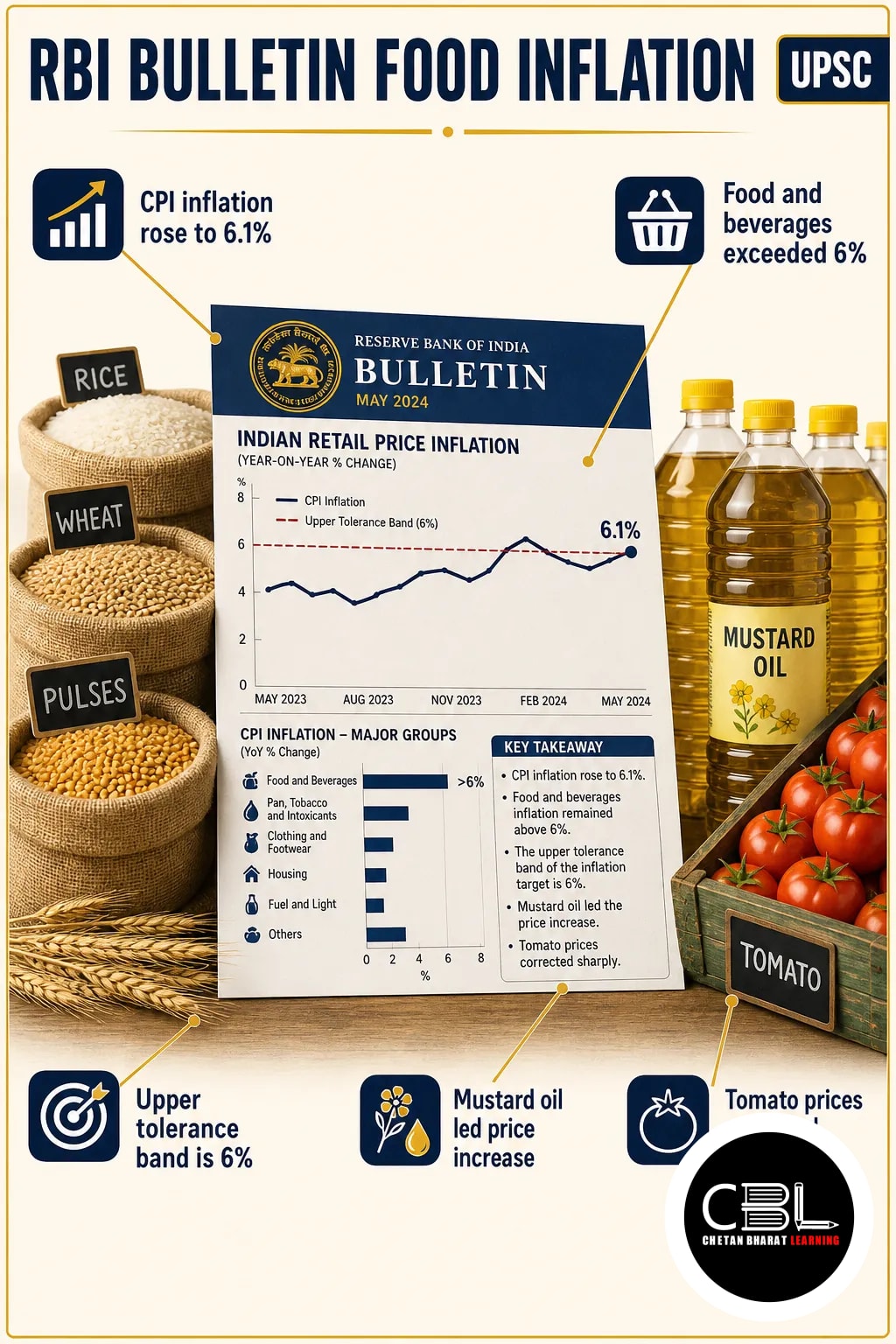

RBI bulletin food inflation figures show continued pressure on food prices in India. The November bulletin also records a rise in overall retail inflation, an important topic for economy current affairs.
Quick answer: The RBI bulletin food inflation update says broad-based food price pressure continued through 19 November 2026. India’s Consumer Price Index inflation rose to 6.1% year-on-year in October from 5.5% in September. Food and beverages inflation exceeded 6% in both rural and urban areas.
What does the RBI bulletin say about inflation?
The Reserve Bank of India (RBI) bulletin identifies food and beverages as the main driver of October’s inflation increase. The Consumer Price Index (CPI) measures changes in retail prices paid by consumers.
October’s 6.1% year-on-year rate exceeded the 6% upper tolerance level. The rate was last above that level in October 2024. For background, see inflation and economic growth.
Which food prices moved in November?
High-frequency data through 19 November showed increases across major cereals, pulses and edible oils. However, vegetable prices moved in different directions.
| Item | Price movement |
|---|---|
| Cereals and pulses | Prices of all major cereals and pulses picked up |
| Edible oils | Broad-based increase, led by mustard oil |
| Onion and potato | Onion rose moderately; potato picked up |
| Tomato | Prices corrected sharply |
How broad was the October price pressure?
Price pressure extended beyond food: fuel and core inflation also increased. Moreover, 11 of 12 CPI divisions registered month-on-month increases.
Inflation rose in both rural and urban areas. Most states and Union Territories recorded rates between 4% and 6%; however, more recorded rates above 6%. The Indian crude oil basket averaged $95 per barrel during 1–18 November, according to the bulletin.
Why does inflation matter for monetary policy?
Inflation matters because the RBI’s monetary policy framework seeks price stability while keeping growth in mind. Its CPI inflation target is 4%, with a tolerance band of 2% to 6%.
Year-on-year inflation compares prices with the same period a year earlier; month-on-month momentum compares them with the preceding month. Core inflation generally excludes food and fuel, so it helps distinguish underlying price pressures from those components. Also see the context on growth amid global economic risks.
Source: The Hindu Economy, 26 November 2026
- Economic Resilience: India’s Growth Amid Global Risks (27 Aug 2026)
- Inflation and Economic Growth- June 2023 (23 Jun 2023)
Asked in UPSC: Previous Year Questions
- UPSC CSE Mains 2024 (GS Paper III): What causes persistent high food inflation in India? Comment on the effectiveness of RBI monetary policy in controlling it.
- UPSC CSE Prelims 2022 (GS Paper I): Which institution is responsible for maintaining price stability by controlling inflation in India?
UPSC tests both the causes of food inflation and the RBI’s role in price stability.
Punjab PCS and Haryana HCS may test CPI inflation, food price trends and the RBI’s monetary policy role in General Studies. Also distinguish national inflation figures from state-specific rates.
Prelims Practice Corner
Mains Practice Questions
Frequently Asked Questions
What was India’s CPI inflation in October 2026?
It was 6.1% year-on-year. Thus, it exceeded the 6% upper tolerance level.
Which food prices rose according to the November bulletin?
Major cereals, pulses and edible oils rose through 19 November. Meanwhile, tomato prices corrected sharply.
What is India’s CPI inflation target?
The target is 4%, with a tolerance band of 2% to 6%. Therefore, October’s 6.1% reading was above the upper limit.
Related Current Affairs
Preparing for UPSC, PCS or HCS?
Talk to a mentor at Chetan Bharat Learning, Chandigarh. Free guidance on choosing the right exam and building a study plan.
Chat on WhatsAppCall 97793 53345UPSC / IAS / PCS coaching in Chandigarh · Trusted by aspirants across Punjab & Haryana






Leave a Reply
You must be logged in to post a comment.