
Important for:
UPSC, Haryana HCS, Punjab PCS
Prelims: Forex reserves, CAD, RBI, imports
Mains: GS Paper 3 — Indian Economy, Growth & External Sector
Why in News?
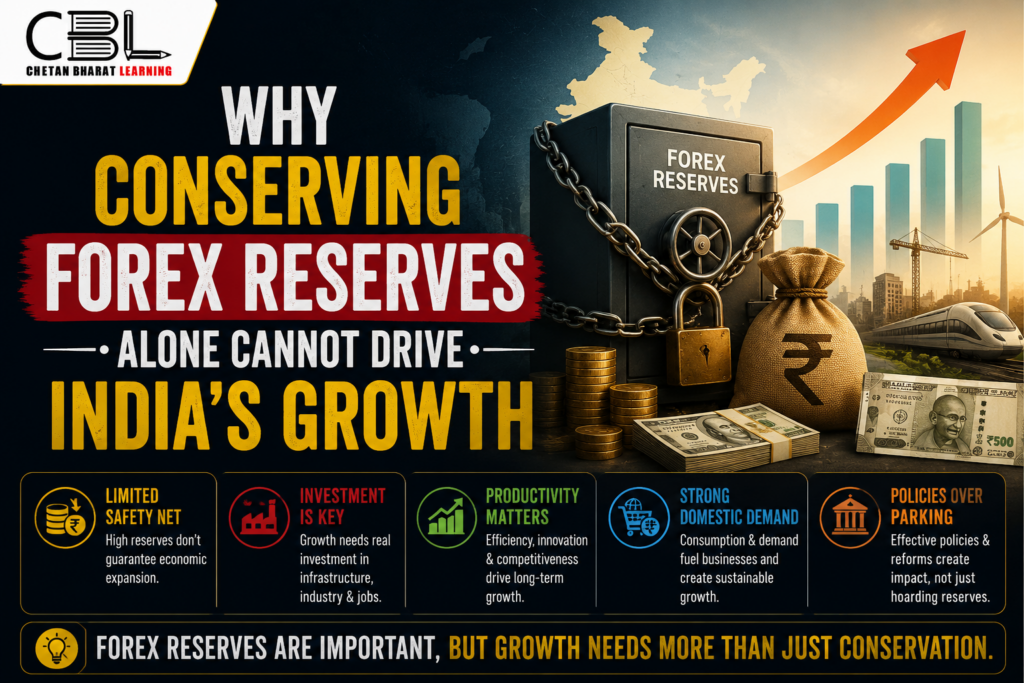
Amid concerns over falling foreign exchange reserves and rising imports, discussions have emerged on whether aggressively cutting imports and conserving forex could hurt India’s long-term economic growth.
Experts argue:
⇢ India needs stronger production and exports, not just reduced consumption.
What Are Forex Reserves?
Forex reserves are:
➤ Foreign currency assets maintained by RBI
They help India:
✔ Pay import bills
✔ Stabilise the rupee
✔ Handle global economic shocks
Why Can Excessive Forex Saving Be Problematic?
1. Reduced Consumption
Cutting imports aggressively may reduce:
✔ Consumer demand
✔ Industrial activity
2. Slower Economic Growth
Industries dependent on imports may face:
→ Production disruptions
3. Impact on Manufacturing
Many sectors require imported:
- Raw materials
- Machinery
- Technology components
What Does India Actually Need?
Experts suggest India should focus on:
1. Expanding Production
Boost:
✔ Manufacturing
✔ Industrial capacity
2. Increasing Exports
Higher exports help earn more foreign exchange sustainably.
3. Improving Productivity
Long-term growth depends on:
→ Efficient production systems
4. Strengthening Domestic Industry
India needs globally competitive industries.
What Is CAD?
CAD (Current Account Deficit) occurs when:
→ Imports exceed exports
High oil and gold imports often increase CAD.
Global Economic Context
Global uncertainty, wars, and crude oil price fluctuations impact:
✔ Forex reserves
✔ Inflation
✔ Trade balance
India-Specific Importance
India remains dependent on imports for:
- Crude oil
- Electronics
- Gold
- Advanced technology
This creates pressure on the external sector.
Key Insight for UPSC
→ Sustainable economic strength comes from:
✔ Production
✔ Exports
✔ Innovation
—not merely from restricting imports.
UPSC Preparation Angle
Important for aspirants preparing through:
UPSC Coaching Chandigarh
IAS Coaching Chandigarh
Useful for:
✅ GS3 Economy
✅ External Sector Topics
✅ Growth vs Stability debates
✅ Essay & Interview preparation
PRELIMS PRACTICE QUESTIONS
Q1. Forex reserves are maintained by:
A. SEBI
B. RBI
C. NITI Aayog
D. Finance Commission
✅ Answer: B
Q2. CAD occurs when:
A. Exports exceed imports
B. Imports exceed exports
C. Inflation rises
D. Tax revenue falls
✅ Answer: B
Q3. Excessive import restrictions may lead to:
A. Higher industrial efficiency immediately
B. Slower production growth
C. Increased exports automatically
D. Trade surplus always
✅ Answer: B
Q4. India imports large quantities of:
A. Crude oil
B. Gold
C. Electronics
D. All of the above
✅ Answer: D
Q5. Long-term economic growth mainly depends on:
A. Restricting trade only
B. Production and productivity
C. Reducing consumption completely
D. Closing markets
✅ Answer: B
CBL Mains Practice Question
“India’s long-term economic stability depends more on productive capacity and export competitiveness than merely conserving forex reserves.” Discuss.
FAQs
1. What are forex reserves?
Foreign currency assets maintained by RBI.
2. Why is India concerned about forex reserves?
Because falling reserves can weaken economic stability.
3. What is CAD?
Current Account Deficit — when imports exceed exports.
4. Why can excessive import cuts hurt growth?
Industries rely on imported raw materials and machinery.
5. Which GS paper covers this topic?
GS Paper 3.
Related Current Affairs
Preparing for UPSC, PCS or HCS?
Talk to a mentor at Chetan Bharat Learning, Chandigarh. Free guidance on choosing the right exam and building a study plan.
Chat on WhatsAppCall 97793 53345UPSC / IAS / PCS coaching in Chandigarh · Trusted by aspirants across Punjab & Haryana
Leave a Reply
You must be logged in to post a comment.