
Rajasthan panchayat elections drew heavy polling in the second phase on 30 October 2026. The vote offers a current example for revising local government and constitutional provisions.
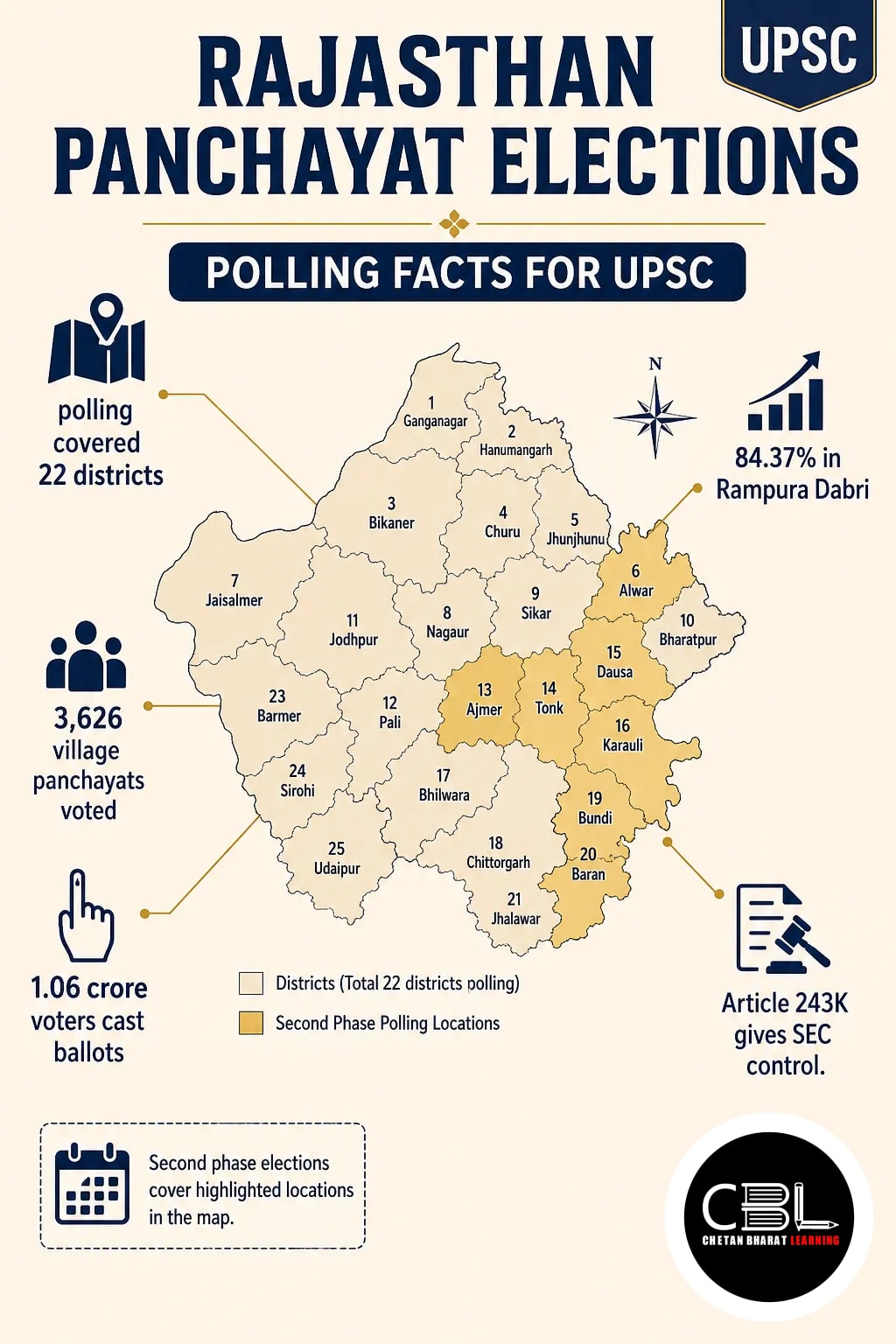
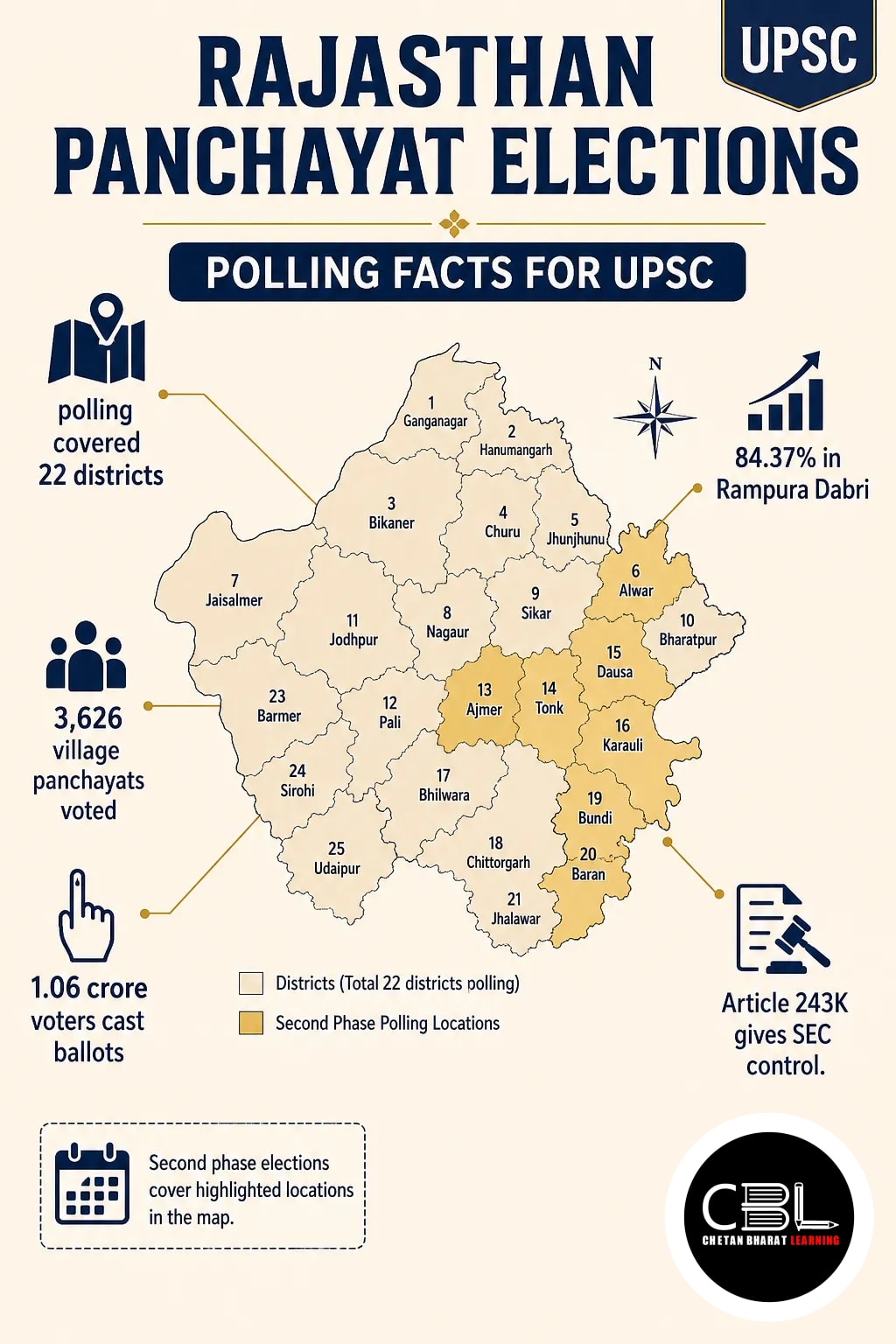
Quick answer: The second phase of Rajasthan panchayat elections covered 3,626 village panchayats across 22 districts on 30 October 2026. About 1.06 crore voters cast ballots for Sarpanch and Ward Panch posts. Rampura Dabri in Jaipur district recorded the highest reported turnout, at 84.37%. Meanwhile, some villages boycotted polling over delimitation or panchayat changes.
What happened in the second phase?
Voters chose Sarpanches and Ward Panches across 22 districts in the second phase of Rajasthan panchayat elections. Before polling, 45 Sarpanches had already been elected unopposed. Counting began immediately after voting ended, and results were expected by late night.
| Indicator | Reported figure |
|---|---|
| Village panchayats that voted | 3,626 |
| Voters who cast ballots | 1.06 crore |
| Sarpanches elected unopposed earlier | 45 |
| Highest reported local turnout | 84.37% in Rampura Dabri, Jaipur district |
The 84.37% figure refers to Rampura Dabri, not the overall turnout. Meanwhile, voters queued despite light rain in places including Kotputli-Behror and Alwar’s Malakhera area.
Where were polling boycotts and clashes reported?
Some villages boycotted voting over delimitation or changes to their panchayats, while police intervened after two clashes.
- Delimitation protest: Karanpur village in Dausa’s Mahwa area boycotted polling over the delimitation exercise.
- Panchayat changes: Voters in Pyara Ka Nagla in Dausa and Bawatra and Dayalpur in Jalore stayed away in protest.
- Clashes: Rival groups clashed over allegations of bogus voting at Majra Aheer in Kotputli-Behror and Sangariya Phata in Jodhpur. Police brought both situations under control.
For a related example of election administration, see security arrangements for Andhra local polls.
Which constitutional provisions govern panchayat elections?
Part IX of the Constitution provides the framework for panchayats and their elections. The 73rd Constitutional Amendment gave constitutional status to Panchayati Raj institutions.
Under Article 243K, the State Election Commission supervises, directs and controls panchayat electoral rolls and elections. In contrast, the Election Commission of India has responsibility for parliamentary and state legislative elections under Article 324.
Article 243B provides for panchayats at village, intermediate and district levels, subject to an exception for the intermediate level in smaller states. Moreover, Article 243E generally provides a five-year term for each panchayat. Article 243D provides for reservation of seats, including for women.
Why does the polling matter for UPSC?
The Rajasthan panchayat elections connect grassroots representation with the constitutional rules for local elections. The reported boycotts also show why candidates should distinguish delimitation issues from election conduct.
For comparison, revise the framework for Andhra local body polls. Rajasthan is also important historically: Panchayati Raj was inaugurated at Nagaur in 1959.
Source: The Hindu, 31 October 2026
Asked in State PCS: Previous Year Questions
- Punjab PCS Prelims 2015 (General Studies): Which state was the first to establish the Panchayati Raj system in India?
The answer is Rajasthan; therefore, revise the history as well as the constitutional framework of Panchayati Raj.
Punjab PCS and Haryana HCS may test panchayat elections alongside the powers of State Election Commissions. Candidates should also revise the constitutional provisions on panchayat tenure and reservation.
Prelims Practice Corner
Mains Practice Questions
Frequently Asked Questions
Where was the highest turnout reported in the Rajasthan panchayat elections?
Rampura Dabri in Jaipur district recorded 84.37%. This was the highest reported local turnout in the second phase, not the overall state turnout.
How many village panchayats voted in the second phase?
A total of 3,626 village panchayats went to the polls. In addition, 45 Sarpanches had already been elected unopposed.
Who conducts panchayat elections in India?
The State Election Commission has responsibility for panchayat elections. Article 243K gives it control over electoral rolls and the conduct of these elections.
Related Current Affairs
Preparing for UPSC, PCS or HCS?
Talk to a mentor at Chetan Bharat Learning, Chandigarh. Free guidance on choosing the right exam and building a study plan.
Chat on WhatsAppCall 97793 53345UPSC / IAS / PCS coaching in Chandigarh · Trusted by aspirants across Punjab & Haryana

 Ananya RanaIAS · AIR 60
 Aditya SharmaIAS · AIR 70
 Ria Kaur SethiIPS · AIR 89
 Aman AloonIRS · AIR 295
 Sumer Singh VirkIRS · AIR 335
 Shivani PanchalIAS

Leave a Reply
You must be logged in to post a comment.