
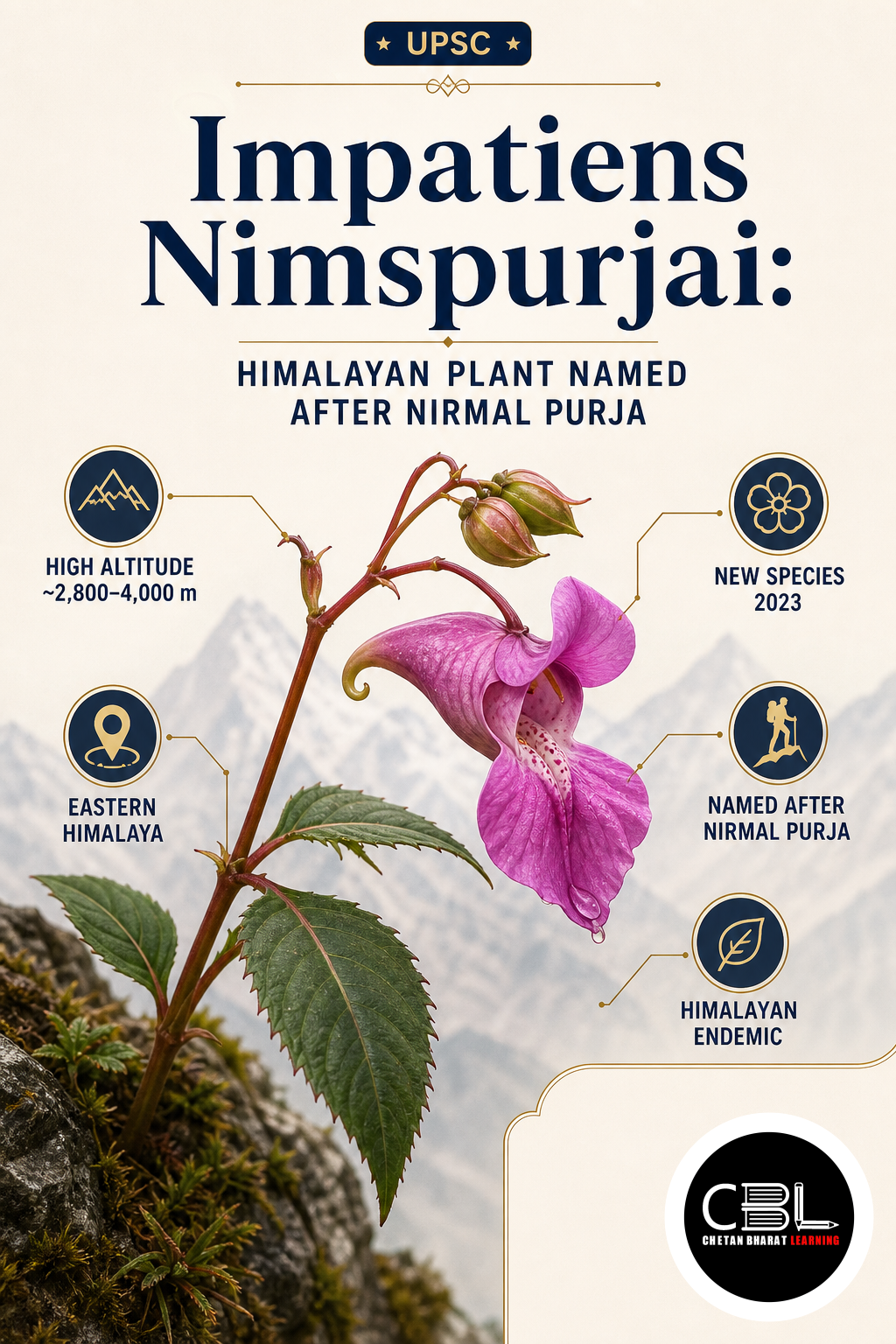
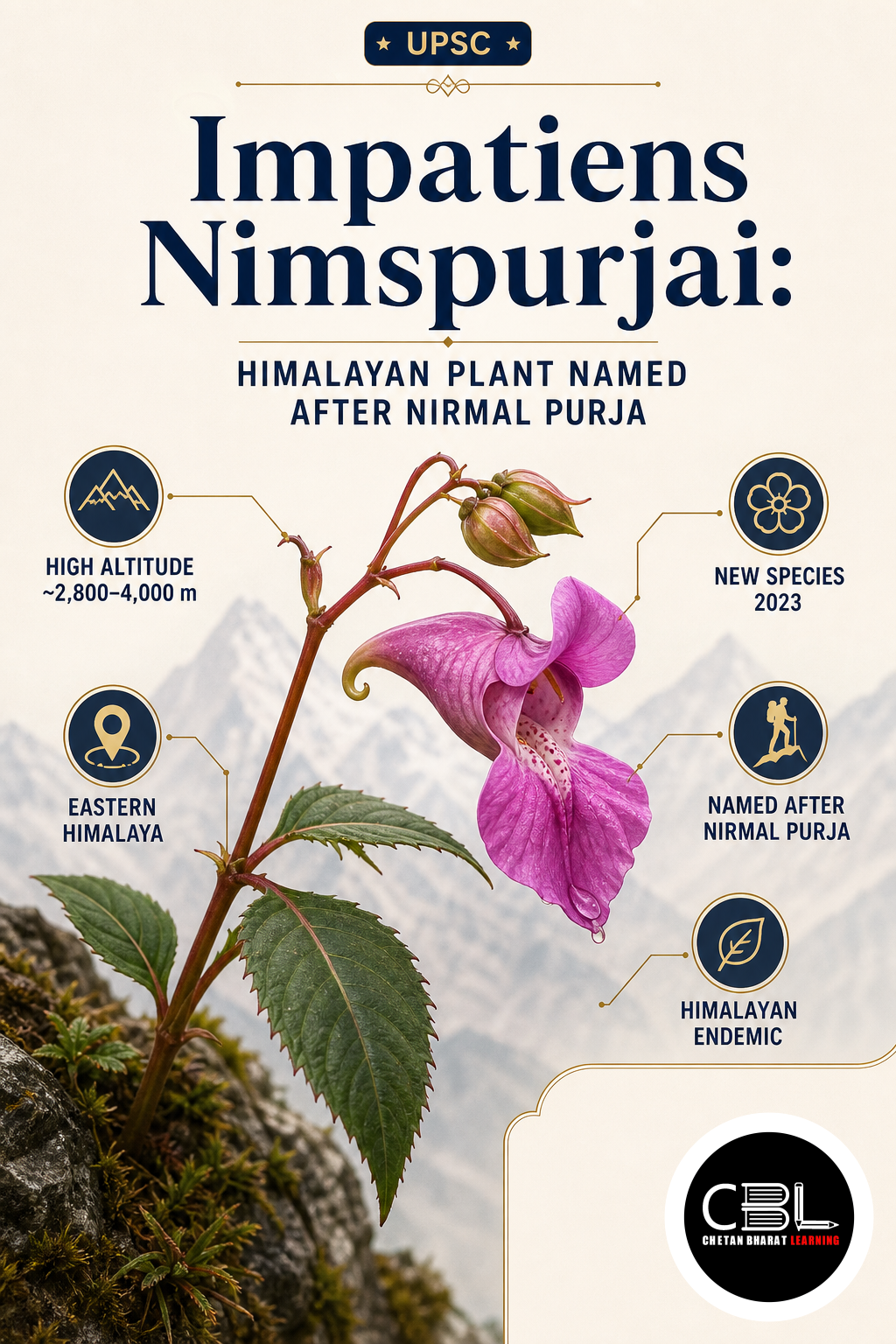
Impatiens Nimspurjai: Himalayan Plant Named After Nirmal Purja
Impatiens Nimspurjai is a newly discovered Himalayan plant species found in Myagdi, Nepal, and named in honour of legendary Nepali mountaineer Nirmal Purja. The plant belongs to the Balsaminaceae family, which includes balsams and touch-me-not plants, and is found in temperate forests and forest margins. For more environment updates, explore the environment archive.
| Important for Prelims | Environment & Biodiversity |
|---|---|
| Important for Mains | GS Paper 3 (Environment & Biodiversity) |
| Family | Balsaminaceae |
|---|---|
| Location | Myagdi, Nepal |
What is Impatiens Nimspurjai?
Impatiens Nimspurjai is a newly discovered plant species found in the temperate forests of Myagdi, Nepal. It belongs to the Balsaminaceae family, which includes balsams and touch-me-not plants. The species was named in honour of legendary Nepali mountaineer Nirmal Purja, known for his record-breaking climbs in the Himalayas. The plant is found in forest margins and temperate forest habitats.
The discovery highlights the rich biodiversity of the Himalayan region and the importance of continued exploration and documentation of plant species. The Balsaminaceae family is known for its showy flowers, and this new species adds to the diversity of the genus Impatiens.
Why is Impatiens Nimspurjai in News?
Impatiens Nimspurjai is in the news because it is a new species discovery in the Himalayas, named after the famous mountaineer Nirmal Purja. The discovery underscores the biodiversity of Nepal’s forests and the importance of taxonomic research. The naming honours Purja’s contributions to mountaineering and his global recognition.
The discovery also draws attention to the need for conservation of Himalayan ecosystems, which are under threat from climate change and human activities. For more details, refer to this PIB release.
Key Features of Impatiens Nimspurjai
- New Species: Recently discovered in the Himalayas.
- Family: Balsaminaceae (balsams and touch-me-nots).
- Location: Myagdi, Nepal, in temperate forests.
- Named After: Nirmal Purja, Nepali mountaineer.
- Conservation: Highlights the need for Himalayan biodiversity conservation.
Challenges in Impatiens Nimspurjai
- Habitat Loss: Deforestation and land-use change threaten its habitat.
- Climate Change: Himalayan ecosystems are vulnerable to warming.
- Limited Knowledge: As a new species, its ecology and conservation needs are not fully understood.
- Invasive Species: Potential competition from invasive plants.
- Research Gaps: More surveys needed to assess its distribution and population. For more on biodiversity conservation, visit the biodiversity section.
Way Forward for Impatiens Nimspurjai
To protect Impatiens Nimspurjai, habitat conservation in Nepal’s temperate forests is essential. Conducting further surveys to understand its distribution and population status can inform conservation planning. Protecting forest margins and maintaining ecological connectivity can support the species.
Raising awareness about the importance of Himalayan biodiversity and involving local communities in conservation can be effective. For international best practices, refer to the IUCN.
Prelims Practice Corner
Q1. Which plant family does Impatiens Nimspurjai belong to?
- (a) Fabaceae
- (b) Balsaminaceae
- (c) Rosaceae
- (d) Asteraceae
Answer: (b) Balsaminaceae
Q2. In which country was the plant discovered?
- (a) India
- (b) Nepal
- (c) Bhutan
- (d) China
Answer: (b) Nepal
Q3. After whom is the plant named?
- (a) Tenzing Norgay
- (b) Nirmal Purja
- (c) Edmund Hillary
- (d) Reinhold Messner
Answer: (b) Nirmal Purja
Q4. What type of habitat does the plant occupy?
- (a) Tropical rainforest
- (b) Temperate forests and forest margins
- (c) Alpine meadows
- (d) Deserts
Answer: (b) Temperate forests and forest margins
Q5. What is a key threat to this new species?
- (a) Overcollection
- (b) Habitat loss and climate change
- (c) Predation
- (d) Disease
Answer: (b) Habitat loss and climate change
Mains Practice Questions
Q1. Discuss the importance of taxonomic discoveries like Impatiens Nimspurjai for biodiversity conservation in the Himalayas. (250 words, 15 marks)
Answer Structure:
- Intro: Introduce the new species discovery.
- Body: Discuss the significance for biodiversity knowledge, the need for habitat conservation, and the threats from climate change and human activities.
- Conclusion: Emphasize the need for continued exploration and conservation.
Q2. What is the significance of naming a new species after a notable individual? (150 words, 10 marks)
Answer Structure:
- Intro: Explain the practice of naming species.
- Body: Discuss how naming after individuals honours their contributions, raises awareness about biodiversity, and can promote conservation efforts.
- Conclusion: Conclude that such naming also helps in building a connection between people and nature.
FAQs on Impatiens Nimspurjai
What is Impatiens Nimspurjai?
A newly discovered Himalayan plant species in Nepal, named after mountaineer Nirmal Purja.
Where was it discovered?
In Myagdi, Nepal, in temperate forests.
What family does it belong to?
The Balsaminaceae family.
Related Current Affairs
Preparing for UPSC, PCS or HCS?
Talk to a mentor at Chetan Bharat Learning, Chandigarh. Free guidance on choosing the right exam and building a study plan.
Chat on WhatsAppCall 97793 53345UPSC / IAS / PCS coaching in Chandigarh · Trusted by aspirants across Punjab & Haryana
Leave a Reply
You must be logged in to post a comment.