
UPSC Syllabus Mapping
| GS Paper | GS-III |
|---|---|
| Subject | Indian Economy, Energy Security, Environment and Agriculture |
| Syllabus Pointers | UPSC Current Affairs Hub analysis guidelines |
Introduction
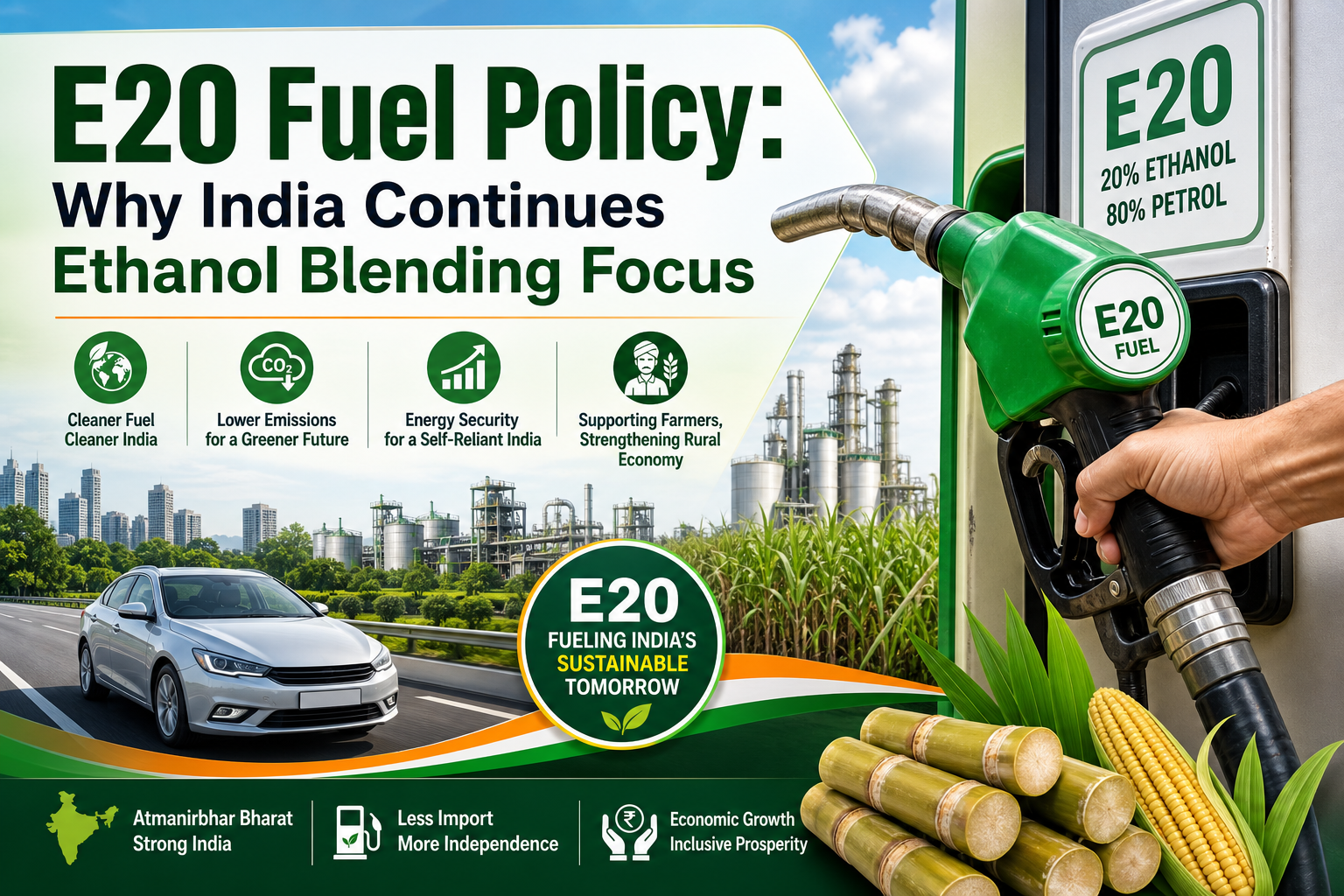
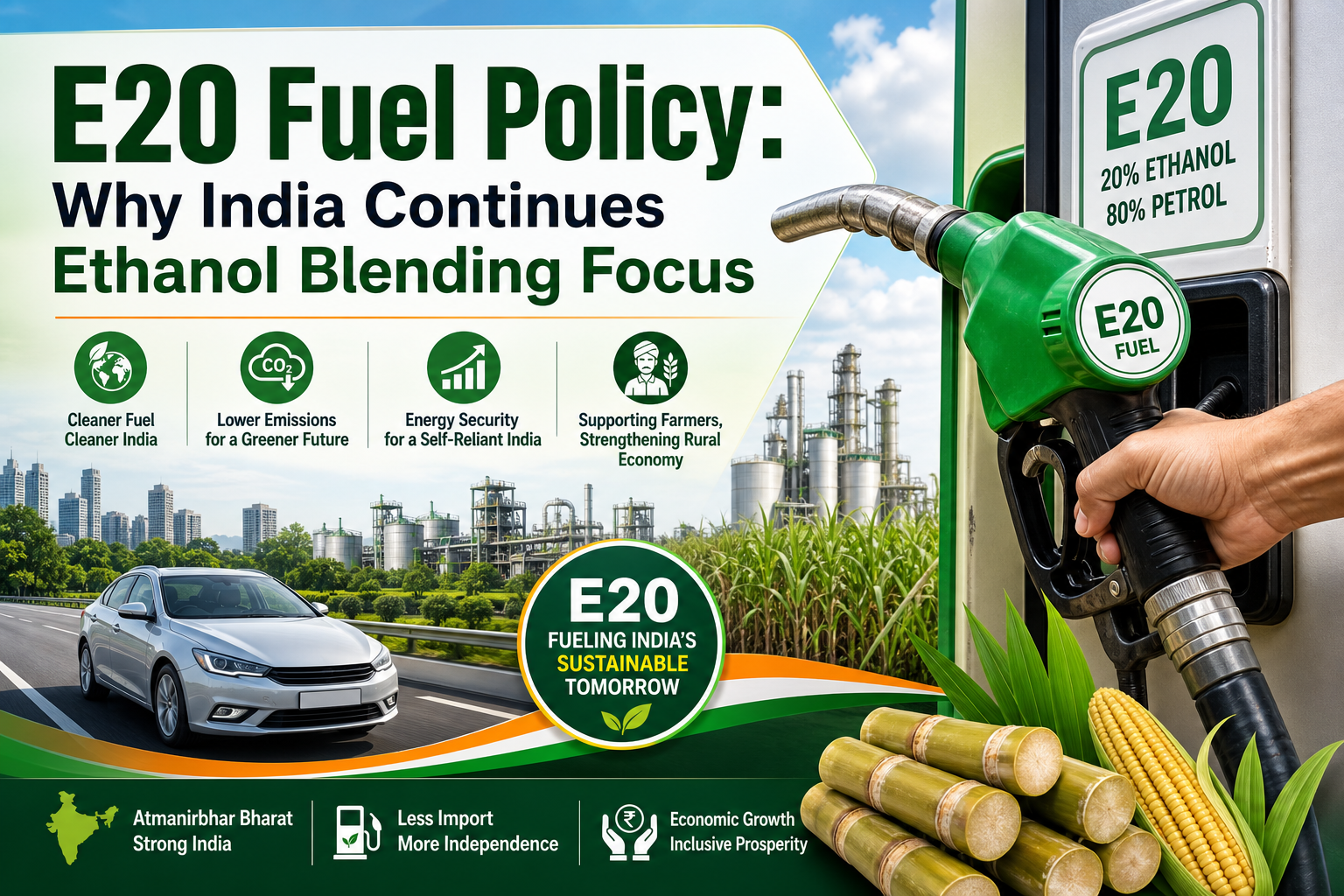
Recent updates regarding E20 Fuel Policy indicate that the Government has decided to continue nationwide implementation of E20 petrol and has clarified that a return to pure petrol or E10 is not currently feasible. The decision is based on considerations of energy security, lower crude oil imports, investments already made in ethanol infrastructure and long-term support for India’s biofuel ecosystem.
Key Dimensions of E20 Fuel Policy
E20 refers to petrol blended with 20% ethanol and 80% petrol. It is part of India’s Ethanol Blended Petrol (EBP) Programme aimed at gradually increasing ethanol blending from earlier levels such as E5, E10, E12 and E15 to E20.
Ethanol is a renewable biofuel produced mainly from sugarcane, maize and other approved agricultural feedstocks. Blending ethanol with petrol reduces dependence on imported fossil fuels while supporting cleaner combustion.
Why is India Continuing with E20?
- Energy Security: India imports a large share of its crude oil requirement. Higher ethanol blending reduces exposure to global oil price volatility and strengthens domestic energy resilience.
- Environmental Benefits: Ethanol burns more cleanly than conventional petrol and contributes to lower tailpipe emissions, supporting India’s climate commitments.
- Farmer Welfare: Increased demand for ethanol creates additional markets for sugarcane, maize and other approved feedstocks, generating supplementary income for farmers.
- Infrastructure Investments: Significant investments have already been made by oil marketing companies, ethanol producers and financial institutions. Reversing the policy would reduce the economic viability of these investments.
Concerns and Government’s Response
Some consumers have expressed concerns regarding reduced mileage and compatibility with older vehicles. The Government has stated that extensive testing and consultations were conducted before nationwide implementation and has indicated that widespread warranty-related issues have not emerged.
The Government has also indicated that future decisions on moving towards higher blending levels, such as E25, will depend on technological readiness, public feedback and periodic policy review.
For broader understanding of ethanol fuel, refer to global developmental tracking frameworks.
Way Forward
India should diversify ethanol feedstocks, encourage second-generation biofuels from agricultural residues, improve consumer awareness and continue investing in flex-fuel vehicle technologies. Biofuels should complement electric mobility and other clean energy pathways to create a balanced and sustainable transport ecosystem.
Prelims Practice Corner
Question 1
E20 fuel consists of:
- (a) 20% biodiesel and 80% petrol
- (b) 20% ethanol and 80% petrol
- (c) 20% methanol and 80% petrol
- (d) 100% ethanol
Answer: (b) E20 denotes petrol blended with 20% ethanol and 80% petrol.
Question 2
Which of the following is NOT a major objective of India’s ethanol blending programme?
- (a) Reduce crude oil imports
- (b) Promote cleaner fuels
- (c) Increase dependence on imported petroleum
- (d) Support farmers’ income
Answer: (c) The ethanol blending programme aims to reduce dependence on imported petroleum, not increase it.
Mains Practice Question
“India’s E20 Fuel Policy reflects the need to balance energy security, environmental sustainability, farmer welfare and consumer interests.” Examine. (150 Words, 10 Marks)
FAQs
Why has the Government decided to retain E20?
The decision is based on long-term energy security, environmental benefits, support for farmers and the substantial investments already made in ethanol production and fuel distribution infrastructure.
Related Current Affairs
Preparing for UPSC, PCS or HCS?
Talk to a mentor at Chetan Bharat Learning, Chandigarh. Free guidance on choosing the right exam and building a study plan.
Chat on WhatsAppCall 97793 53345UPSC / IAS / PCS coaching in Chandigarh · Trusted by aspirants across Punjab & Haryana
Leave a Reply
You must be logged in to post a comment.