
UPSC Syllabus Mapping
GS Paper: GS-II & GS-III
Subject: International Relations, Energy Security & Economy
Syllabus Pointers: West Asia, Maritime Security, Energy Security, External Sector, Strategic Chokepoints.
Why in News
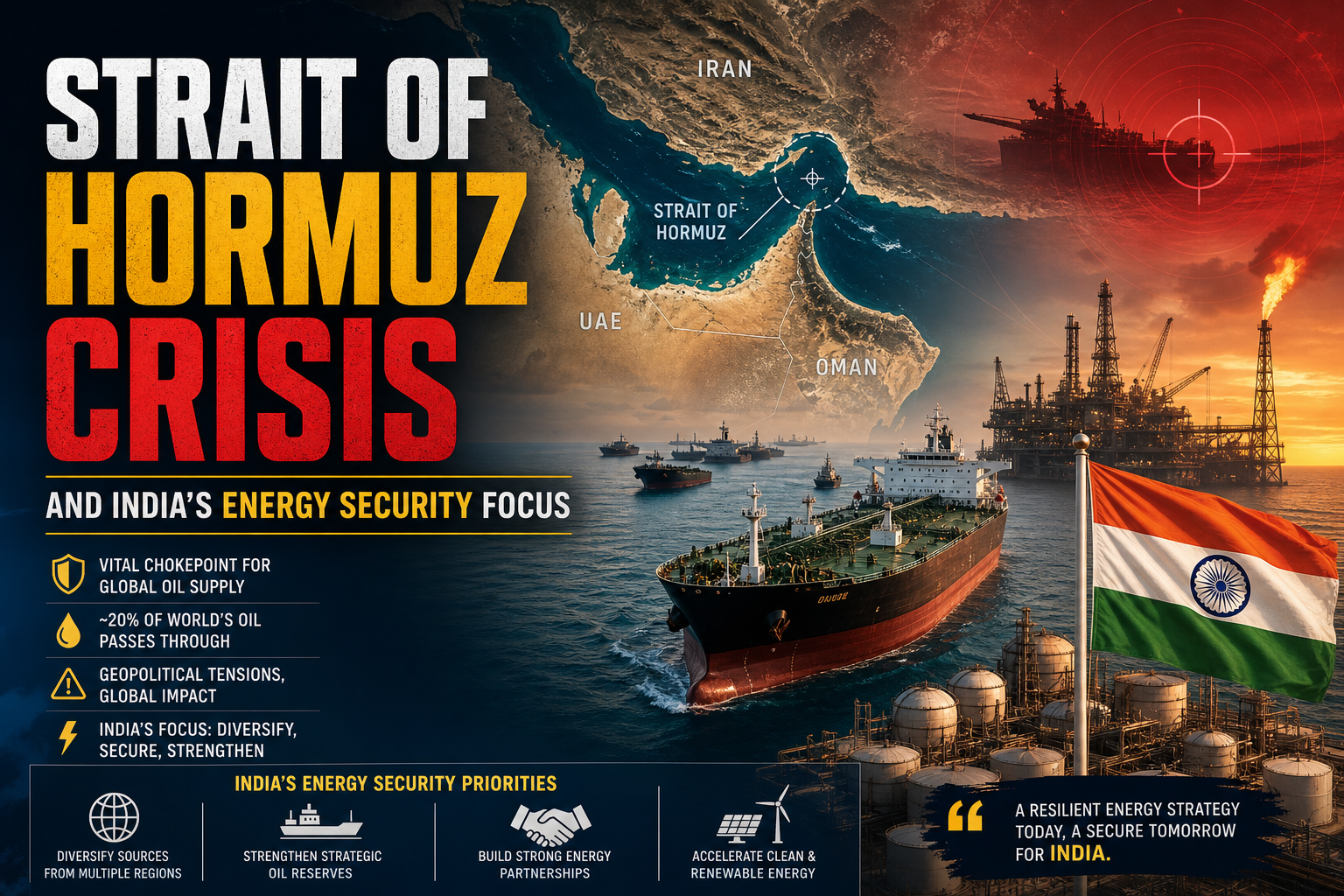
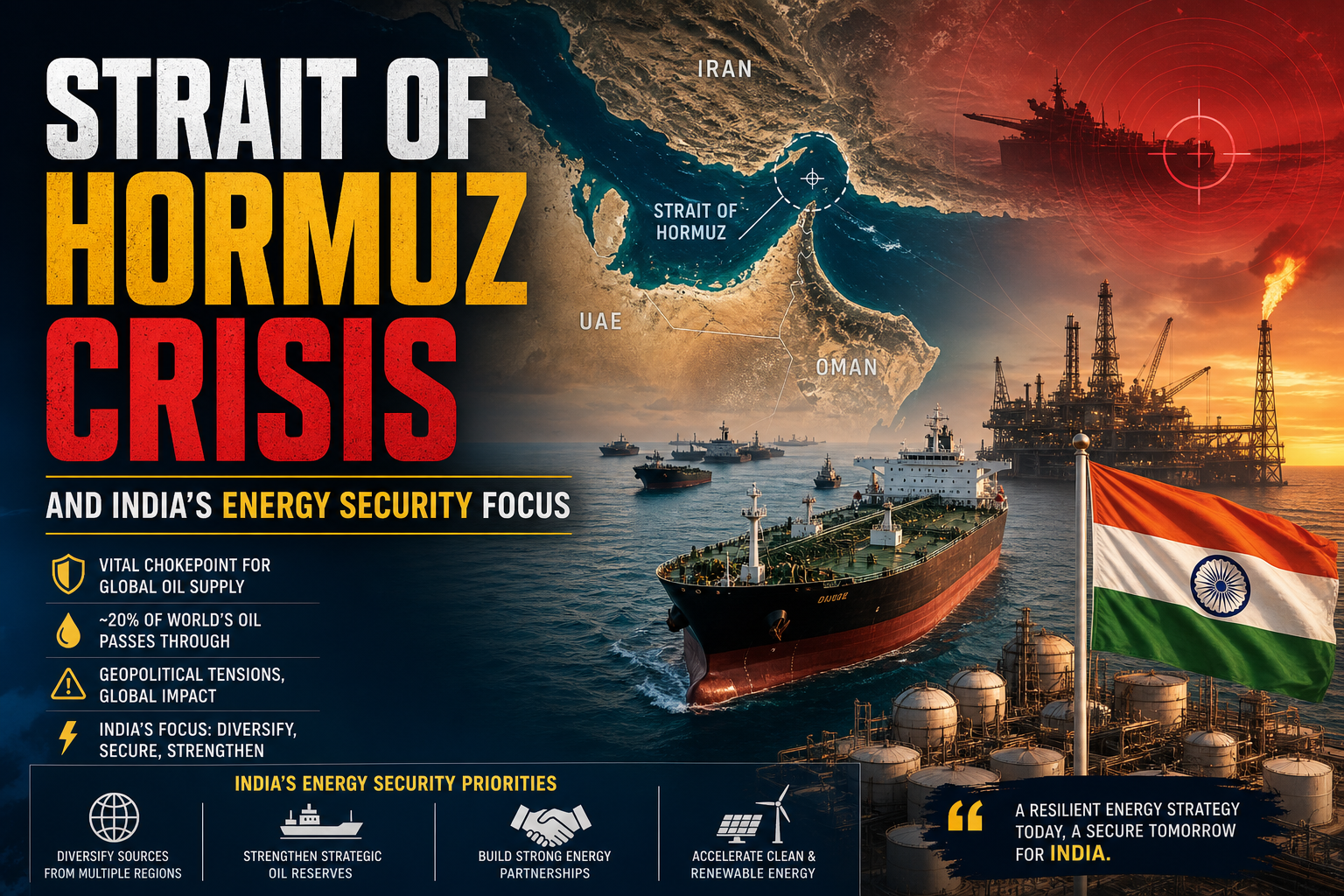
Strait of Hormuz Crisis is in the news following renewed tensions in West Asia that have increased concerns over disruptions to maritime trade, global oil supplies and regional stability. The developments have triggered volatility in crude oil prices and financial markets while prompting India to call for restraint and dialogue.
What is the Strait of Hormuz?
The Strait of Hormuz is a narrow maritime passage connecting the Persian Gulf with the Gulf of Oman and the Arabian Sea. It is one of the world’s most important energy chokepoints, through which a significant share of globally traded crude oil and liquefied natural gas (LNG) passes.
Why is West Asia Important?
- Home to some of the world’s largest oil and gas producers.
- Critical supplier of crude oil and LNG to India.
- Vital for global energy markets and maritime trade.
- Strategically located along major international sea lanes.
Why Does the Strait of Hormuz Matter to India?
- A substantial share of India’s crude oil and LNG imports originates from West Asia.
- Disruptions increase import costs and inflationary pressures.
- Higher freight charges and insurance premiums raise overall trade costs.
- Energy price volatility can widen the current account deficit and affect economic growth.
Economic Implications
| Potential Impact | Likely Outcome |
|---|---|
| Rise in crude oil prices | Higher fuel and transportation costs. |
| Shipping disruptions | Increased logistics expenses and delivery delays. |
| Inflation | Higher prices for goods and services. |
| Current Account Deficit | Greater pressure on external balances. |
| Financial Markets | Increased volatility in equity and currency markets. |
UPSC Significance
- Highlights the importance of maritime chokepoints in global geopolitics.
- Links international conflicts with India’s energy security.
- Demonstrates the relationship between oil prices, inflation and macroeconomic stability.
- Illustrates India’s policy of strategic autonomy and balanced diplomacy in West Asia.
Static Linkages
- India’s Energy Security Strategy.
- Current Account Deficit (CAD).
- Strategic Petroleum Reserves.
- SAGAR (Security and Growth for All in the Region).
- Blue Economy and Maritime Security.
Challenges
- Escalating geopolitical tensions affecting global trade.
- Dependence on imported fossil fuels.
- Shipping route disruptions and higher insurance costs.
- Balancing diplomatic relations with multiple West Asian partners.
Way Forward
India should continue diversifying its energy import sources, expand strategic petroleum reserves and accelerate the transition towards renewable energy. Simultaneously, sustained diplomatic engagement, support for freedom of navigation and peaceful resolution of disputes are essential for ensuring long-term energy and maritime security.
Prelims Practice
Q1. The Strait of Hormuz connects:
(a) Red Sea and Mediterranean Sea
(b) Persian Gulf and Gulf of Oman
(c) Arabian Sea and Bay of Bengal
(d) Black Sea and Mediterranean Sea
Answer: (b)
Q2. Which of the following best explains a maritime chokepoint?
(a) A deep-sea port used for naval exercises
(b) A narrow sea passage through which significant global maritime trade passes
(c) An offshore oil platform
(d) An Exclusive Economic Zone (EEZ)
Answer: (b)
Mains Practice Question
“Geopolitical instability in West Asia has direct implications for India’s energy security and macroeconomic stability.” Discuss with special reference to the Strait of Hormuz. (150 Words, 10 Marks)
Quick Revision
| Aspect | Details |
|---|---|
| Topic | Strait of Hormuz Crisis |
| GS Paper | GS-II & GS-III |
| Core Theme | Energy Security & Maritime Geopolitics |
| Key Concepts | Chokepoint, Current Account Deficit, Oil Prices, Strategic Autonomy |
| Related Regions | Persian Gulf, Gulf of Oman, West Asia |
Related Current Affairs
Preparing for UPSC, PCS or HCS?
Talk to a mentor at Chetan Bharat Learning, Chandigarh. Free guidance on choosing the right exam and building a study plan.
Chat on WhatsAppCall 97793 53345UPSC / IAS / PCS coaching in Chandigarh · Trusted by aspirants across Punjab & Haryana
Leave a Reply
You must be logged in to post a comment.