
UPSC Mapping
| Exam | Topics |
|---|---|
| Prelims | International Relations & Energy |
| Mains | GS Paper 2 (International Relations) & GS Paper 3 (Energy Security) |
Quick Facts
- Key Chokepoint: Strait of Hormuz
- Iran’s Response: ‘Economic terrorism’
What are US Sanctions Iran?
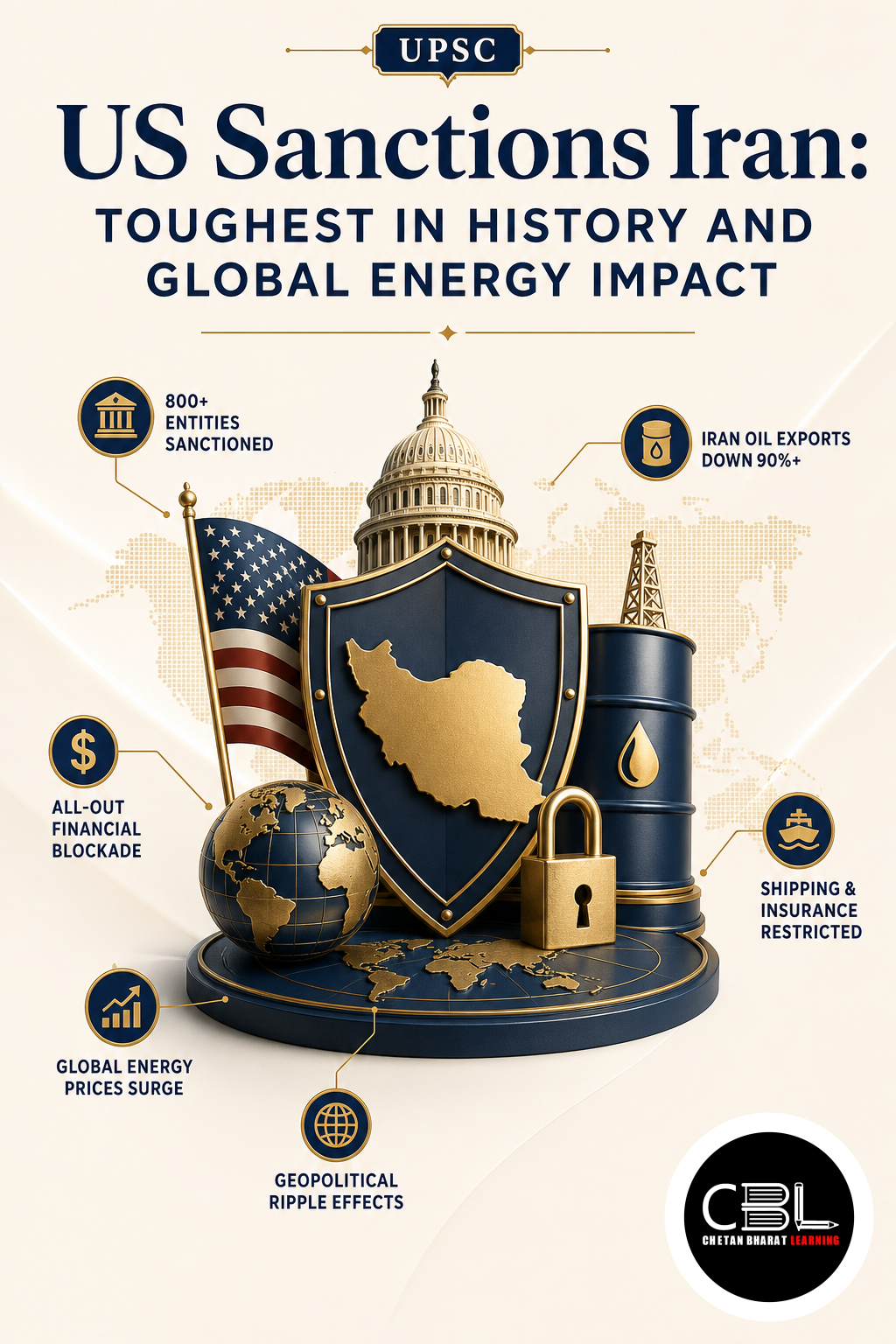
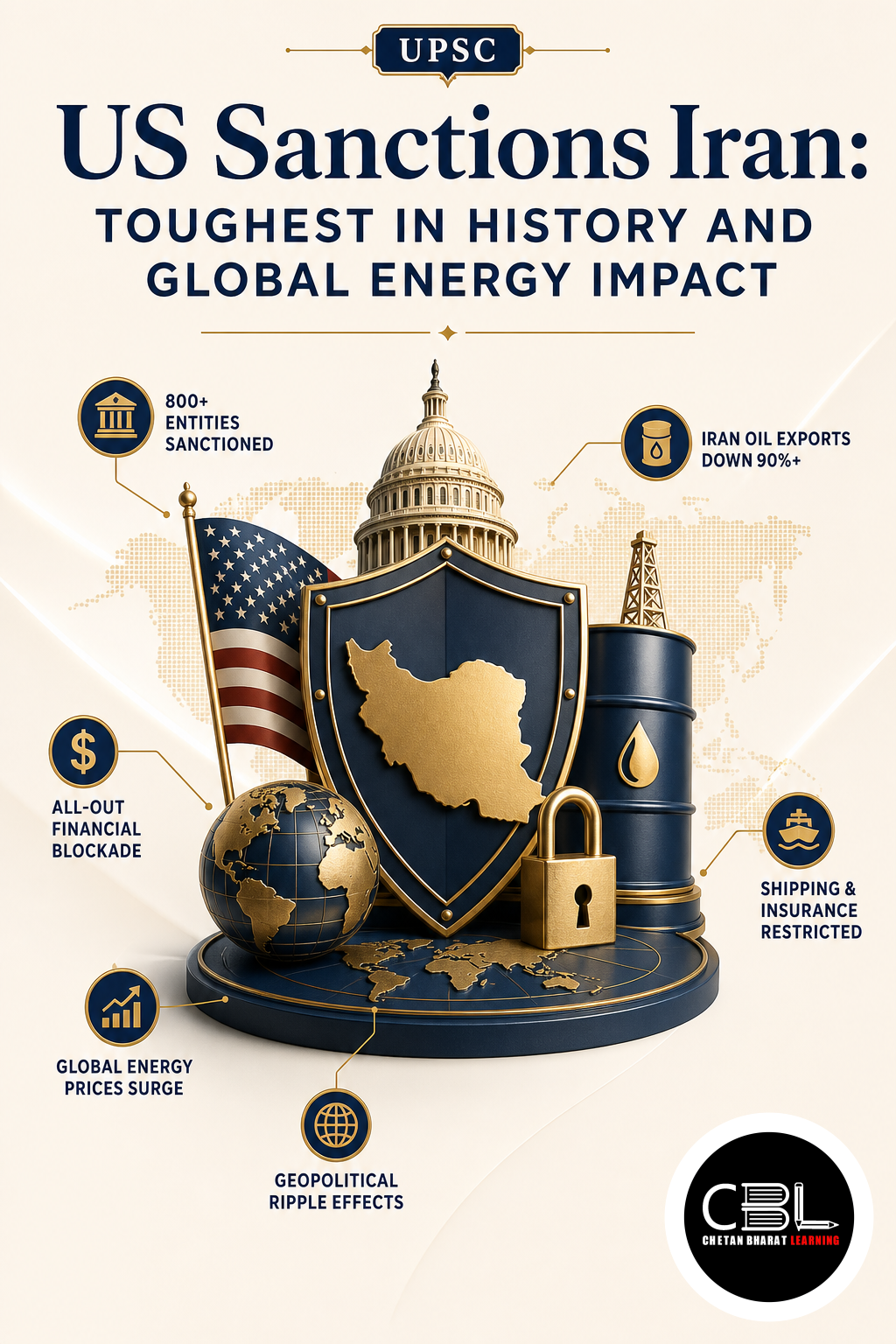
US Sanctions Iran are a series of economic and trade restrictions imposed by the United States against the Islamic Republic of Iran. The latest round announced by Treasury Secretary Scott Bessent is described as ‘the toughest sanctions in history’, aimed at collapsing the Iranian regime. The sanctions also threaten third-country entities and governments that provide any ‘life-line’ to Iran.
The sanctions are part of the broader US–Iran confrontation over the Strait of Hormuz, a critical energy chokepoint. Iran has called the sanctions ‘economic terrorism’ and ‘crimes against humanity’. The US and Iran have twice announced ceasefire deals, but both have collapsed over control of the Strait.
Why are US Sanctions Iran in News?
US Sanctions Iran are in the news because of the unprecedented severity of the new measures and the threat of secondary sanctions against other countries. President Trump warned that any country providing a life-line to Iran would face ‘TREMENDOUS Economic Consequences’.
The sanctions have heightened uncertainty around the Strait of Hormuz, through which a significant share of global oil trade passes. Iran has been negotiating an agreement with Oman on managing the strait, but Trump has threatened to bomb Oman if it ‘gets in the way’. For more details, refer to the PIB release.
Key Features of US Sanctions Iran
- Toughest in History: Aimed at collapsing the Iranian regime.
- Secondary Sanctions: Threaten countries and entities that provide any support to Iran.
- Hormuz Context: Sanctions are linked to the conflict over the Strait of Hormuz.
- Iran’s Response: Condemned as ‘economic terrorism’ and ‘crimes against humanity’.
- Global Impact: Rising oil prices, shipping uncertainty, and inflation risks.
Challenges in US Sanctions Iran
- Geopolitical Escalation: Sanctions could escalate into a wider conflict.
- Energy Prices: Disruption fears drive up oil prices, hitting import-dependent countries like India.
- Supply Chain Risks: Shipping disruptions and insurance costs rise.
- Diplomatic Tensions: US threats against Oman and other countries strain alliances.
- Humanitarian Impact: Sanctions disproportionately affect ordinary Iranians.
Way Forward for US Sanctions Iran
To mitigate the impact of US Sanctions Iran, India should diversify its oil imports, expand strategic petroleum reserves, and accelerate the transition to renewable energy. Diplomatic engagement with all stakeholders—the US, Iran, Gulf states, and Oman—is essential to protect India’s energy interests.
Strengthening maritime security cooperation with regional partners and international navies can reduce shipping risks. India’s strategic autonomy requires balancing relations with the US, Iran, and Gulf states while safeguarding its energy security.
Prelims Practice Corner
Q1. What is the Strait of Hormuz?
- (a) A strait between India and Sri Lanka
- (b) A chokepoint between Iran and Oman/UAE
- (c) A strait between Europe and Africa
- (d) A canal in Egypt
Answer: (b) The Strait of Hormuz is between Iran and Oman/UAE.
Q2. What percentage of global oil passes through the Strait of Hormuz?
- (a) About 10%
- (b) About 20%
- (c) About 30%
- (d) About 50%
Answer: (c) About 30% of global oil passes through the Strait of Hormuz.
Q3. How has Iran responded to the US sanctions?
- (a) Agreed to all demands
- (b) Called it ‘economic terrorism’
- (c) Reduced oil production
- (d) Sought US help
Answer: (b) Iran called the sanctions ‘economic terrorism’.
Q4. Which country is Iran negotiating with to manage the Strait?
- (a) UAE
- (b) Saudi Arabia
- (c) Oman
- (d) Qatar
Answer: (c) Iran is negotiating with Oman.
Q5. What is secondary sanctions?
- (a) Sanctions on a country’s own citizens
- (b) Sanctions on third-party entities dealing with the sanctioned country
- (c) Sanctions on non-oil trade
- (d) Sanctions on financial institutions only
Answer: (b) Secondary sanctions target third parties dealing with Iran.
Mains Practice Questions
Q1. Analyse the implications of the escalating US-Iran conflict and the threat of secondary sanctions for India’s energy security and foreign policy. (250 words, 15 marks)
Answer Structure:
- Intro: Introduce the US sanctions and the Strait of Hormuz context.
- Body: Discuss the impact on global oil prices, India’s import bill, and shipping risks. Analyse India’s strategic options: diversification, SPRs, diplomatic balancing, and energy transition.
- Conclusion: Emphasise the need for a multi-pronged strategy to ensure energy security.
Q2. What is the Strait of Hormuz, and why is it important for global energy security? (150 words, 10 marks)
Answer Structure:
- Intro: Define the Strait of Hormuz as a key maritime chokepoint.
- Body: Explain its location between Iran and Oman, connecting the Persian Gulf to the Gulf of Oman. Discuss its importance for oil and LNG exports.
- Conclusion: Conclude that its security is vital for the global economy.
FAQs on US Sanctions Iran
What are the new US sanctions on Iran?
The US announced the ‘toughest sanctions in history’ on Iran, targeting the regime and threatening third-country entities.
How does this affect India?
It raises oil prices, increases shipping costs, and creates uncertainty in the Persian Gulf, impacting India’s energy security.
What is Iran’s response?
Iran has condemned the sanctions as ‘economic terrorism’ and ‘crimes against humanity’.
Related Current Affairs
Preparing for UPSC, PCS or HCS?
Talk to a mentor at Chetan Bharat Learning, Chandigarh. Free guidance on choosing the right exam and building a study plan.
Chat on WhatsAppCall 97793 53345UPSC / IAS / PCS coaching in Chandigarh · Trusted by aspirants across Punjab & Haryana
Leave a Reply
You must be logged in to post a comment.