
UPSC Mapping
| Prelims | Polity |
|---|---|
| Mains | GS Paper 2 |
| Committee | Kovind Panel |
|---|---|
| Year | 2024 |
| Type | Constitutional Reform |
| Authority | Law Ministry and ECI |
Article
The One Nation One Election proposal represents a major constitutional debate in India today. This ambitious initiative targets massive administrative efficiency across the democratic cycle. You can track more constitutional updates in our daily current affairs archive. Governance stability remains crucial for executing long-term development policies without frequent disruptions. The policy framework encourages extensive deliberations among political stakeholders to build robust democratic consensus.
What is One Nation One Election?
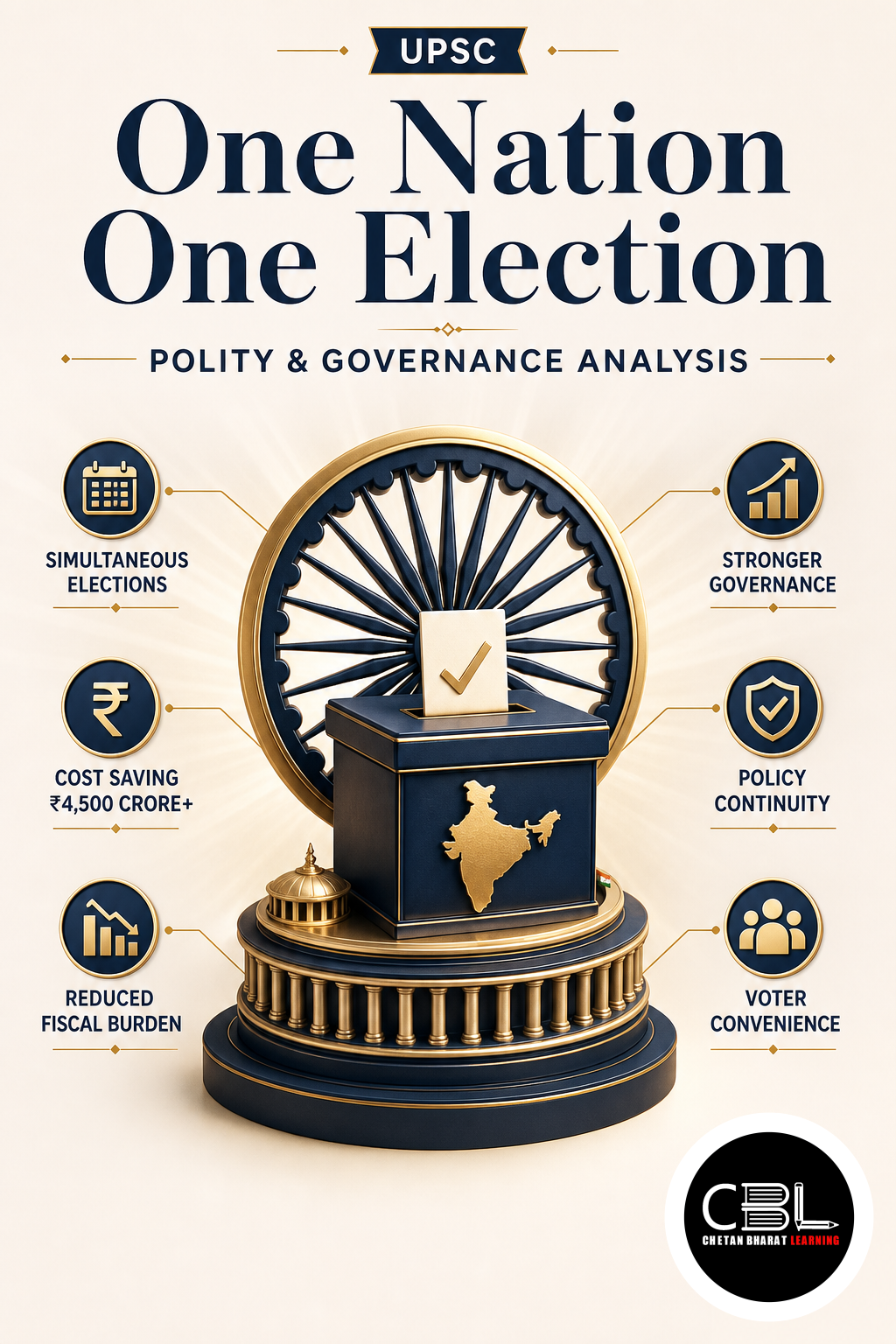
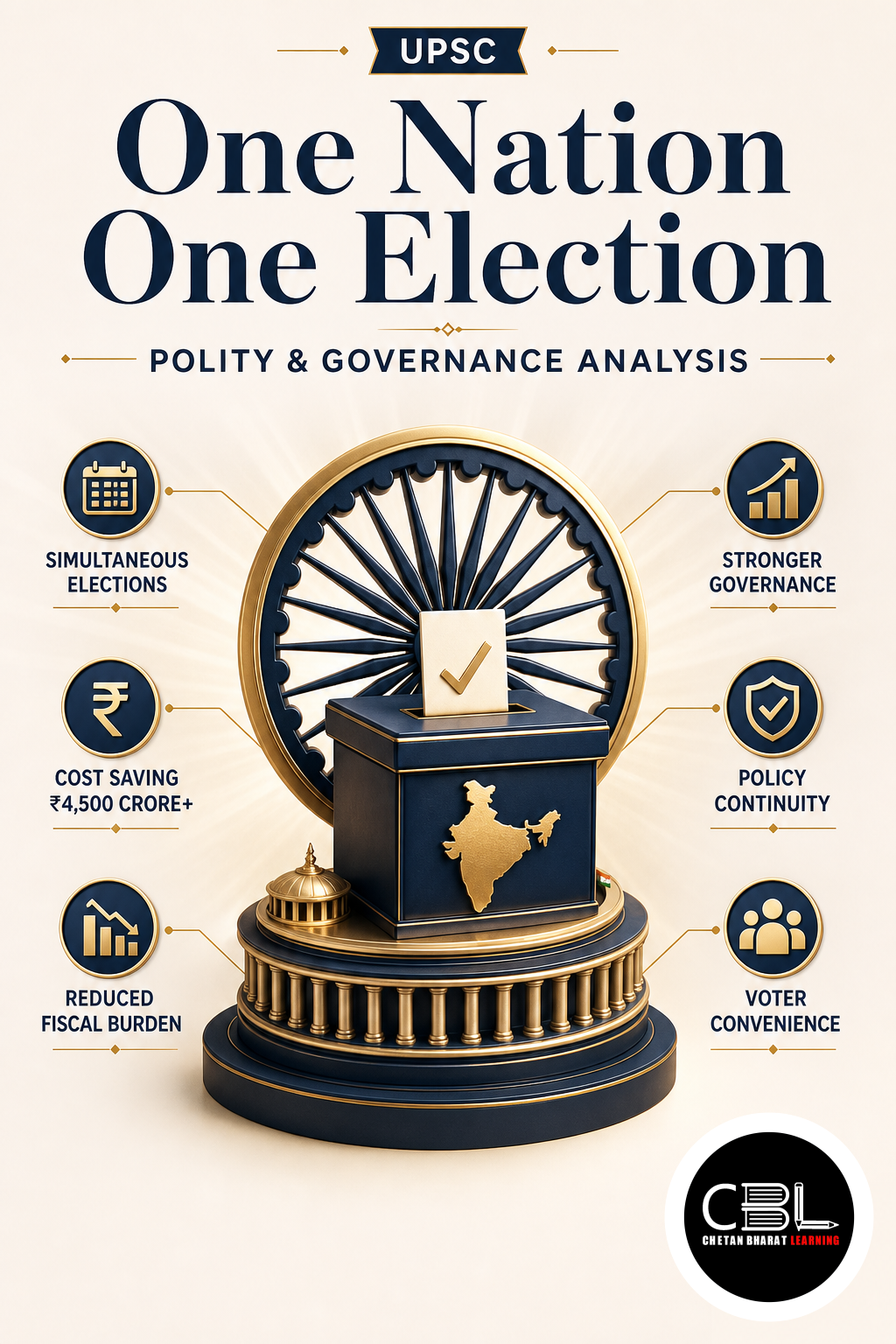
The One Nation One Election concept represents a strategic push to synchronize national and state legislative elections. Holding multiple polls concurrently reduces the massive financial burden on the exchequer and administrative machinery. This process completely minimizes the disruption caused by the continuous enforcement of the Model Code of Conduct.
The initiative primarily operates through proposed amendments to several constitutional provisions regarding legislative tenures. These modifications aim to align the terms of the Lok Sabha and State Assemblies permanently. The government aims to establish a unified electoral calendar covering all major democratic mandates across the country.
Why is One Nation One Election in News?
The Union Cabinet recently considered the recommendations submitted by the high-level committee led by former President Ram Nath Kovind. Several state governments have also initiated consultations to assess the logistical feasibility of simultaneous polls. A recent PIB release highlighted the government’s intent to draft necessary constitutional amendment bills for parliamentary approval.
Political consensus remains simultaneously crucial for advancing this structural reform in the federal democratic framework. Global examples like South Africa and Sweden successfully conduct synchronized elections to ensure administrative efficiency. These international precedents create highly compelling arguments for domestic policymakers scaling up their governance reforms rapidly.
Key Features
The comprehensive policy framework introduces several targeted interventions to streamline the democratic process.
- Unified Electoral Cycle: The proposal mandates conducting general elections and state assembly polls on a single designated date.
- Constitutional Amendments: The framework requires modifying Articles 83, 172, and 356 to synchronize legislative tenures effectively.
- Mid-Term Poll Provisions: Special mechanisms address scenarios where a government collapses before completing its full five-year term.
- Local Body Integration: The long-term vision includes aligning municipal and panchayat elections within a specific window of the main polls.
- Model Code Relaxation: Continuous governance resumes faster as the prolonged enforcement of administrative restrictions gets significantly reduced.
Challenges
Implementing One Nation One Election faces several critical hurdles within the current federal structure.
- Federal Concerns: Regional parties argue that national issues might overshadow critical local concerns during synchronized campaigns.
- Constitutional Hurdles: Aligning tenures requires complex amendments that could potentially undermine the basic structure of parliamentary democracy.
- Logistical Deficits: Deploying massive central paramilitary forces simultaneously across the entire country strains existing security resources heavily.
- Mid-Term Collapses: Managing premature assembly dissolutions without disrupting the synchronized national cycle remains a massive legal puzzle.
- Voter Behavior: Critics fear that simultaneous voting might lead to identical outcomes for both tiers, reducing diverse political representation.
Political parties remain cautious due to the complex transition periods and uncertain short-term electoral impacts of these massive structural shifts. Read our detailed breakdown on electoral reforms in India.
Way Forward
The government must aggressively pursue bipartisan consensus-building to address genuine federal apprehensions regarding regional representation. Establishing a joint parliamentary committee with opposition participation will rapidly bridge existing trust deficits in the democratic framework. A comprehensive Election Commission strategy should also prioritize phased logistical planning to ensure seamless execution across diverse terrains.
Developing robust constitutional safeguards for mid-term collapses will provide crucial initial certainty for regional stakeholders entering the synchronized cycle. Simultaneously, policymakers must streamline the deployment of security forces through advanced predictive modeling and resource pooling. Long-term success ultimately depends on creating a self-sustaining democratic ecosystem independent of partisan executive dominance.
Prelims Practice Corner
Q1. Which committee recently submitted a report recommending the synchronization of elections in India?
Answer: (b) The high-level committee headed by former President Ram Nath Kovind recommended the implementation of simultaneous polls.
Q2. Which constitutional articles would primarily require amendment to implement this proposal?
Answer: (b) Articles governing the duration of the Lok Sabha and State Assemblies, along with President’s Rule provisions, need modification.
Q3. What is the primary administrative benefit of holding simultaneous polls?
Answer: (b) It minimizes administrative disruptions by limiting the continuous enforcement of the Model Code of Conduct.
Q4. Which country is frequently cited as a successful example of synchronized national and provincial elections?
Answer: (c) South Africa successfully conducts national and provincial elections simultaneously every five years.
Q5. What is a major concern raised by regional parties regarding this proposal?
Answer: (b) Regional parties fear that voters might prioritize national narratives over critical state-specific issues during a unified campaign.
Mains Practice Questions
Q1. Examine the constitutional and federal challenges in implementing the proposal for simultaneous elections in India. How can a balance be struck between administrative efficiency and democratic diversity? (250 words)
Answer Structure
Intro: Define the concept and its objective to reduce the financial and administrative burden of continuous elections.
Body: Discuss constitutional hurdles (Articles 83, 172, 356), federal concerns of regional parties, and logistical challenges. Suggest a phased implementation approach and consensus-building.
Conclusion: Conclude that while administrative efficiency is vital, it must not compromise the federal spirit and democratic accountability of state governments.
Q2. “Synchronized elections might lead to a homogenization of voter choices, undermining the federal spirit of the Constitution.” Critically analyze this statement in the context of regional representation. (150 words)
Answer Structure
Intro: Introduce the concern that national narratives often dominate when polls are held together.
Body: Analyze how local issues might get sidelined, impacting the mandate for state assemblies. Contrast this with the administrative benefits and examples from other federal democracies.
Conclusion: Emphasize the need for robust voter awareness campaigns and potentially staggered synchronized cycles to preserve regional political diversity.
FAQs on One Nation One Election
What is the core objective of the synchronized polls proposal?
The core objective is to hold Lok Sabha and State Assembly elections simultaneously to reduce the financial burden and administrative disruption caused by the continuous Model Code of Conduct.
How will premature dissolution of an assembly be handled?
The proposed framework suggests conducting mid-term polls only for the remainder of the original term, ensuring the broader synchronized cycle remains undisturbed.
Does the Election Commission support this move?
The Election Commission has previously indicated logistical readiness for simultaneous polls, provided the necessary legal framework, security personnel, and EVMs are made available well in advance.
Related Current Affairs
Preparing for UPSC, PCS or HCS?
Talk to a mentor at Chetan Bharat Learning, Chandigarh. Free guidance on choosing the right exam and building a study plan.
Chat on WhatsAppCall 97793 53345UPSC / IAS / PCS coaching in Chandigarh · Trusted by aspirants across Punjab & Haryana
Leave a Reply
You must be logged in to post a comment.