
Important for:
UPSC, Haryana HCS, Punjab PCS
Prelims: Adam Smith, Classical Economics
Mains: GS Paper 4 & GS Paper 3 — Ethics, Economic Thought, Moral Philosophy
Why in News?
The discussion around “Das Adam Smith Problem” has regained attention as scholars revisit whether Adam Smith’s economic ideas support selfishness or whether morality and ethics remain central to his philosophy.
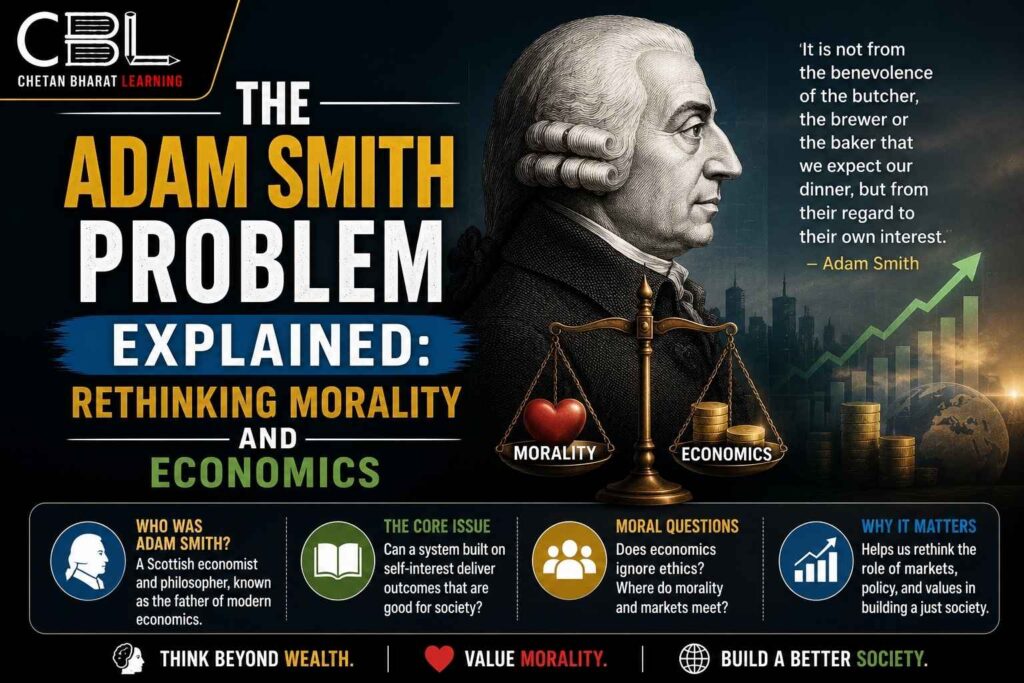
Who Was Adam Smith?
➤ Scottish economist & philosopher
➤ Known as:
✔ “Father of Modern Economics”
Famous Works:
- The Wealth of Nations (1776)
- The Theory of Moral Sentiments (1759)
What is “Das Adam Smith Problem”?
➤ A debate among scholars about:
✔ Whether Adam Smith supported:
- Pure self-interest
OR - Morality and ethics in society
Why the Debate Happened?
➤ His two books seemed different:
1. Wealth of Nations
Focus:
✔ Self-interest
✔ Markets
✔ Competition
2. Theory of Moral Sentiments
Focus:
✔ Sympathy
✔ Morality
✔ Human ethics
What Do Modern Scholars Say?
➤ Most scholars now believe:
✔ There is NO contradiction
✔ Both books complement each other
Core Argument:
➤ Smith believed:
✔ Self-interest works within moral limits
✔ Society needs ethics + markets together
Key Economic Concepts Linked to Smith
1. Invisible Hand
Markets can organise economic activity naturally
2. Division of Labour
Specialisation increases productivity
3. Moral Restraint
Economic freedom requires ethical behaviour
Why This Debate Matters Today
1. Ethics in Capitalism
Can markets function without morality?
2. Responsible Growth
Need balance between:
✔ Profit
✔ Social welfare
3. Corporate Responsibility
Modern economies need ethical regulation
Global Relevance
➤ Current debates on:
- Inequality
- Corporate greed
- Ethical capitalism
make Adam Smith relevant again.
India-Specific Relevance
Important for understanding:
✔ Economic reforms
✔ Welfare capitalism
✔ Inclusive growth model
Key Insight for UPSC
➤ Core idea:
✔ Economics and ethics are interconnected
PRELIMS PRACTICE QUESTIONS
Q1. Adam Smith is known as:
A. Father of Sociology
B. Father of Modern Economics
C. Father of Political Science
D. Father of Ethics
⇢ Answer: B
Q2. The Wealth of Nations was published in:
A. 1759
B. 1776
C. 1789
D. 1800
⇢ Answer: B
Q3. “Invisible Hand” is associated with:
A. Karl Marx
B. Adam Smith
C. Keynes
D. Ricardo
⇢ Answer: B
Q4. The Theory of Moral Sentiments focuses on:
A. Military power
B. Ethics and morality
C. Taxation
D. Banking
⇢ Answer:
Q5. Adam Smith supported:
A. Pure greed only
B. Ethics with economic activity
C. State monopoly
D. No markets
⇢ Answer: B
CBL Mains Practice Question
“Economic growth without ethics can weaken social trust.”
Discuss with reference to Adam Smith’s ideas on morality and markets.
FAQs
1. Who was Adam Smith?
Father of modern economics.
2. What is Das Adam Smith Problem?
Debate about morality vs self-interest in Smith’s philosophy.
3. What is the Invisible Hand theory?
Markets self-regulate through individual actions.
4. Why is Adam Smith important today?
His ideas shape modern capitalism.
5. Which GS papers cover this?
GS3 and GS4.
Related Current Affairs
Preparing for UPSC, PCS or HCS?
Talk to a mentor at Chetan Bharat Learning, Chandigarh. Free guidance on choosing the right exam and building a study plan.
Chat on WhatsAppCall 97793 53345UPSC / IAS / PCS coaching in Chandigarh · Trusted by aspirants across Punjab & Haryana
Leave a Reply
You must be logged in to post a comment.