

UPSC Mapping
- Prelims: Health & Diseases
- Mains: GS Paper 2 (Health & Social Issues)
Article
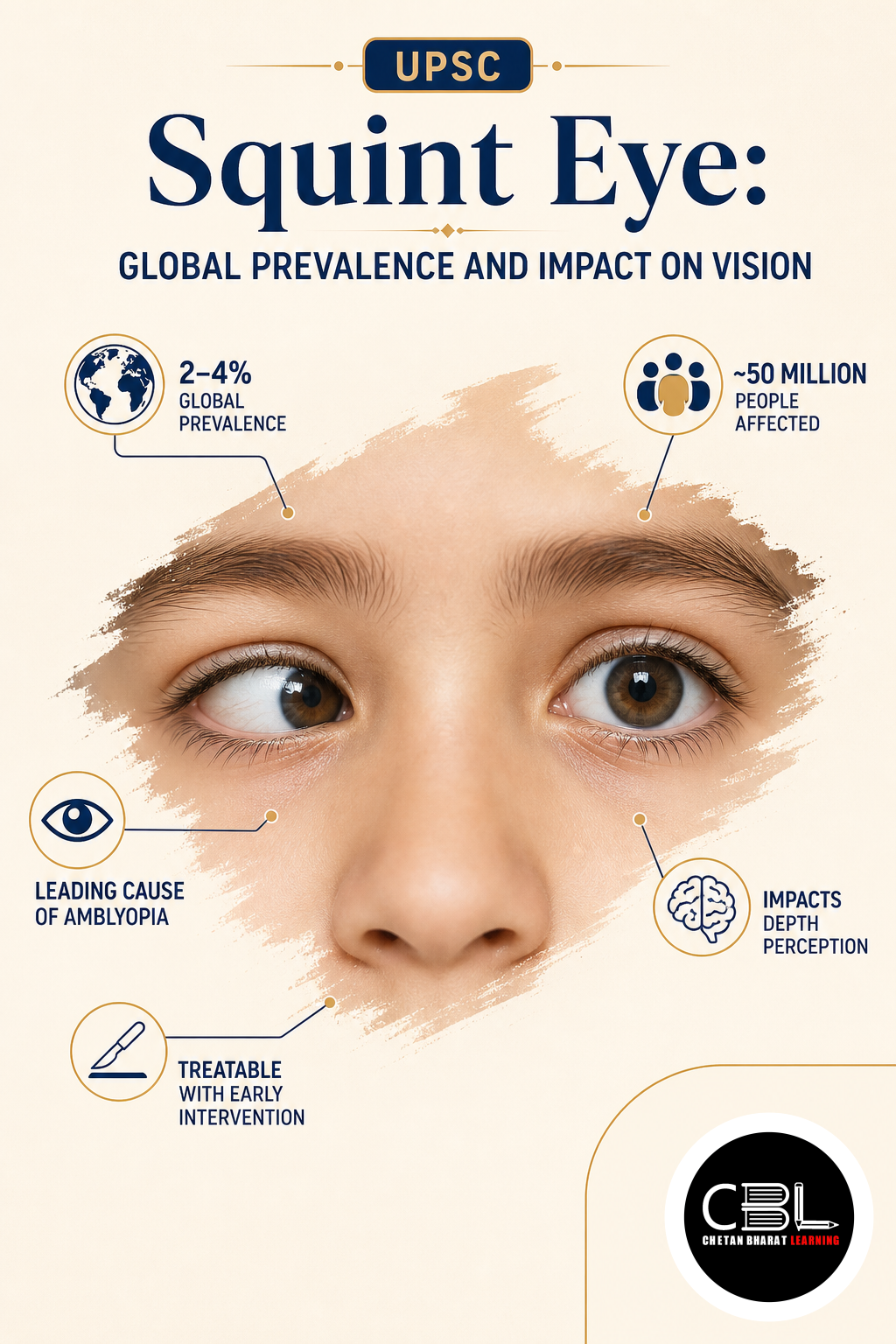
A recent study has estimated that squint eye (strabismus) affects 1.81% of the global population, highlighting the significant burden of this vision disorder. Squint eye is a condition in which the eyes are misaligned and do not look in the same direction simultaneously; the eye may turn inward (esotropia), outward (exotropia), upward, or downward. This condition can have profound effects on visual development and quality of life, making it an important topic for health current affairs.
What is Squint Eye?
Squint eye, medically known as strabismus, is a condition where the eyes are not properly aligned and point in different directions. One eye may look straight ahead while the other turns inward (esotropia), outward (exotropia), upward (hypertropia), or downward (hypotropia). The misalignment can be constant or intermittent and may affect one or both eyes.
In children, the major risk factors include genetic predisposition, refractive errors, premature birth, and low birth weight. In adults, causes include diabetes, thyroid disease, eye diseases, stroke, neurological disorders, and trauma. The condition can lead to amblyopia (lazy eye) in children due to suppression of the affected eye’s image, while adults may experience double vision, blurred vision, eye strain, and headaches.
Why is Squint Eye in News?
Squint eye has come into the spotlight following a comprehensive study that estimated its global prevalence at 1.81%, affecting millions of people worldwide. The study provides crucial data for understanding the burden of this condition and underscores the need for early detection and intervention, especially in children, to prevent permanent vision loss.
The study also highlights the importance of addressing refractive errors and promoting regular eye check-ups. In India, where a large population has limited access to eye care, such data can inform public health policies. For more on eye health, visit the eye health archive.
Key Facts about Squint Eye
| Prevalence | 1.81% of the global population |
|---|---|
| Childhood Risk | Genetics, refractive errors, premature birth, low birth weight |
| Adult Causes | Diabetes, thyroid disease, stroke, neurological disorders, trauma |
| Complications | Amblyopia in children, double vision in adults |
| Treatment | Glasses, patching, prisms, surgery |
Challenges in Management
- Late Detection: In many cases, especially in rural areas, squint is detected late, leading to irreversible amblyopia.
- Access to Care: Specialist ophthalmologists and pediatric eye care services are limited in underserved regions.
- Awareness: Many parents are unaware of the importance of early treatment, leading to neglect.
- Cost of Treatment: Surgical interventions and long-term management can be expensive for low-income families. For more on public health issues, explore the public health archive.
Way Forward for Eye Health
To address squint eye and other vision disorders, India needs to strengthen its primary eye care infrastructure and integrate vision screening into school health programmes. Training primary health workers to detect squint and refractive errors can facilitate early referral. The government should also consider subsidising corrective surgeries and providing affordable glasses and patching materials.
Public awareness campaigns can dispel myths and encourage timely treatment. According to the WHO, vision impairment is a major global health challenge, and countries need to invest in comprehensive eye care services to achieve universal health coverage.
Prelims Practice Corner
-
What is the medical term for squint eye?
Answer: (b) Strabismus.
-
What is the estimated global prevalence of squint eye?
Answer: (b) 1.81%.
-
In children, what is a common complication of untreated squint?
Answer: (b) Amblyopia (lazy eye).
-
Which of the following is a risk factor for squint in adults?
Answer: (b) Diabetes.
-
What is the first-line treatment for squint in children?
Answer: (b) Glasses and patching.
Mains Practice Questions
Q1. “The burden of avoidable blindness and vision impairment is a significant public health challenge in India.” Discuss the role of early detection and management of squint eye in reducing this burden. (250 words, 15 marks)
- Intro: Introduce squint eye and its prevalence.
- Body: Discuss causes, complications (amblyopia), challenges in detection and treatment, and the importance of school-based screening and public awareness.
- Conclusion: Suggest strengthening primary eye care and integrating with health programmes.
Q2. “Non-communicable diseases, including eye disorders, are emerging as major health challenges in India.” Analyse the role of lifestyle factors and healthcare infrastructure in managing conditions like squint eye. (250 words, 15 marks)
- Intro: Highlight the growing burden of NCDs and vision disorders.
- Body: Discuss risk factors (diabetes, lifestyle), the need for early detection, and the role of primary health centres.
- Conclusion: Emphasise the need for a comprehensive approach to eye health.
FAQs on Squint Eye
- What is the difference between esotropia and exotropia?
- Esotropia is when the eye turns inward (cross-eyed), while exotropia is when the eye turns outward (wall-eyed).
- Can squint eye be corrected in adults?
- Yes, with treatments such as prism glasses, vision therapy, and surgery, though early treatment in childhood yields better outcomes.
- What is amblyopia?
- Amblyopia, or lazy eye, is a condition where the brain ignores the visual input from the misaligned eye, leading to permanent vision loss if not treated early.
Related Current Affairs
Preparing for UPSC, PCS or HCS?
Talk to a mentor at Chetan Bharat Learning, Chandigarh. Free guidance on choosing the right exam and building a study plan.
Chat on WhatsAppCall 97793 53345UPSC / IAS / PCS coaching in Chandigarh · Trusted by aspirants across Punjab & Haryana
Leave a Reply
You must be logged in to post a comment.