
Why the NFHS-6 Findings Matter
India has made significant progress in improving healthcare access, reducing maternal mortality, and strengthening nutrition outcomes. However, the latest National Family Health Survey (NFHS-6) highlights a growing concern: a sharp increase in obesity and diabetes across the country.
According to survey findings, the percentage of overweight or obese adults has increased significantly since the previous survey cycle. This trend reflects changing lifestyles, dietary habits, and urbanisation patterns.
The issue is no longer limited to affluent urban populations. Lifestyle diseases are increasingly affecting both urban and rural communities, creating new challenges for India’s healthcare system.
Students preparing through UPSC Coaching in Chandigarh and IAS Coaching in Chandigarh should closely follow topics like public health, nutrition, healthcare governance, and non-communicable diseases because these themes are highly important for GS Paper 2, Essay, and UPSC Interview preparation.
What Does the NFHS-6 Data Show?
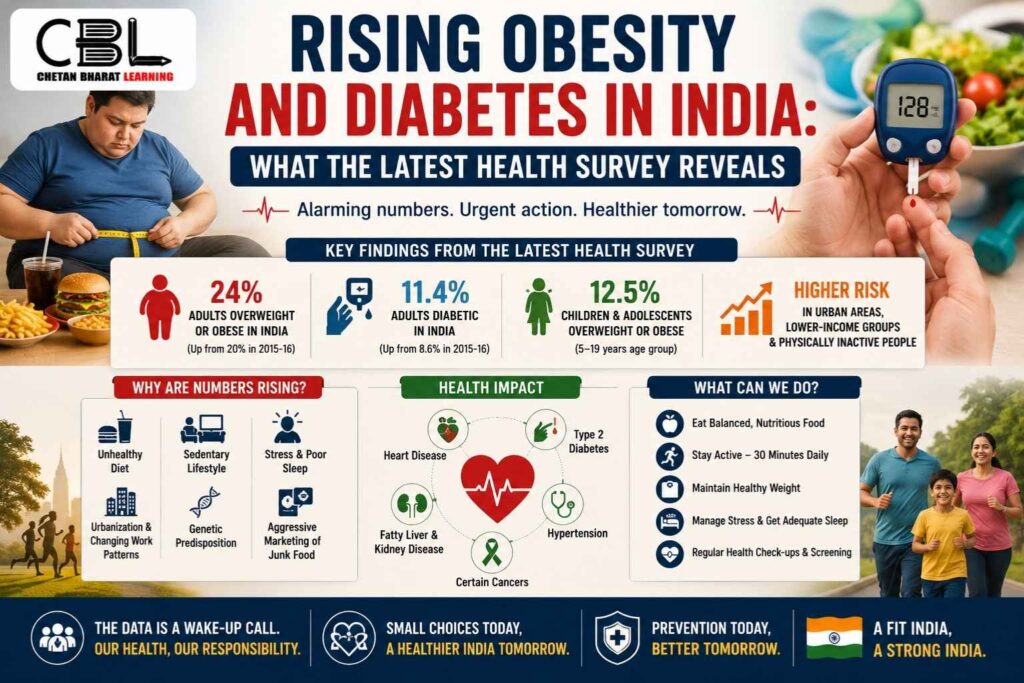
Recent survey findings indicate a notable increase in overweight and obesity levels among adults.
Women (15–49 years)
- NFHS-5: 24%
- NFHS-6: 30.7%
Men (15–49 years)
- NFHS-5: 22.9%
- NFHS-6: 27.3%
The data suggests that excess weight is becoming increasingly common across different demographic groups.
Understanding Obesity and Diabetes
What Is Obesity?
Obesity is a condition characterized by excessive accumulation of body fat that may negatively affect health.
It increases the risk of:
- Diabetes
- Hypertension
- Heart disease
- Stroke
- Certain cancers
What Is Diabetes?
Diabetes is a chronic disease that occurs when the body cannot effectively regulate blood sugar levels.
The most common form is Type-2 diabetes, which is often linked to:
- Obesity
- Physical inactivity
- Unhealthy diets
- Genetic factors
Why Are Lifestyle Diseases Increasing?
1. Changing Dietary Patterns
India is witnessing a nutrition transition characterized by:
- Higher consumption of processed foods
- Increased sugar intake
- Greater dependence on packaged foods
- Rising consumption of unhealthy fats
These dietary shifts contribute significantly to obesity and diabetes.
2. Sedentary Lifestyles
Technological advancement and urban living have reduced physical activity levels.
Many people spend long hours:
- Sitting at work
- Using digital devices
- Travelling in motorized transport
Reduced physical activity increases health risks over time.
3. Rapid Urbanisation
Urbanisation has changed lifestyle patterns by:
- Reducing active commuting
- Increasing fast-food consumption
- Limiting recreational physical activity
These changes influence long-term health outcomes.
4. Stress and Mental Health Factors
Modern lifestyles often involve:
- Work-related stress
- Sleep deprivation
- Irregular routines
These factors can indirectly contribute to obesity and metabolic disorders.
The Public Health Challenge
The rise in obesity and diabetes presents several challenges.
Healthcare Burden
Non-communicable diseases (NCDs) require long-term management and treatment.
This can:
- Increase healthcare expenditure
- Strain public health systems
- Reduce workforce productivity
Economic Costs
Lifestyle diseases affect:
- Household finances
- Healthcare spending
- Labour productivity
The economic impact extends beyond the healthcare sector.
Social Impact
Poor health outcomes can reduce quality of life and affect long-term human development.
India’s Response to Non-Communicable Diseases
India has introduced multiple initiatives to address lifestyle diseases.
Key measures include:
✔ National Programme for Prevention and Control of Cancer, Diabetes, Cardiovascular Diseases and Stroke (NPCDCS)
✔ Ayushman Bharat initiatives
✔ Health and Wellness Centres
✔ Awareness campaigns promoting healthy lifestyles
These interventions focus on prevention, early detection, and treatment.
Why Prevention Is Better Than Cure
Public health experts emphasize preventive healthcare.
Important preventive measures include:
- Balanced nutrition
- Regular physical activity
- Adequate sleep
- Reduced sugar consumption
- Periodic health screening
Prevention helps reduce long-term health risks and healthcare costs.
The Need for a Multi-Sectoral Approach
Addressing obesity and diabetes requires cooperation across multiple sectors.
Important stakeholders include:
- Government agencies
- Schools
- Healthcare institutions
- Urban planners
- Food industries
- Civil society organizations
A comprehensive approach is essential for long-term success.
Prelims Pointers
Important Survey
- National Family Health Survey (NFHS)
Important Disease Category
- Non-Communicable Diseases (NCDs)
Key Programme
- NPCDCS
Mains Perspective
Possible Question
“India is increasingly facing a dual burden of malnutrition and lifestyle diseases.” Discuss in the context of recent health survey findings.
Key Dimensions to Include
- Nutrition transition
- Public health
- Urbanisation
- Healthcare infrastructure
- Preventive healthcare
- Human capital development
Frequently Asked Questions (FAQ)
What is NFHS?
The National Family Health Survey is a large-scale survey that provides data on health, nutrition, and population indicators in India.
Why are obesity rates increasing in India?
Changing diets, reduced physical activity, urbanisation, and lifestyle changes are major contributing factors.
Why is diabetes becoming more common?
Rising obesity, sedentary lifestyles, unhealthy diets, and ageing populations contribute to increasing diabetes prevalence.
How can obesity be prevented?
Healthy eating habits, regular exercise, adequate sleep, and routine health monitoring can help prevent obesity.
Conclusion: A New Public Health Challenge
India’s public health success story now faces a new challenge. While infectious diseases and undernutrition remain important concerns, obesity and diabetes are emerging as major threats to long-term health outcomes.
The NFHS-6 findings highlight the need to move beyond treatment-focused healthcare and strengthen preventive health strategies.
Building a healthier India will require greater awareness, better nutrition, active lifestyles, and stronger public health interventions.
“The future of healthcare lies not only in curing disease but in preventing it before it begins.”
Related Current Affairs
Preparing for UPSC, PCS or HCS?
Talk to a mentor at Chetan Bharat Learning, Chandigarh. Free guidance on choosing the right exam and building a study plan.
Chat on WhatsAppCall 97793 53345UPSC / IAS / PCS coaching in Chandigarh · Trusted by aspirants across Punjab & Haryana
Leave a Reply
You must be logged in to post a comment.