
RERA complaints have drawn fresh attention after a homebuyers’ forum asked Prime Minister Narendra Modi to review the law’s implementation. The issue connects consumer protection with regulatory accountability and the wider economy and housing sector.
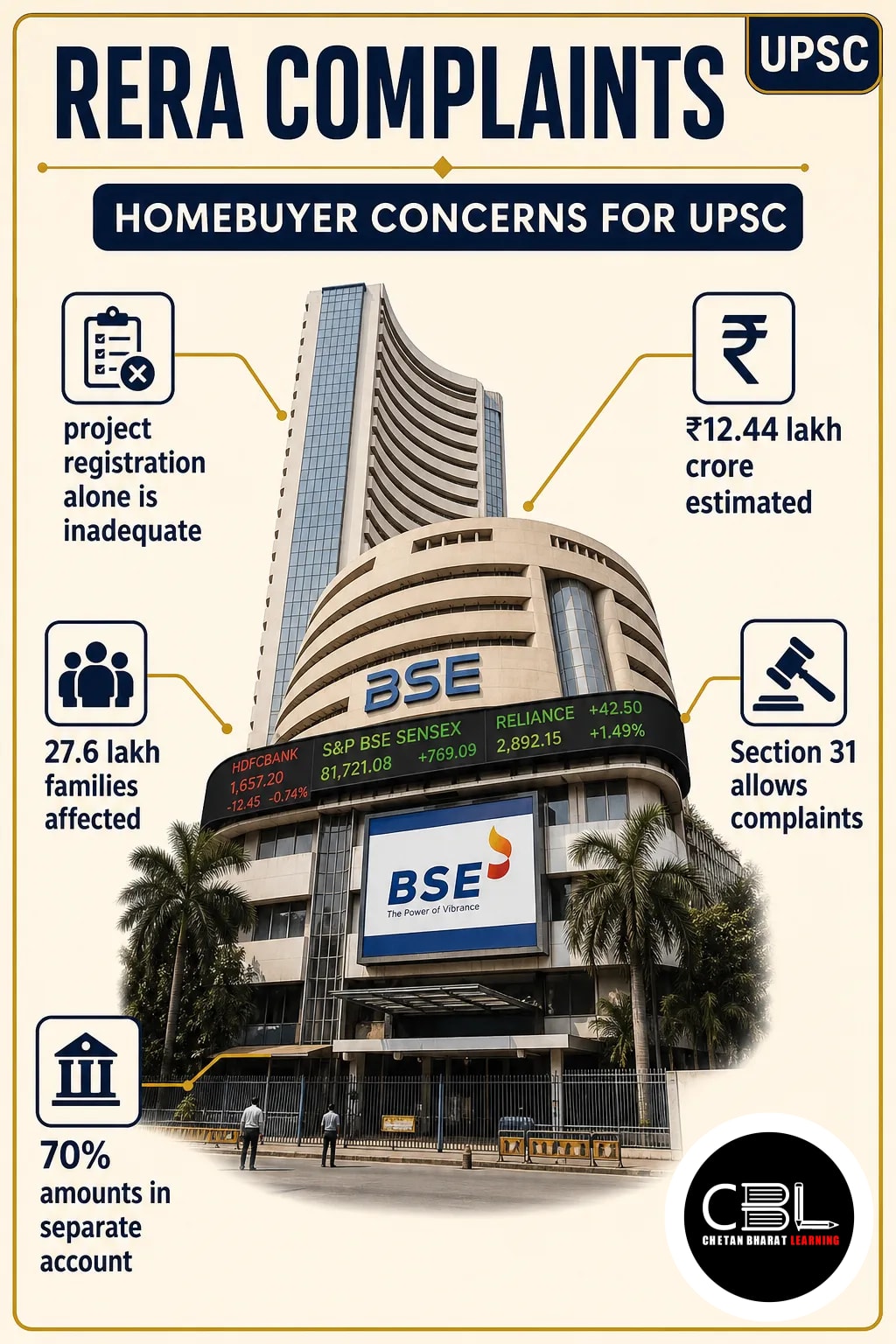
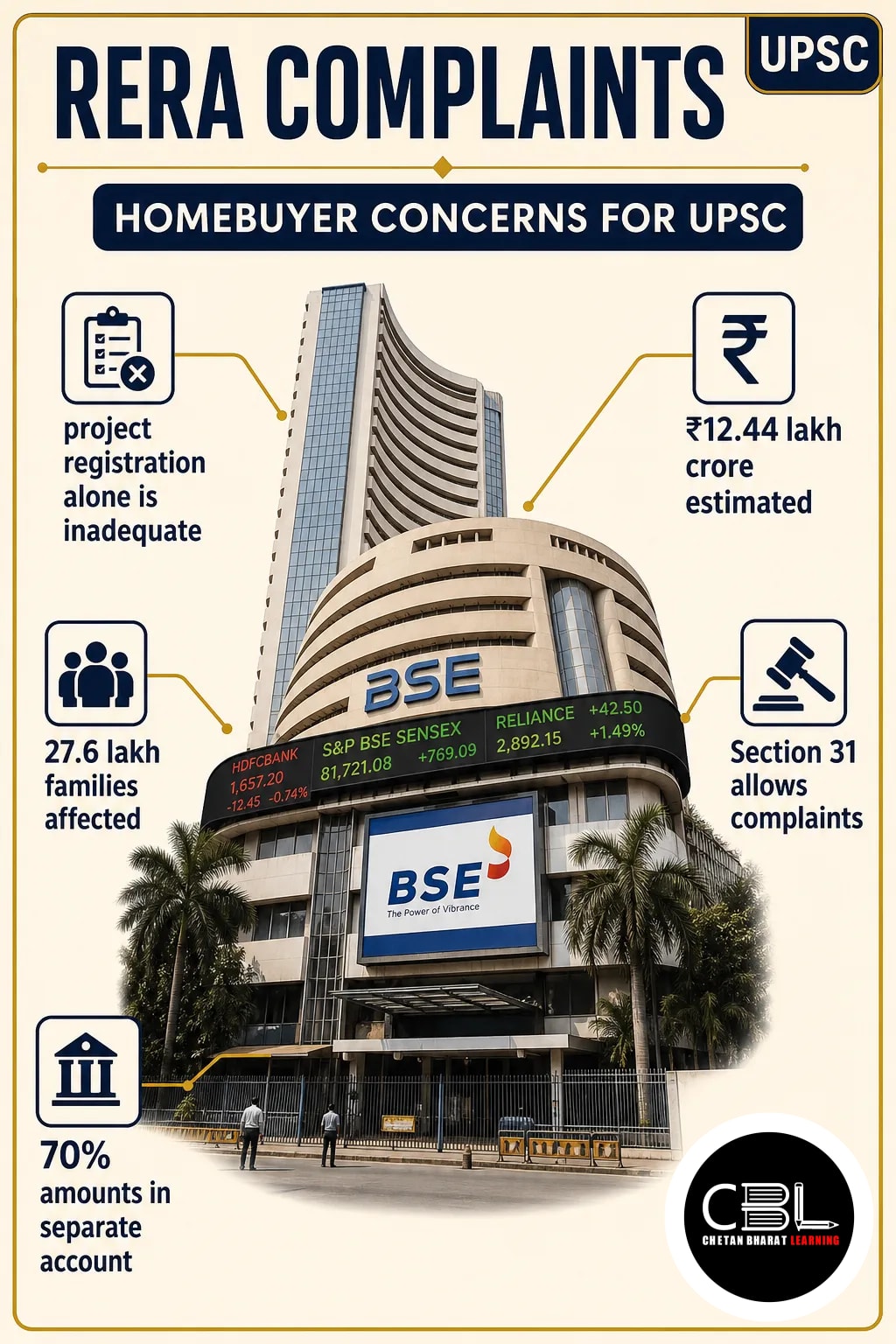
Quick answer: RERA complaints concern project delays, alleged misuse of buyer funds, one-sided contracts and difficulty enforcing orders. On 26 October 2026, the Forum for People’s Collective Efforts urged a change in regulatory responsibilities. Its estimate puts ₹12.44 lakh crore in delayed projects affecting 27.6 lakh families; these figures are the forum’s estimates.
What is the real estate regulation framework?
The Real Estate (Regulation and Development) Act, 2016 establishes a framework for regulating real estate projects and protecting buyers. The term RERA commonly refers to the law and the Real Estate Regulatory Authority established under it.
The Act provides for project registration, disclosures, complaints and appeals. However, the forum argues that access to these mechanisms does not necessarily translate into timely possession or payment.
Why are RERA complaints in the news?
The Forum for People’s Collective Efforts (FPCE) says that registration and disclosure alone do not establish the law’s success. FPCE, which campaigned for the law, raised its concerns in a letter dated 26 October.
Forum president Abhay Upadhyay acknowledged that more projects had entered the registration framework. However, FPCE said continuing violations and difficulty obtaining effective remedies showed that the law’s objectives remained unmet.
In a report submitted to the ministry in September, the forum estimated that ₹12.44 lakh crore of buyer funds was trapped in delayed projects. It also estimated that 27.6 lakh families were affected and equated the amount to about 3.8% of India’s annual gross domestic product (GDP). These are FPCE’s estimates based on ministry data, not independently established totals.
What safeguards does the Act provide?
The Act combines registration and financial safeguards with routes for complaints and appeals.
| Provision | What it provides |
|---|---|
| Section 4 | Requires prescribed project details for registration and a separate account for 70% of amounts realised from allottees, subject to statutory conditions. |
| Section 18 | Provides remedies, including return of money with interest and compensation in specified circumstances involving failure to complete or give possession. |
| Section 31 | Allows an aggrieved person to file a complaint with the authority or adjudicating officer for violations of the Act or its rules and regulations. |
| Section 43 | Provides for establishment of a Real Estate Appellate Tribunal to hear appeals against specified decisions and orders. |
Thus, the legal framework covers both preventive disclosure and remedies after a breach. Its effectiveness, however, also depends on scrutiny and enforcement.
Where does implementation fall short?
FPCE identifies gaps in registration scrutiny, contracts and enforcement of orders. These are the forum’s concerns, rather than findings of an official inquiry.
- Document scrutiny: FPCE says projects have been registered without adequate checks of sanctioned plans, amenity disclosures, promoter declarations and proposed agreements for sale.
- Unequal agreements: The forum says builder-buyer contracts remain one-sided. In 2023, a regulatory authority chairperson recommended that state authorities audit such agreements; however, FPCE says conditions have not improved.
- Delayed remedies: Buyers may wait for years to receive refunds or compensation even after prolonged proceedings and favourable orders, according to FPCE.
- Promoter history: The forum says no robust mechanism checks outstanding liabilities, unexecuted orders and past compliance before a new project is registered.
- Conflict of interest: FPCE also flagged the possibility of conflicts when former authority chairpersons take positions with a builders’ organisation.
Why do these gaps matter for governance and the economy?
Weak enforcement can turn formal consumer rights into remedies that arrive too late to protect household finances. For example, a buyer awaiting a refund may remain exposed to housing and financing costs while the dispute continues.
In addition, project delays can lock up savings and affect lenders, construction activity and confidence. FPCE highlights these wider risks; however, its aggregate estimate should not be treated as a measured loss to the economy.
The issue also illustrates a regulatory design problem. FPCE argues that sector promotion and buyer protection can create competing priorities. Yet separating departmental responsibilities would not, by itself, resolve weak scrutiny or non-compliance with orders.
What reforms could improve outcomes?
Reforms should link registration and dispute resolution to verifiable outcomes for homebuyers.
- Clarify mandates: FPCE proposes that the Ministry of Housing and Urban Affairs retain sector promotion, while the Department of Consumer Affairs handles homebuyer protection. Any change would require careful examination of its legal and institutional design.
- Strengthen entry checks: Authorities could verify key documents and examine a promoter’s compliance record before registration. In addition, accessible disclosures would help buyers assess project risks.
- Track enforcement: Authorities could publish pending and executed orders alongside disposal figures. This would distinguish a decision on paper from an actual remedy.
- Review contracts and ethics: Regular scrutiny of sale agreements and safeguards against conflicts of interest could improve confidence. Moreover, consistent implementation across states would make protections more meaningful.
Overall, completed homes, enforceable orders and timely refunds offer more useful outcome measures than registration totals alone.
Source: The Indian Express, 2 November 2026
Punjab PCS and Haryana HCS can test the role of state real estate authorities in registration, complaint handling and enforcement. In addition, compare legal safeguards with administrative outcomes without assuming that implementation is identical across states.
Prelims Practice Corner
Mains Practice Questions
Frequently Asked Questions
What are the main RERA complaints raised by homebuyers?
They include project delays, alleged misuse of funds, unfair agreements and delayed enforcement of orders. FPCE says these problems persist despite registration and disclosure requirements.
How much homebuyer money is estimated to be stuck in delayed projects?
Approximately ₹12.44 lakh crore, according to FPCE’s estimate. The forum also estimates that delayed projects affect 27.6 lakh families.
Can an aggrieved homebuyer file a complaint under the Act?
Yes, because Section 31 allows an aggrieved person to complain to the authority or adjudicating officer. The complaint concerns violations of the Act or its rules and regulations.
What change in responsibilities has FPCE proposed?
FPCE proposes placing homebuyer protection with the Department of Consumer Affairs. Meanwhile, it wants the Ministry of Housing and Urban Affairs to continue promoting the sector.
Related Current Affairs
Preparing for UPSC, PCS or HCS?
Talk to a mentor at Chetan Bharat Learning, Chandigarh. Free guidance on choosing the right exam and building a study plan.
Chat on WhatsAppCall 97793 53345UPSC / IAS / PCS coaching in Chandigarh · Trusted by aspirants across Punjab & Haryana

 Ananya RanaIAS · AIR 60
 Aditya SharmaIAS · AIR 70
 Ria Kaur SethiIPS · AIR 89
 Aman AloonIRS · AIR 295
 Sumer Singh VirkIRS · AIR 335
 Shivani PanchalIAS

Leave a Reply
You must be logged in to post a comment.