
UPSC Mapping
- Prelims: Governance & Disaster Management
- Mains: GS Paper 2 (Governance & Social Justice)
Quick Facts
| Established | 1948 |
|---|---|
| Tax Deduction | 100% under Section 80G |
| Minimum Contribution | ₹100 |
What is Prime Minister National Relief Fund?
The Prime Minister National Relief Fund (PMNRF) is a charitable trust established in 1948 to assist people displaced from Pakistan during the Partition. Its current mandate includes aiding families affected by natural disasters, accidents, and riots, and covering high-cost medical treatments such as heart surgeries, kidney transplants, and cancer care. The fund is non-lapsable under the Income Tax Act, 1961, and is funded solely by voluntary contributions, not drawing from the Consolidated Fund of India.
The Prime Minister is the ex-officio Chairperson with sole discretion to approve disbursements. The PMO manages it, and an independent chartered accountant audits it annually (not the CAG). Contributions are 100% tax-deductible under Section 80G of the IT Act.
Why is Prime Minister National Relief Fund in News?
The Prime Minister National Relief Fund is in the news because the Prime Minister announced relief for victims of a hotel fire in Birbhum. The fund’s role in providing immediate assistance during emergencies has been highlighted. Additionally, the fund is under scrutiny regarding its RTI status: the PMO states it is not a public authority, but a larger bench of the Delhi High Court is reviewing this classification following a split verdict.
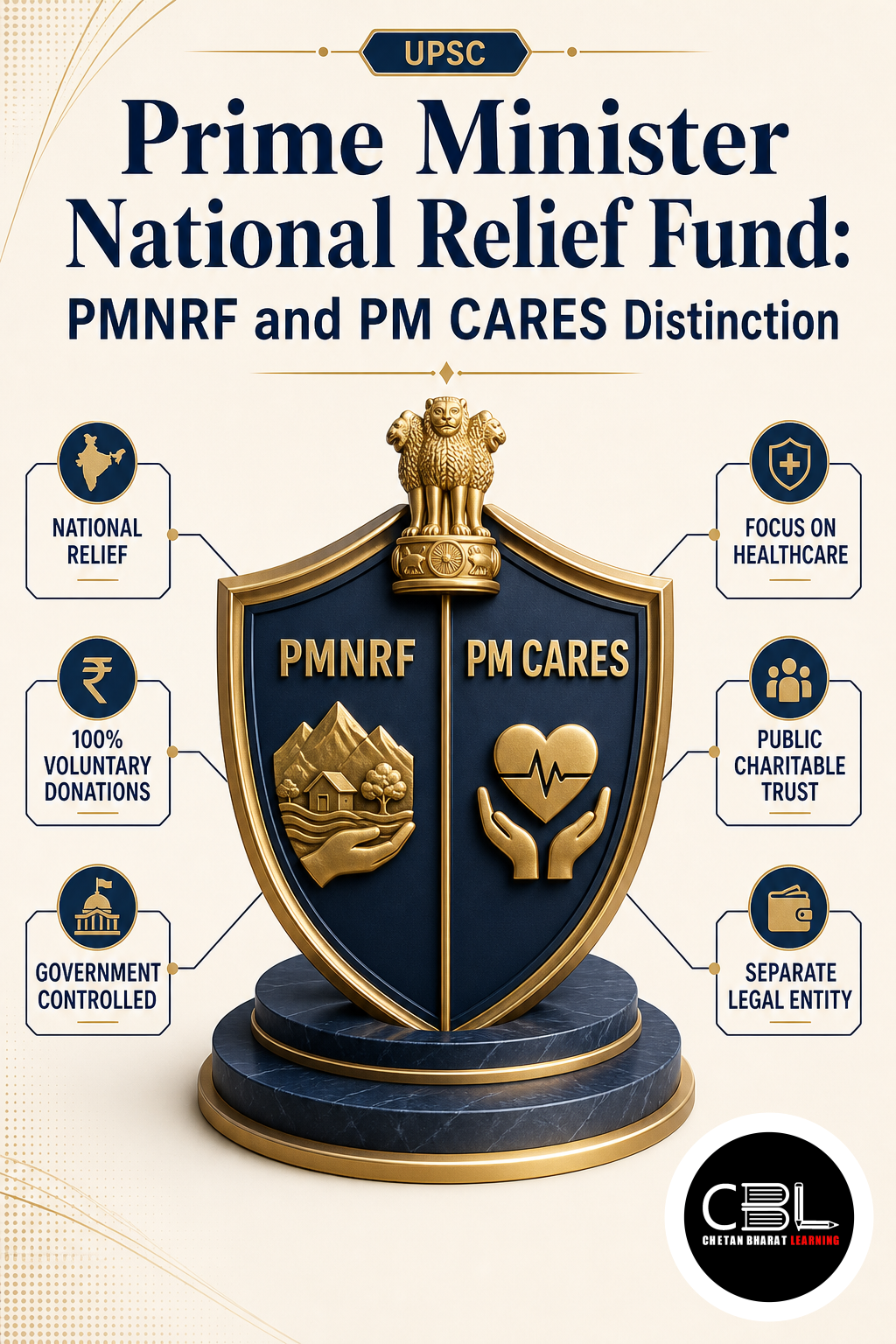
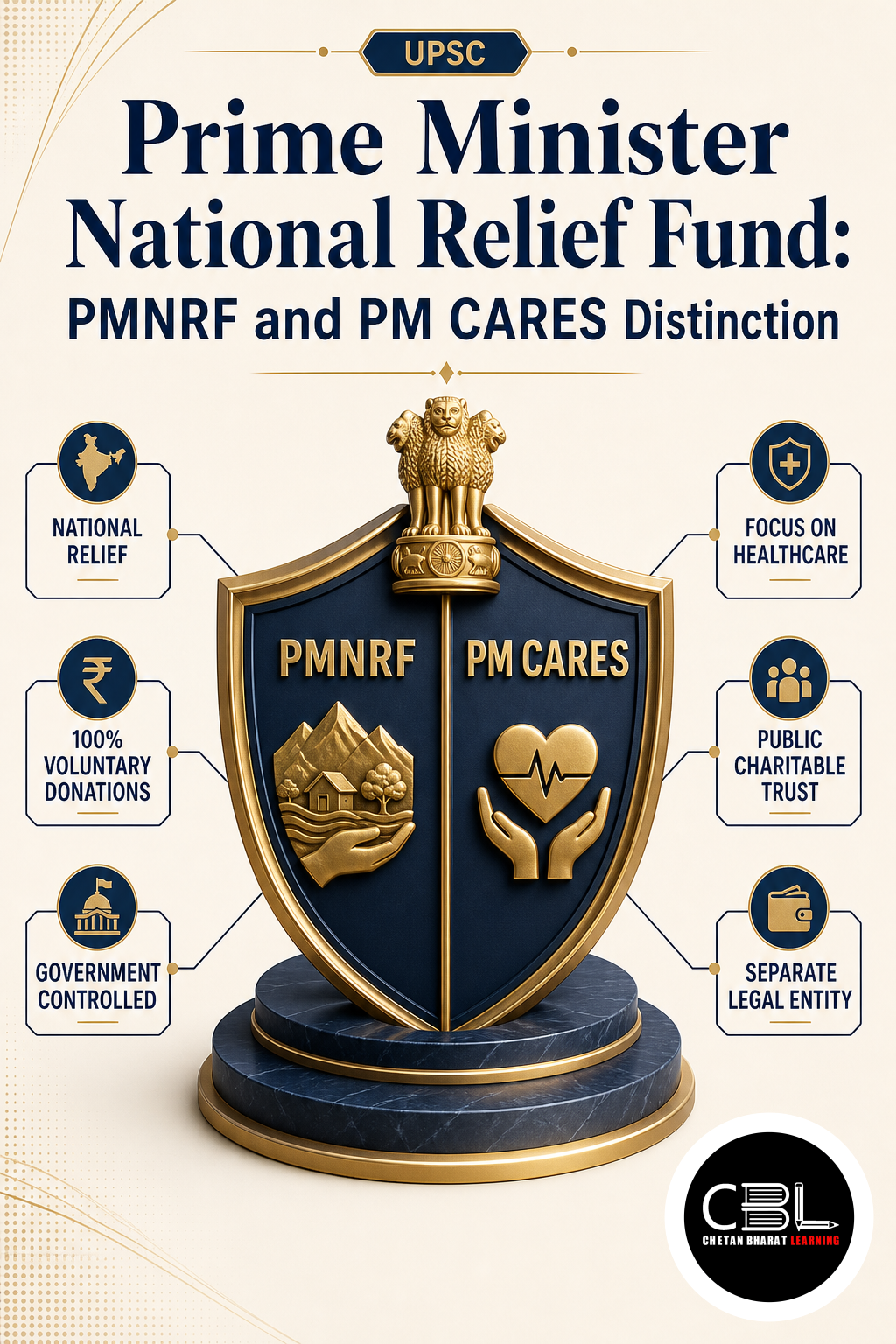
The PMNRF is often compared with the PM CARES Fund, which was created in 2020 for COVID-19 and related emergencies.
Key Features of Prime Minister National Relief Fund
- Origin: Established in 1948 for Partition refugees; now covers disasters, accidents, and medical treatment.
- Non-Lapsable: Funds are not subject to lapsing.
- Voluntary Contributions: Funded solely by public donations; no government budget allocation.
- 100% Tax Deduction: Eligible under Section 80G.
- Administration: PM is ex-officio Chairperson; PMO manages; independent auditor.
Challenges in Prime Minister National Relief Fund
- RTI Status: Controversy over whether PMNRF is a public authority under the RTI Act.
- Transparency: Calls for greater disclosure of fund utilisation and beneficiary details.
- Duplication: Similarities with PM CARES Fund create confusion.
- Minimum Contribution: Minimum donation of ₹100 may limit micro-donations.
- Scope: Whether the fund should be used for individual medical treatments or only disasters.
Way Forward for Prime Minister National Relief Fund
To enhance Prime Minister National Relief Fund‘s credibility, the government should clarify its RTI status through legislative or judicial means. Publishing annual reports with detailed expenditure and impact can improve transparency. The fund should maintain distinct identities with PM CARES to avoid duplication.
Reviewing the minimum contribution and expanding digital payment options can increase donations. Ensuring timely disbursement and monitoring of assistance can strengthen public trust.
Prelims Practice Corner
Q1. When was the Prime Minister National Relief Fund established?
- (a) 1947
- (b) 1948
- (c) 1950
- (d) 1962
Answer: (b) PMNRF was established in 1948.
Q2. What is the tax deduction benefit for contributions to PMNRF?
- (a) 50%
- (b) 75%
- (c) 100%
- (d) No deduction
Answer: (c) Contributions are 100% tax-deductible under Section 80G.
Q3. Who has sole discretion to approve disbursements from PMNRF?
- (a) Finance Minister
- (b) Prime Minister
- (c) Home Minister
- (d) Cabinet Secretary
Answer: (b) The Prime Minister is the ex-officio Chairperson with sole discretion.
Q4. What is the minimum contribution to PMNRF?
- (a) ₹10
- (b) ₹100
- (c) ₹500
- (d) ₹1,000
Answer: (b) The minimum contribution is ₹100.
Q5. Which fund was created in 2020 for COVID-19 emergencies?
- (a) PMNRF
- (b) PM CARES Fund
- (c) National Disaster Response Fund
- (d) State Disaster Response Fund
Answer: (b) PM CARES Fund was created in March 2020.
Mains Practice Questions
Q1. Discuss the role of the Prime Minister’s National Relief Fund in disaster management and the concerns regarding its transparency and accountability. (250 words, 15 marks)
Answer Structure
- Intro: Introduce PMNRF and its mandate.
- Body: Explain its role in providing relief during disasters and medical emergencies; analyse transparency issues, RTI status, and the distinction with PM CARES; suggest reforms for better governance.
- Conclusion: Emphasise the need for transparency and public trust.
Q2. What are the differences between PMNRF and PM CARES Fund? (150 words, 10 marks)
Answer Structure
- Intro: Mention both funds.
- Body: Compare origin (1948 vs 2020), mandate (disasters/medical vs COVID-19/health emergencies), board composition (PM only vs PM + 3 ministers), contribution limits (₹100 vs ₹10), and acceptance of PSU contributions.
- Conclusion: Conclude that both serve emergency relief but differ in scope and governance.
FAQs on Prime Minister National Relief Fund
What is PMNRF?
It is a charitable trust established in 1948 to provide relief to those affected by natural disasters, accidents, and medical emergencies.
Is PMNRF under RTI?
The PMO states it is not a public authority, but a Delhi High Court bench is reviewing this classification.
How is PMNRF different from PM CARES?
PMNRF is older and broader, while PM CARES was created for COVID-19 and related emergencies, with a different governance structure.
Related Current Affairs
Preparing for UPSC, PCS or HCS?
Talk to a mentor at Chetan Bharat Learning, Chandigarh. Free guidance on choosing the right exam and building a study plan.
Chat on WhatsAppCall 97793 53345UPSC / IAS / PCS coaching in Chandigarh · Trusted by aspirants across Punjab & Haryana
Leave a Reply
You must be logged in to post a comment.