
UPSC Mapping
Prelims
- MISHTI Scheme, Mangroves, UNESCO, Coastal Ecosystems
Mains
- GS Paper III: Environment, Biodiversity and Climate Change
Article
MISHTI Scheme is in the news after Andhra Pradesh secured the second position among Indian states under the Centre’s Mangrove Initiative for Shoreline Habitats and Tangible Incomes (MISHTI). The state’s innovative restoration efforts have strengthened mangrove conservation while enhancing coastal resilience against climate change.
Quick Facts
| Launch Year | 2023 |
|---|---|
| Focus | Mangrove Restoration |
| International Day | 26 July |
| Adopted By | UNESCO (2015) |
What is MISHTI Scheme?
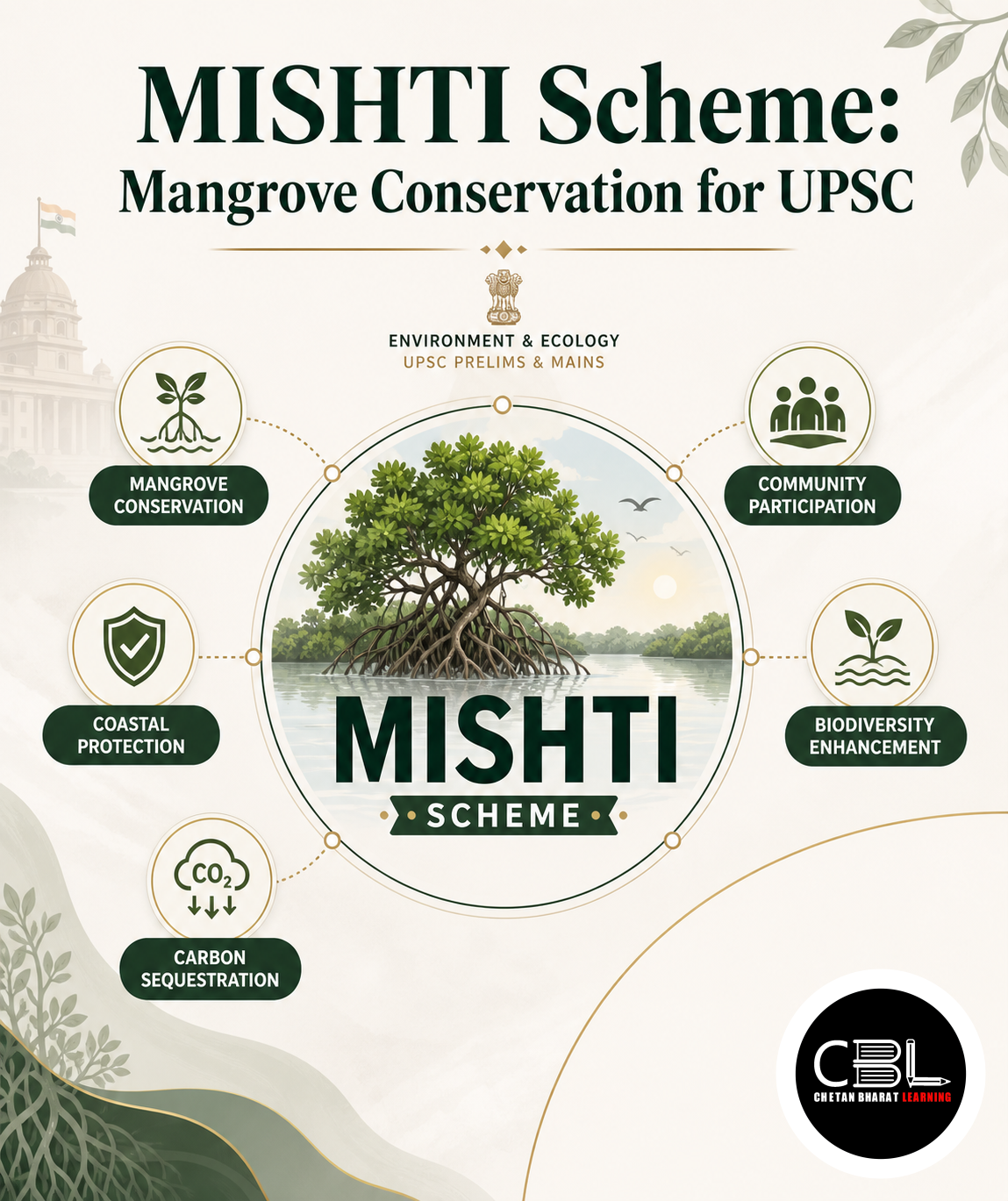
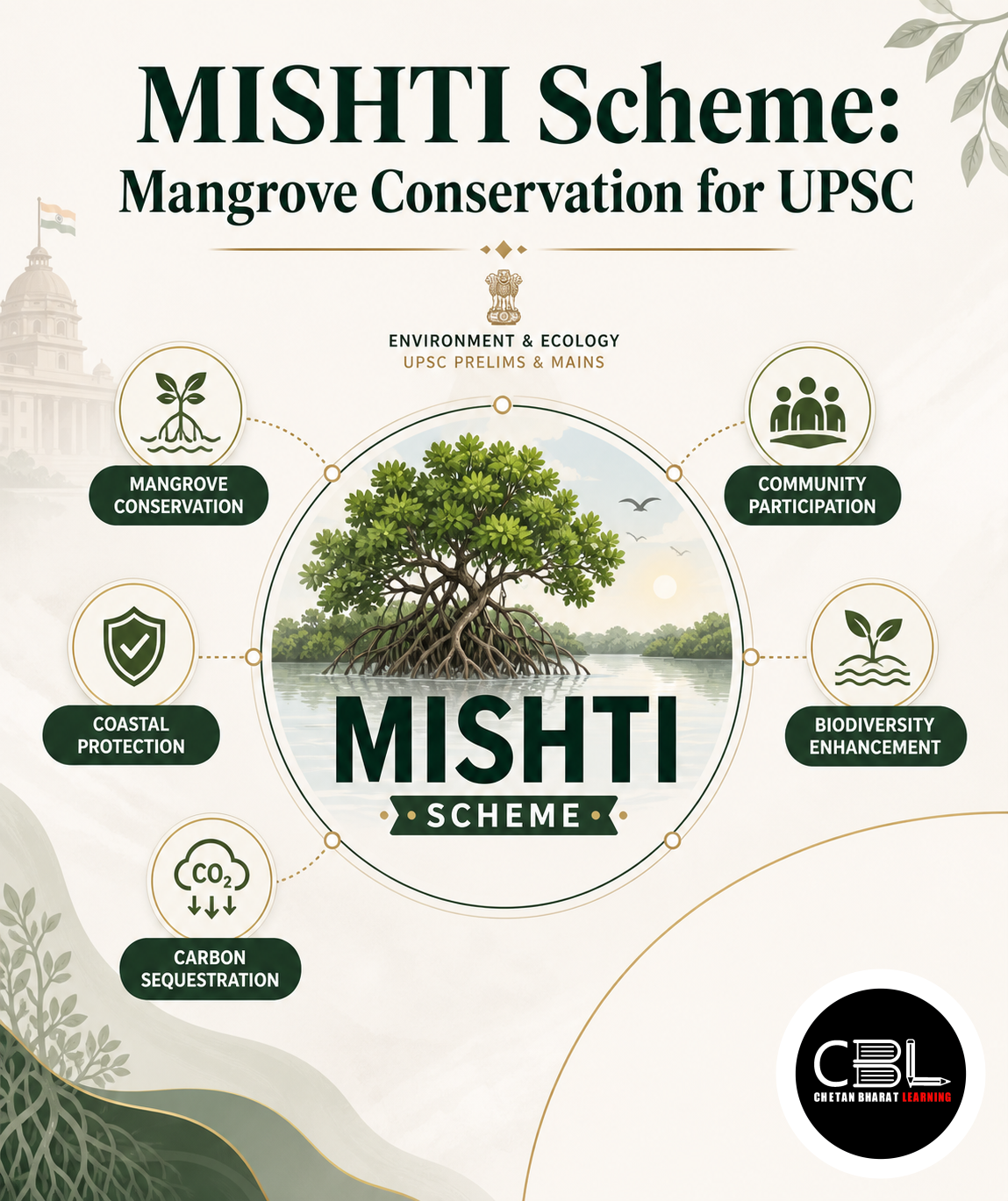
MISHTI Scheme (Mangrove Initiative for Shoreline Habitats and Tangible Incomes) is a Central Government initiative launched in 2023 to restore and expand mangrove forests across India’s coastline. The scheme aims to strengthen coastal ecosystems, improve climate resilience, reduce shoreline erosion and generate sustainable livelihood opportunities for coastal communities.
Mangroves are unique salt-tolerant forests found in tropical and subtropical coastal regions. They protect coastlines from storms, cyclones and tidal surges while serving as breeding grounds for fish and supporting rich biodiversity.
Why is MISHTI Scheme in News?
Andhra Pradesh secured the second position among Indian states under the MISHTI Scheme. The state has complemented the programme through the Great Green Wall of Andhra Pradesh initiative and the innovative Fish Bone Technique, which improves tidal water circulation, increases mangrove survival rates and enhances long-term ecological resilience.
Key Features
- Mangrove restoration: Promotes restoration and afforestation of degraded mangrove ecosystems along India’s coastline.
- Climate resilience: Healthy mangroves reduce coastal erosion, buffer cyclones and store significant amounts of blue carbon.
- Livelihood generation: Supports sustainable income opportunities for coastal communities through fisheries, eco-tourism and ecosystem services.
- Innovative restoration: The Fish Bone Technique improves tidal water movement, enhancing mangrove regeneration.
- Global awareness: International Day for the Conservation of the Mangrove Ecosystem is observed on 26 July every year.
Challenges
- Coastal development: Urbanisation, ports and industrial expansion often reduce mangrove cover.
- Pollution: Industrial discharge, plastics and agricultural runoff degrade coastal ecosystems.
- Climate change: Sea-level rise and changing salinity patterns affect mangrove survival.
- Encroachment: Illegal land conversion and aquaculture expansion threaten habitats.
- Community participation: Long-term conservation requires active involvement of local communities.
Way Forward
India should expand mangrove restoration using scientific techniques such as hydrological restoration, community-led conservation and climate-resilient planning. Strengthening state-level implementation under the MISHTI Scheme can significantly improve coastal ecosystem health.
Prelims Practice Corner
Q1. MISHTI stands for:
- (a) Mangrove Initiative for Shoreline Habitats and Tangible Incomes
- (b) Marine Initiative for Sustainable Habitat Transformation
- (c) Mangrove Integrated Scheme for Tidal Habitats
- (d) Marine Shoreline Protection Initiative
Answer: (a) Mangrove Initiative for Shoreline Habitats and Tangible Incomes.
Q2. The MISHTI Scheme was launched in:
- (a) 2020
- (b) 2021
- (c) 2022
- (d) 2023
Answer: (d) 2023.
Q3. The International Day for the Conservation of the Mangrove Ecosystem is observed on:
- (a) 5 June
- (b) 21 May
- (c) 26 July
- (d) 2 February
Answer: (c) 26 July.
Q4. Which organisation adopted the International Day for the Conservation of the Mangrove Ecosystem?
- (a) UNEP
- (b) UNESCO
- (c) FAO
- (d) IUCN
Answer: (b) UNESCO.
Q5. The Fish Bone Technique is primarily used for:
- (a) Coral reef restoration
- (b) Mangrove restoration by improving tidal water circulation
- (c) River interlinking
- (d) Wetland dredging
Answer: (b) Mangrove restoration by improving tidal water circulation.
Mains Practice Questions
Q1. Discuss the significance of the MISHTI Scheme in strengthening India’s coastal resilience and biodiversity conservation. (10 marks)
Answer Structure:
- Intro: Briefly explain the MISHTI Scheme.
- Body: Objectives, ecological benefits, livelihood support, climate resilience and implementation challenges.
- Conclusion: Highlight the importance of mangrove restoration for sustainable coastal development.
Q2. Explain the ecological importance of mangrove ecosystems and evaluate the role of scientific restoration techniques in their conservation. (15 marks)
Answer Structure:
- Intro: Define mangrove ecosystems.
- Body: Ecosystem services, threats, Fish Bone Technique, MISHTI Scheme and community participation.
- Conclusion: Emphasise integrated coastal ecosystem management.
FAQs on MISHTI Scheme
What is the MISHTI Scheme?
MISHTI is a Central Government initiative launched in 2023 to restore mangrove forests, protect coastlines from climate impacts and support sustainable livelihoods for coastal communities.
Why are mangroves important?
Mangroves protect coastal areas from erosion and cyclones, store blue carbon, support fisheries and provide habitat for diverse plant and animal species.
What is the Fish Bone Technique?
The Fish Bone Technique is an innovative mangrove restoration method that improves tidal water circulation, increases mangrove survival rates and enhances the long-term resilience of coastal ecosystems.
Related Current Affairs
Preparing for UPSC, PCS or HCS?
Talk to a mentor at Chetan Bharat Learning, Chandigarh. Free guidance on choosing the right exam and building a study plan.
Chat on WhatsAppCall 97793 53345UPSC / IAS / PCS coaching in Chandigarh · Trusted by aspirants across Punjab & Haryana
Leave a Reply
You must be logged in to post a comment.