
Important for:
UPSC, Haryana HCS, Punjab PCS
Prelims: Gig economy, labour laws, social security
Mains: GS Paper 2 & 3 — Governance, Economy, Labour Reforms
Why in News?
Karnataka government has introduced a digital grievance redressal system for gig workers, marking a major step in formalising and protecting platform-based labour.
What is the Gig Economy?
➤ Work based on:
- Short-term contracts
- Digital platforms (apps)
➤ Examples:
- Food delivery
- Ride-hailing
What is the New Portal?
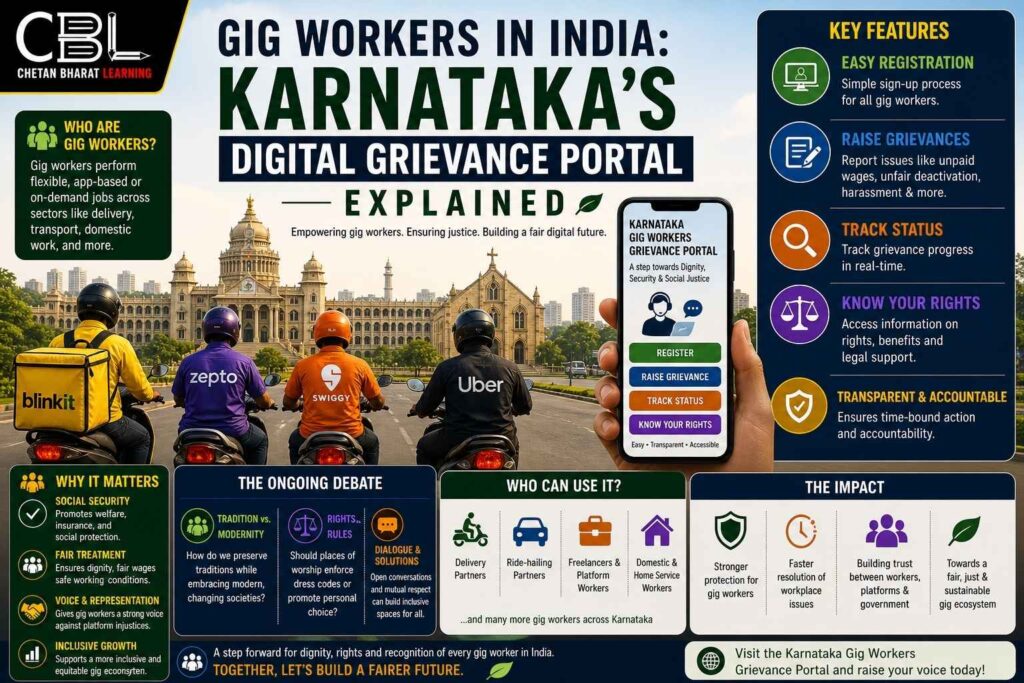
Key Features:
- Online complaint registration
- Automatic routing to companies
- Time-bound resolution
- Government monitoring
Legal Backing
- Based on:
→ Karnataka Platform-Based Gig Workers Act - Integrated with:
→ Public grievance systems
Why is it Important?
1. Worker Protection
- Addresses:
- Payment issues
- Work conditions
2. Formalisation
- Moves gig work from:
→ Informal → structured system
3. Transparency
- Clear grievance process
➤ Challenges
- Platform accountability
- Enforcement issues
- Digital literacy gaps
- Coverage limitations
Broader Significance
➤ Reflects:
- Changing nature of work
- Rise of platform economy
India-Specific Context
- Gig workforce growing rapidly
- Need for:
→ Social security & legal protection
Key Insight for UPSC
➤ Future labour reforms must:
✔ Adapt to digital economy
PRELIMS PRACTICE QUESTIONS
Q1. Gig economy refers to:
A. Permanent jobs
B. Contract-based work
C. Government jobs
D. Farming
✅ Answer: B
Q2. Gig workers are:
A. Farmers
B. Platform-based workers
C. Teachers
D. Doctors
✅ Answer: B
Q3. The grievance portal aims to:
A. Increase tax
B. Resolve disputes
C. Promote exports
D. Mining
✅ Answer: B
Q4. Gig economy is part of:
A. Traditional economy
B. Digital economy
C. Agricultural economy
D. Trade
✅ Answer: B
Q5. Labour reforms aim to:
A. Reduce jobs
B. Protect workers
C. Increase taxes
D. Reduce trade
✅ Answer: B
CBL Mains Practice Question
“The rise of the gig economy demands new labour governance frameworks.”
Discuss with reference to recent initiatives in India.
FAQs
1. What is the gig economy?
Work based on short-term contracts via digital platforms.
2. What is Karnataka’s initiative?
A grievance portal for gig workers.
3. Why is it important?
It provides legal protection and dispute resolution.
4. What are challenges?
Implementation and coverage issues.
5. Which GS paper covers this?
GS2 and GS3.
Related Current Affairs
Preparing for UPSC, PCS or HCS?
Talk to a mentor at Chetan Bharat Learning, Chandigarh. Free guidance on choosing the right exam and building a study plan.
Chat on WhatsAppCall 97793 53345UPSC / IAS / PCS coaching in Chandigarh · Trusted by aspirants across Punjab & Haryana
Leave a Reply
You must be logged in to post a comment.