
Important for:
UPSC, Haryana HCS, Punjab PCS
Prelims: Public health system, PHCs, CHCs, MBBS seats
Mains: GS Paper 2 — Health, Governance, Human Resource Challenges
Why in News?
The discussion around India’s healthcare system intensified after concerns were raised about:
✔ Shortage of specialist doctors
✔ Weak rural healthcare infrastructure
✔ Imbalance between medical education and public service needs
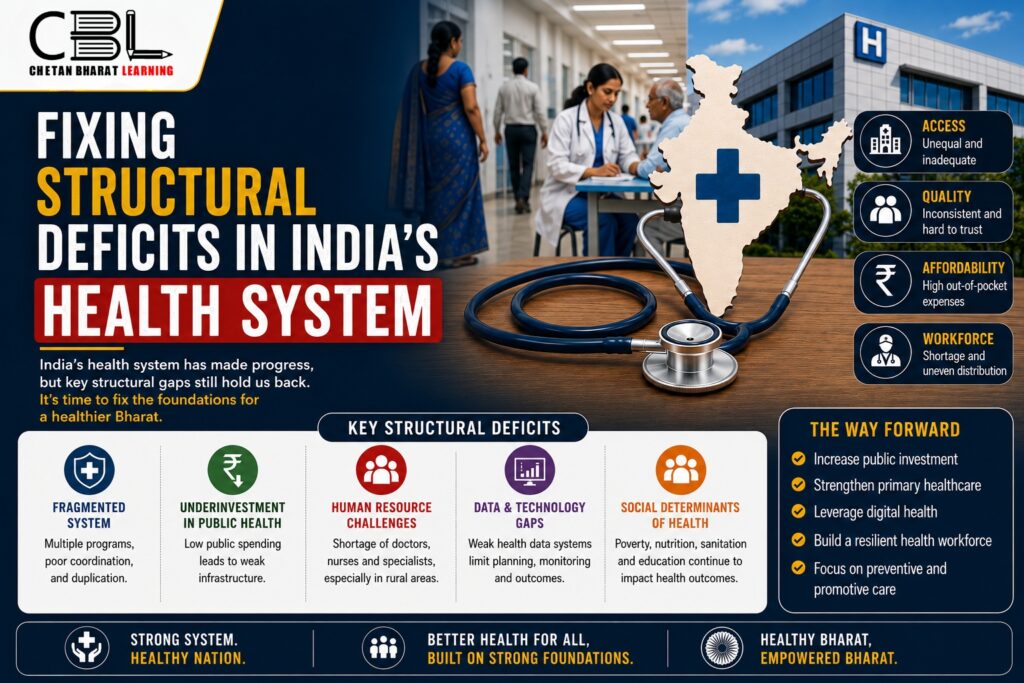
What are Structural Deficits in Health System?
Structural deficits refer to:
→ Long-term weaknesses in healthcare infrastructure and service delivery.
These include:
- Doctor shortages
- Rural healthcare gaps
- Poor hospital infrastructure
- Unequal access to specialists
Major Problems Highlighted
1. Shortage of Specialists
India faces major shortages in:
✔ Surgeons
✔ Physicians
✔ Gynaecologists
✔ Paediatricians
especially in rural areas.
2. Rural-Urban Health Divide
Most doctors prefer urban postings due to:
- Better facilities
- Higher income
- Better living conditions
3. Weak PHCs and CHCs
Primary Health Centres (PHCs) and Community Health Centres (CHCs) often lack:
✔ Equipment
✔ Staff
✔ Specialists
✔ Infrastructure
4. Medical Education Disconnect
Increase in MBBS seats alone is insufficient if:
→ Doctors avoid public service or rural postings.
What are PHCs and CHCs?
PHC (Primary Health Centre)
→ First level of healthcare contact in rural areas.
CHC (Community Health Centre)
→ Referral centre with specialist healthcare services.
Key Challenges
1. Vacancy Crisis
Large number of specialist posts remain vacant.
2. Poor Incentives
Rural postings often lack:
- Housing
- Safety
- Schools
- Career growth
3. Infrastructure Deficit
Many facilities lack:
✔ Functional operation theatres
✔ Diagnostic equipment
✔ Staff quarters
Suggested Solutions
1. Better Incentives
Provide:
✔ Higher salaries
✔ Better accommodation
✔ Career benefits
2. Stronger Public Health Investment
Increase healthcare spending and infrastructure funding.
3. Improve Rural Facilities
Strengthen PHCs and CHCs with modern equipment and specialists.
4. Align Education with Public Service
Medical education policies should support:
→ Public healthcare requirements.
Special Note for Aspirants
For students preparing in:
➤UPSC coaching Chandigarh
➤IAS coaching Chandigarh
topics like:
✔ Public health governance
✔ Rural healthcare
✔ Human resource shortages
✔ Social sector reforms
are highly important for:
→ GS2 Mains + Essay + Interview.
Key Insight for UPSC
→ Healthcare reforms require more than increasing MBBS seats.
Real improvement needs:
✔ Strong infrastructure
✔ Rural healthcare support
✔ Efficient human resource planning
PRELIMS PRACTICE QUESTIONS
Q1. PHC stands for:
A. Public Health Council
B. Primary Health Centre
C. Public Hospital Committee
D. Primary Human Care
→ Answer: B
Q2. CHC refers to:
A. Central Health Committee
B. Community Health Centre
C. Clinical Health Cell
D. Community Hospital Council
→ Answer: B
Q3. Which issue is most severe in rural healthcare?
A. Excess specialists
B. Infrastructure shortage
C. Excess hospitals
D. Low patient load
→ Answer: B
Q4. PHCs mainly provide:
A. Space research
B. Primary healthcare services
C. Stock market regulation
D. Judicial services
→ Answer: B
Q5. Rural doctor shortages mainly affect:
A. Urban trade
B. Public healthcare access
C. Parliament sessions
D. Foreign policy
→ Answer: B
CBL Mains Practice Question
“India’s healthcare challenges are deeply linked to structural deficits in rural health infrastructure and specialist availability.”
Discuss with suitable reforms.
FAQs
1. What are structural deficits in healthcare?
Long-term weaknesses in health infrastructure and manpower.
2. What is a PHC?
Primary Health Centre providing first-level healthcare.
3. Why are rural areas underserved?
Due to specialist shortages and weak infrastructure
4. Why is increasing MBBS seats alone insufficient?
Because doctors may avoid public or rural service
5. Which GS paper covers this topic?
GS Paper 2.
Related Current Affairs
Preparing for UPSC, PCS or HCS?
Talk to a mentor at Chetan Bharat Learning, Chandigarh. Free guidance on choosing the right exam and building a study plan.
Chat on WhatsAppCall 97793 53345UPSC / IAS / PCS coaching in Chandigarh · Trusted by aspirants across Punjab & Haryana
Leave a Reply
You must be logged in to post a comment.