
Introduction
India’s agricultural sector is facing fresh challenges as rising global fertiliser prices and supply chain disruptions threaten to significantly increase the country’s fertiliser subsidy burden. According to recent estimates, the fertiliser subsidy bill could touch nearly ₹3.4 lakh crore, almost double the budgeted allocation, due to escalating international prices and supply shortages.
The situation has emerged amid ongoing geopolitical tensions, logistical disruptions, and increasing demand for fertilisers across global markets. As India remains one of the world’s largest consumers of fertilisers, ensuring adequate availability at affordable prices is crucial for maintaining agricultural productivity and food security.
To protect farmers from rising costs, the government continues to sell fertilisers at heavily subsidised rates. However, this policy comes with substantial fiscal implications, making fertiliser subsidies an important issue for policymakers, economists, and UPSC aspirants alike.
Why Fertiliser Subsidies Matter in India
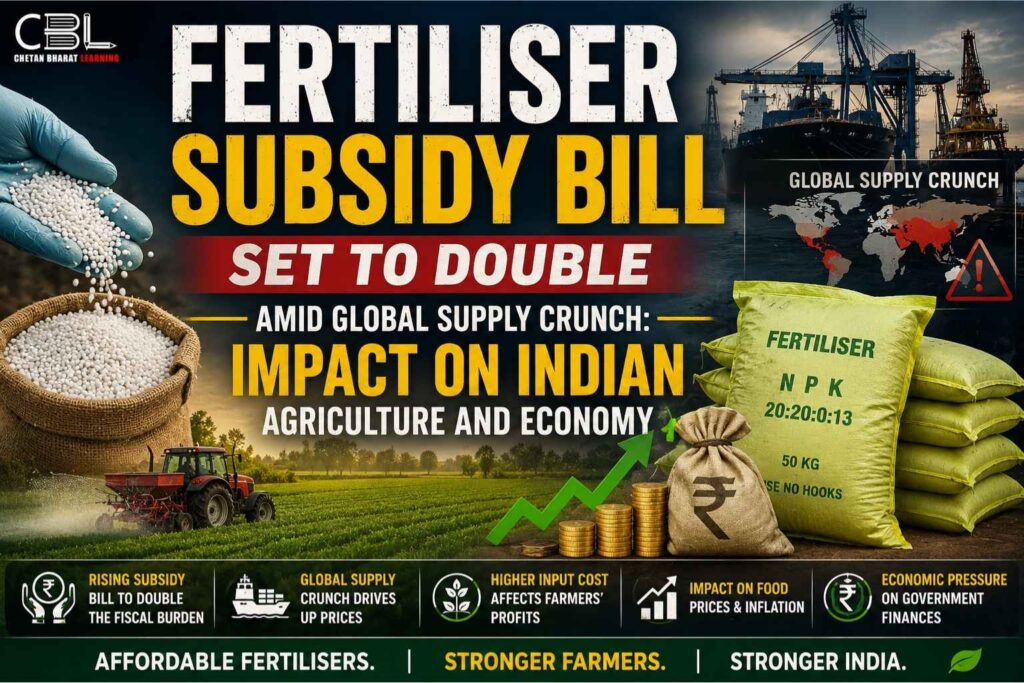
Agriculture continues to support millions of livelihoods across India. Fertilisers play a critical role in improving soil fertility, increasing crop yields, and ensuring food production for a growing population.
Without government support, rising international fertiliser prices would significantly increase cultivation costs for farmers. Higher input costs often lead to reduced profitability, lower agricultural investment, and potential declines in crop production.
To prevent such outcomes, the government provides subsidies that allow fertilisers to be sold at affordable prices. This support mechanism helps stabilize agricultural production and protects farmers from volatility in global markets.
The fertiliser subsidy system has therefore become one of the most important pillars of India’s agricultural policy framework.
Global Supply Crunch and Rising Fertiliser Costs
The current crisis is largely driven by disruptions in global fertiliser supply chains.
Several factors have contributed to the shortage. Geopolitical conflicts, sanctions, shipping disruptions, energy price volatility, and logistical bottlenecks have increased production and transportation costs worldwide.
Fertiliser manufacturing depends heavily on natural gas and other energy inputs. Rising energy prices have directly increased production costs for major fertiliser-producing countries.
At the same time, restrictions on exports by some countries and supply chain congestion at ports have further tightened availability in international markets. As a result, fertiliser prices have surged across the world.
For countries like India that depend significantly on imports, these developments have created serious challenges in maintaining affordable supplies.
Why India’s Subsidy Bill Could Double
Despite rising global prices, Indian farmers continue to purchase fertilisers at government-controlled subsidised rates.
Reports indicate that a fertiliser bag sold at approximately ₹300 today costs significantly more in international markets. The government absorbs this difference through subsidies.
As international prices continue rising, the gap between actual costs and retail prices widens. Consequently, government expenditure on subsidies increases substantially.
Officials estimate that the fertiliser subsidy burden could reach nearly ₹3.4 lakh crore if current market conditions persist. This represents a sharp increase from the original budget estimates and could place additional pressure on public finances.
The challenge for policymakers is balancing fiscal discipline with the need to support agricultural production and farmer welfare.
India’s Dependence on Fertiliser Imports
India has made considerable progress in domestic fertiliser production, but imports remain essential to meet overall demand.
The country imports significant quantities of urea, phosphatic fertilisers, potash, and raw materials required for manufacturing. Any disruption in global supply chains directly affects domestic availability and pricing.
To address potential shortages, public sector companies have reportedly floated tenders for additional imports. The government is also exploring alternative suppliers and strengthening partnerships with countries capable of meeting India’s fertiliser requirements.
Russia has emerged as a particularly important source due to its large production capacity and ability to provide competitive supplies.
Diversifying import sources remains a key strategy for reducing vulnerability to future disruptions.
Impact on Indian Farmers
For farmers, fertiliser availability is often more important than price discussions occurring at the policy level.
A shortage during critical agricultural seasons can negatively affect crop productivity, farm incomes, and overall agricultural output.
Government subsidies ensure that farmers continue receiving fertilisers at affordable rates despite rising international costs. This support helps maintain cultivation activities and prevents sudden increases in production expenses.
However, delays in imports or supply disruptions could still affect timely availability, especially during sowing seasons when demand peaks.
Ensuring uninterrupted supply therefore remains as important as maintaining subsidies.
Food Security Concerns
The fertiliser issue extends beyond agriculture and directly impacts food security.
Crop production depends heavily on adequate nutrient application. Any decline in fertiliser availability can reduce yields, affecting the production of cereals, pulses, oilseeds, and other essential commodities.
Lower agricultural output often translates into higher food prices, increased inflation, and greater economic stress for consumers.
India’s food security achievements over the past decades have been supported by reliable access to agricultural inputs. Maintaining fertiliser availability is therefore crucial for sustaining food production and controlling inflationary pressures.
Fiscal Challenges for the Government
While fertiliser subsidies benefit farmers, they also create significant fiscal challenges.
A subsidy bill approaching ₹3.4 lakh crore represents a major expenditure commitment. Such spending affects budget allocations for infrastructure, healthcare, education, and other development priorities.
Policymakers must carefully balance competing demands while ensuring support for agriculture remains intact.
The challenge becomes even greater during periods of global uncertainty when commodity prices remain volatile and supply disruptions persist.
Efficient subsidy management, improved targeting, and long-term reforms may become increasingly important in addressing these fiscal pressures.
Role of Russia in India’s Fertiliser Strategy
Russia has become an increasingly important partner in India’s efforts to secure fertiliser supplies.
As one of the world’s major producers of fertilisers and related raw materials, Russia can help India meet growing demand during periods of global shortages.
Strengthening trade relations with Russia may improve supply stability while reducing exposure to disruptions from other regions.
However, policymakers are also likely to continue diversifying sourcing arrangements to avoid excessive dependence on any single supplier.
A diversified import strategy provides greater resilience against future geopolitical and market shocks.
Logistics and Shipping Challenges
The fertiliser crisis is not only about production but also about transportation and logistics.
Port congestion, container shortages, higher freight rates, and shipping disruptions have increased delivery costs. Exporters and importers have reported concerns regarding opportunistic pricing by shipping carriers and additional charges imposed during transit.
These logistical challenges increase overall import costs and contribute to higher subsidy requirements.
Improving supply chain efficiency and strengthening port infrastructure could help reduce some of these pressures over the long term.
Long-Term Solutions for India
While immediate measures focus on securing imports and maintaining subsidies, long-term solutions require a broader approach.
Increasing domestic fertiliser production capacity can reduce import dependence and improve supply security. Investments in research and innovation may also promote efficient fertiliser use and alternative nutrient solutions.
Encouraging balanced fertiliser application, improving soil health management, and promoting sustainable agricultural practices can help reduce excessive consumption without affecting productivity.
Technology-driven precision agriculture could further optimize fertiliser use while lowering costs for farmers.
These reforms can strengthen agricultural sustainability while reducing fiscal pressures on the government.
Why This Topic Matters for UPSC Aspirants
The fertiliser subsidy issue is highly relevant for UPSC preparation because it connects multiple syllabus areas:
- Indian Economy
- Agriculture
- Food Security
- Government Subsidies
- International Trade
- Geopolitics
- Fiscal Policy
- Current Affairs
Questions related to fertiliser subsidies, agricultural inputs, food inflation, and global supply chains frequently appear in both UPSC Prelims and Mains examinations.
FAQs
What is fertiliser subsidy?
Fertiliser subsidy is financial assistance provided by the government to ensure farmers receive fertilisers at affordable prices.
Why is India’s fertiliser subsidy bill increasing?
Rising global fertiliser prices, supply shortages, and higher import costs are increasing subsidy requirements.
How do fertiliser subsidies help farmers?
Subsidies reduce cultivation costs and protect farmers from fluctuations in international fertiliser prices.
Why does India import fertilisers?
Domestic production alone cannot fully meet national demand, making imports necessary.
How does fertiliser availability affect food security?
Adequate fertiliser supplies support crop production, which is essential for maintaining food security and controlling inflation.
Conclusion
The global fertiliser supply crunch has emerged as a major challenge for India’s agricultural and economic landscape. Rising international prices and logistical disruptions are expected to significantly increase the government’s subsidy burden, potentially pushing fertiliser subsidies to record levels.
While subsidies remain essential for protecting farmers and ensuring food security, long-term solutions will require greater domestic production, diversified import sources, improved supply chains, and sustainable agricultural practices. How India manages this challenge will have important implications for agriculture, inflation, fiscal policy, and overall economic stability in the years ahead.
Related Current Affairs
Preparing for UPSC, PCS or HCS?
Talk to a mentor at Chetan Bharat Learning, Chandigarh. Free guidance on choosing the right exam and building a study plan.
Chat on WhatsAppCall 97793 53345UPSC / IAS / PCS coaching in Chandigarh · Trusted by aspirants across Punjab & Haryana
Leave a Reply
You must be logged in to post a comment.