
UPSC Mapping
| Prelims | Health |
|---|---|
| Mains | GS Paper 2 |
The current Ebola outbreak represents the fastest-growing viral emergency recorded in recent history. The World Health Organization recently flagged this escalating crisis in the Democratic Republic of Congo. Policymakers globally monitor these developments due to their massive impact on international health security. Students can track similar updates in our daily current affairs archive regularly. The ongoing epidemic severely threatens regional stability and cross-border medical infrastructure.
Quick Facts
| Total Cases | 6,000 Plus |
|---|---|
| Fatalities | 2,911 |
| Virus Strain | Bundibugyo |
| Hotspot | Ituri Province |
What is Ebola outbreak?
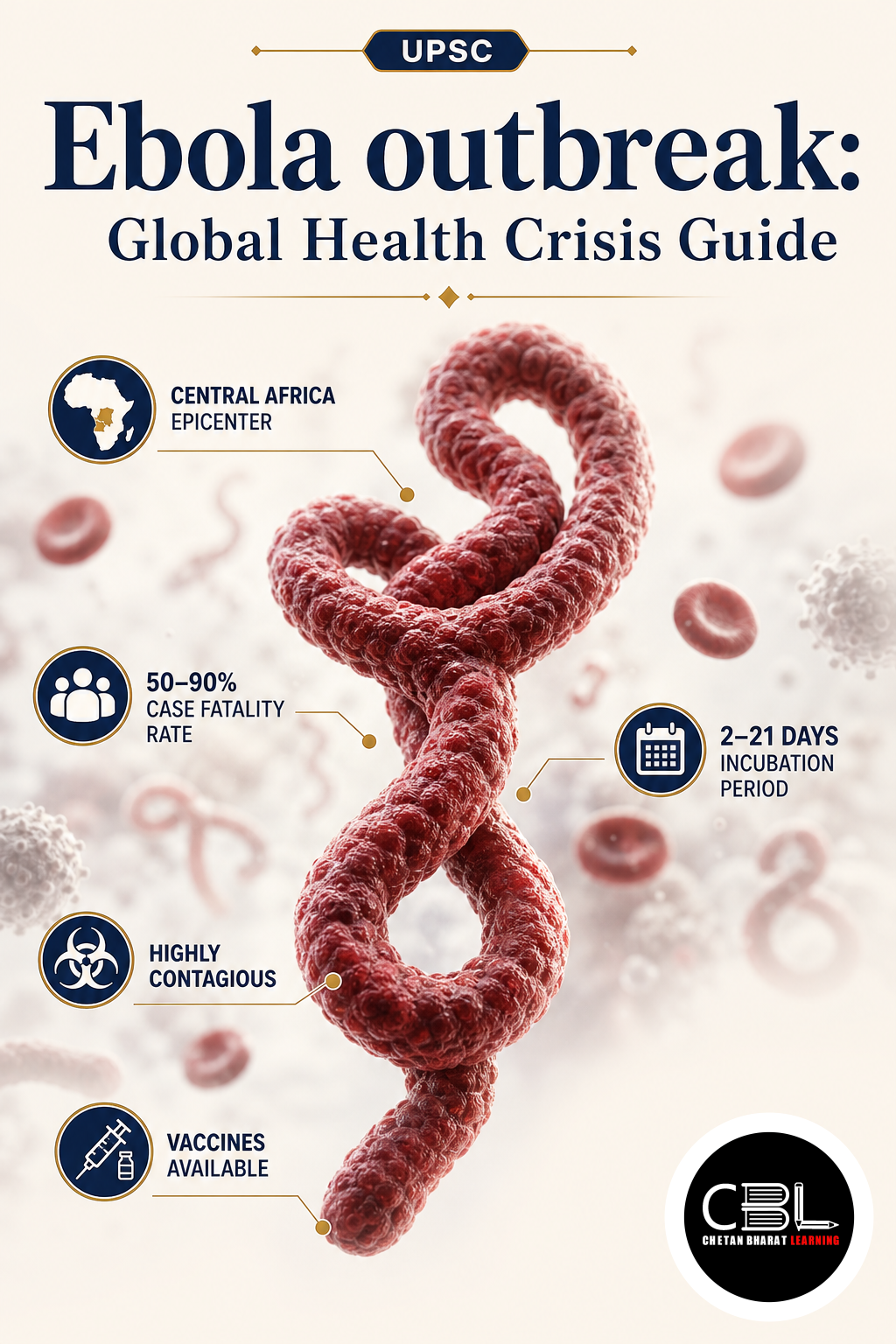
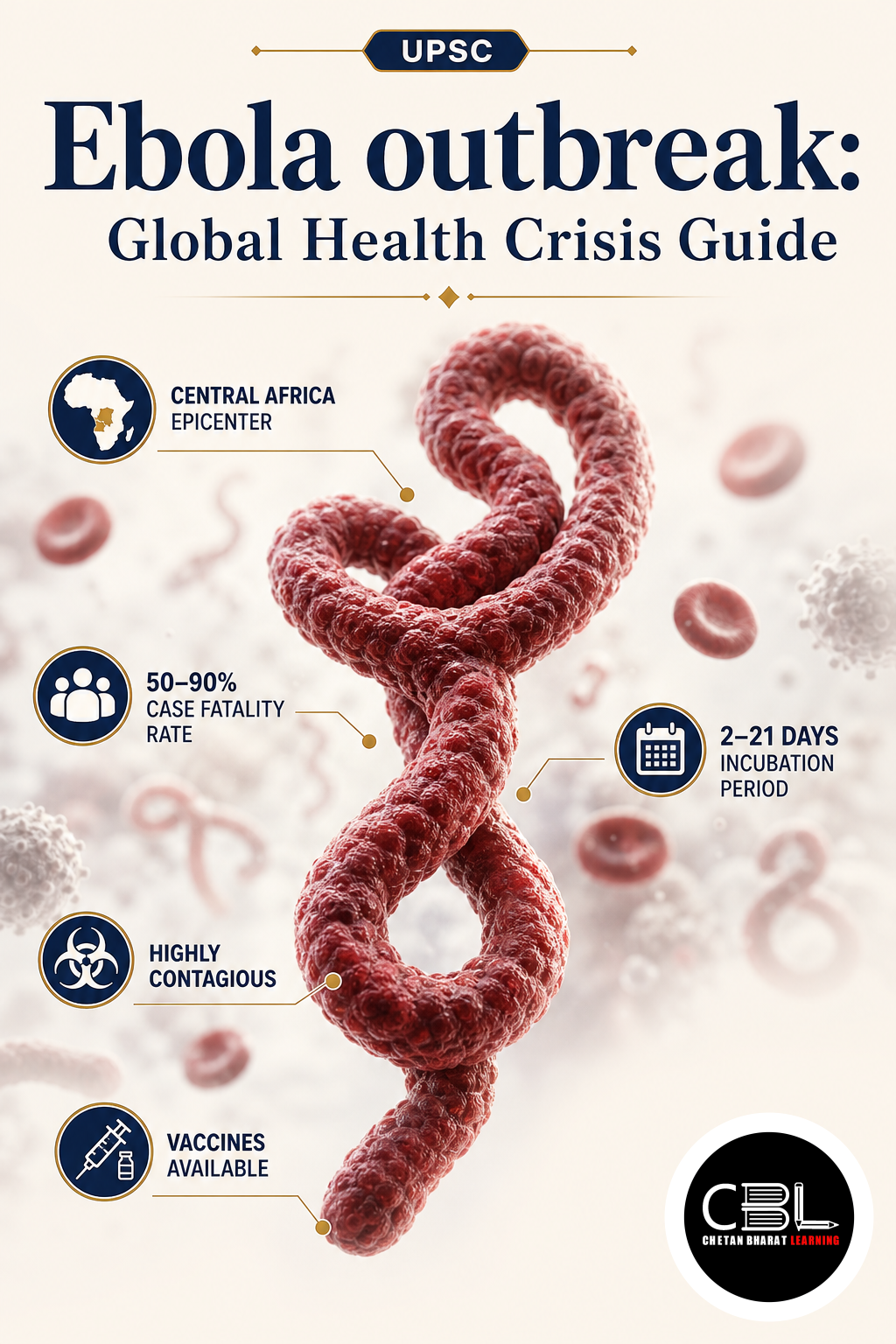
The Ebola outbreak involves a severe viral hemorrhagic fever transmitted through direct contact with bodily fluids. The specific strain driving this current crisis is the rare Bundibugyo virus. Medical teams struggle to contain the rapid spread across remote provincial health zones.
Unlike the more common Zaire variant, this specific pathogen lacks widely approved commercial vaccines. Researchers continuously monitor the mutation rates of these viral strands to ensure strict diagnostic reliability. Historical precedents show that delayed international responses inevitably lead to catastrophic cross-border transmission events.
The strategic pivot recognizes that controlling the underlying epidemiological vectors guarantees long-term global health security. The administration provides substantial financial incentives to domestic startups developing indigenous rapid-testing kits. Local engineers can now access advanced genomic sequencing tools through dedicated state-backed support mechanisms.
Why is Ebola outbreak in News?
Congolese authorities recently confirmed that the total case count surpassed 6,000 with nearly 3,000 fatalities. This staggering mortality rate prompted global health agencies to declare a severe international emergency. You can review the official global health alerts via this WHO portal for precise epidemiological data.
The virus recently spilled into two entirely new health zones, drastically expanding the geographical footprint of the epidemic. Global experts warn this trajectory could soon surpass the devastating 2014 West African crisis. That historical pandemic killed over 11,000 people and shattered regional economic networks.
Simultaneously, violent community resistance severely hampers the deployment of foreign medical personnel. Armed groups recently attacked a response team securing a funeral site in Mambasa. This hostile environment forces humanitarian workers to constantly evacuate critical isolation wards.
Key Features
- Rapid Transmission: The virus spreads quickly through traditional burial practices and community caregiving rituals.
- Bundibugyo Strain: This specific variant lacks widely approved vaccines compared to the more common Zaire strain.
- Security Threats: Armed groups and hostile communities frequently attack medical response teams operating in the field.
- Healthcare Collapse: Local clinics lack basic isolation wards and cold-chain storage for experimental therapeutics.
- Clinical Trials: Researchers are actively conducting emergency trials to find a licensed vaccine for this rare pathogen.
Challenges
Despite massive international funding, managing the Ebola outbreak presents several severe structural and geopolitical hurdles. Addressing these deep-rooted limitations remains crucial for maximizing actual public health outcomes across the region.
- Community Resistance: Deep-rooted mistrust of foreign medical workers severely hampers contact tracing and safe burial efforts.
- Vaccine Scarcity: Clinical trials for the Bundibugyo vaccine remain incomplete, leaving vulnerable populations entirely unprotected.
- Infrastructure Deficit: Remote forest terrains prevent the rapid deployment of heavy medical equipment and specialized personnel.
- Armed Conflict: Ongoing militia violence in Ituri province forces humanitarian workers to evacuate frequently, abandoning patients.
- Supply Chain Disruption: Regional instability severely restricts the import of essential personal protective equipment and medicines.
You can explore similar global health crises in our health section for deeper insights. Furthermore, the immense financial burden of importing expensive medical supplies strains the annual national exchequer significantly. Regular upgrades to the mobile laboratories require massive sustained investments spanning multiple years before generating tangible results.
Moreover, the highly seasonal nature of regional rainfall severely limits the continuous operational capacity of rural transit routes. Engineers must continuously develop specialized all-terrain vehicles to transport biological samples during prolonged monsoons. The rigorous maintenance schedules often keep the mobile clinics dormant for extended periods, reducing overall diagnostic viability.
Way Forward
The international community must accelerate the development of advanced indigenous vaccine platforms to achieve complete medical self-reliance. Integrating artificial intelligence with epidemiological tracking will drastically improve rural contact tracing efficiency nationwide. Providing localized technical assistance will drastically reduce the maintenance downtime of these complex mobile laboratories.
Check the latest CDC guidelines for strategic epidemic management frameworks. The global community must periodically review the baseline methodologies to ensure they reflect current viral mutation realities. Continuous refinement of the Ebola outbreak strategy will guarantee that the initiative delivers genuine health protection.
State governments must actively align their local quarantine policies with central guidelines to maximize regional synergies. Coordinated efforts between different administrative tiers will eliminate redundant paperwork for aspiring medical researchers. This unified approach will significantly accelerate the continental transition towards a self-reliant health infrastructure.
Policymakers must also focus heavily on creating a robust domestic market for alternative diagnostic technologies. Mandating the use of local components in government testing projects will guarantee initial demand for startups. This assured market access will provide the necessary confidence for private investors to fund ambitious biomedical ventures.
Prelims Practice Corner
Q1. Which specific viral strain is primarily responsible for the current crisis in Congo?
(a) Zaire (b) Sudan (c) Bundibugyo (d) Tai Forest
Answer: (c) The rare Bundibugyo virus is driving this specific emergency, lacking widely approved commercial vaccines.
Q2. Which historical pandemic does the WHO fear this current trajectory might surpass?
(a) 2009 H1N1 (b) 2014-2016 West Africa outbreak (c) 2003 SARS (d) 2012 MERS
Answer: (b) The 2014-2016 West Africa outbreak remains the deadliest on record, killing over 11,000 people.
Q3. What primary factor severely hampers the deployment of foreign medical personnel in Ituri province?
(a) Extreme weather (b) Armed conflict and community resistance (c) Lack of flights (d) Currency fluctuations
Answer: (b) Ongoing militia violence and hostile community actions frequently force humanitarian workers to evacuate.
Q4. How many fatalities were reported as the case count crossed the 6,000 mark?
(a) 1,500 (b) 2,911 (c) 4,200 (d) 5,500
Answer: (b) Authorities confirmed nearly 2,911 deaths alongside the 6,000 confirmed cases.
Q5. Which traditional practice significantly accelerates the transmission of this specific hemorrhagic fever?
(a) Water harvesting (b) Burial rituals (c) Crop burning (d) Cattle herding
Answer: (b) Direct contact with bodily fluids during traditional burial practices rapidly spreads the virus.
Mains Practice Questions
Q1. Discuss the structural challenges of containing viral hemorrhagic fevers in conflict-affected regions. (10 marks)
Intro: Define the current epidemiological crisis and highlight the intersection of public health and regional instability.
Body: Explain how armed conflict disrupts supply chains, while deep-rooted community mistrust hampers contact tracing and safe burial protocols.
Conclusion: Conclude that integrating humanitarian diplomacy with medical interventions is essential for epidemic control.
Q2. “Global health security requires rapid development of targeted vaccines for rare viral strains.” Analyze this statement in the context of the Bundibugyo virus. (15 marks)
Intro: Introduce the concept of viral mutation and the specific threat posed by rare strains lacking commercial vaccines.
Body: Analyze the limitations of current cold-chain infrastructure, the necessity of accelerated clinical trials, and the role of international funding mechanisms.
Conclusion: Suggest that proactive genomic surveillance and equitable vaccine distribution are critical pillars of modern pandemic preparedness.
FAQs on Ebola outbreak
Why is the Bundibugyo strain particularly difficult to manage?
Unlike the more common Zaire variant, the Bundibugyo strain currently lacks widely approved and commercially available vaccines. This forces medical teams to rely heavily on experimental therapeutics and strict isolation protocols to contain the spread.
How does community resistance impact the medical response?
Deep-rooted mistrust of foreign medical workers frequently leads to hostile actions against response teams. This resistance severely hampers critical contact tracing efforts and prevents the safe burial of highly contagious remains.
What historical precedent is the WHO using to gauge this crisis?
Global health agencies are comparing the current trajectory to the devastating 2014-2016 West Africa outbreak. That historical pandemic killed over 11,000 people and highlighted the catastrophic consequences of delayed international intervention.
Related Current Affairs
Preparing for UPSC, PCS or HCS?
Talk to a mentor at Chetan Bharat Learning, Chandigarh. Free guidance on choosing the right exam and building a study plan.
Chat on WhatsAppCall 97793 53345UPSC / IAS / PCS coaching in Chandigarh · Trusted by aspirants across Punjab & Haryana
Leave a Reply
You must be logged in to post a comment.