
UPSC Syllabus Mapping
- GS Paper: GS-III
- Subject: Indian Economy, Energy Security, Environment and Agriculture
- Syllabus Pointers: Prep with our comprehensive UPSC Current Affairs Hub analysis guidelines.
Article
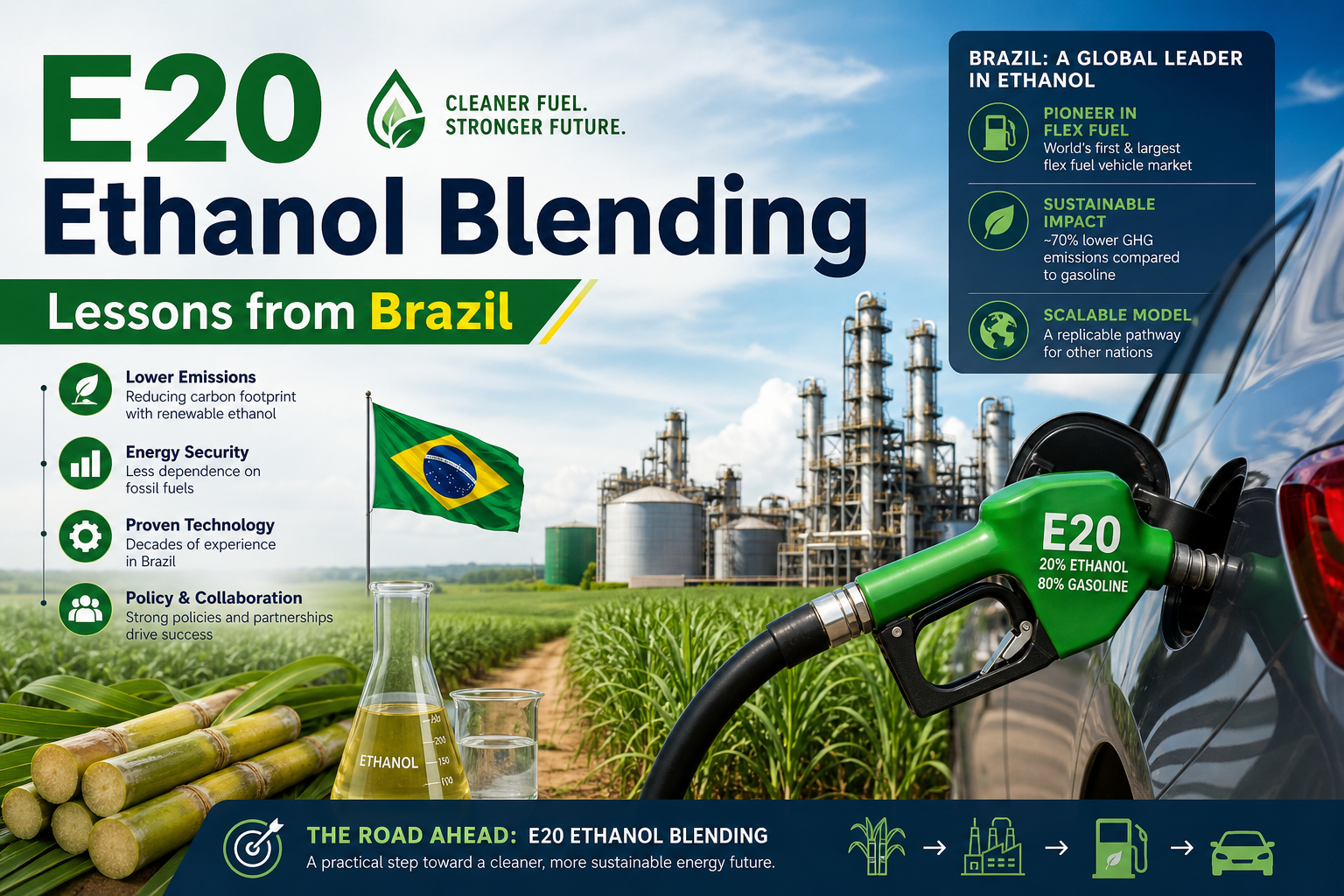
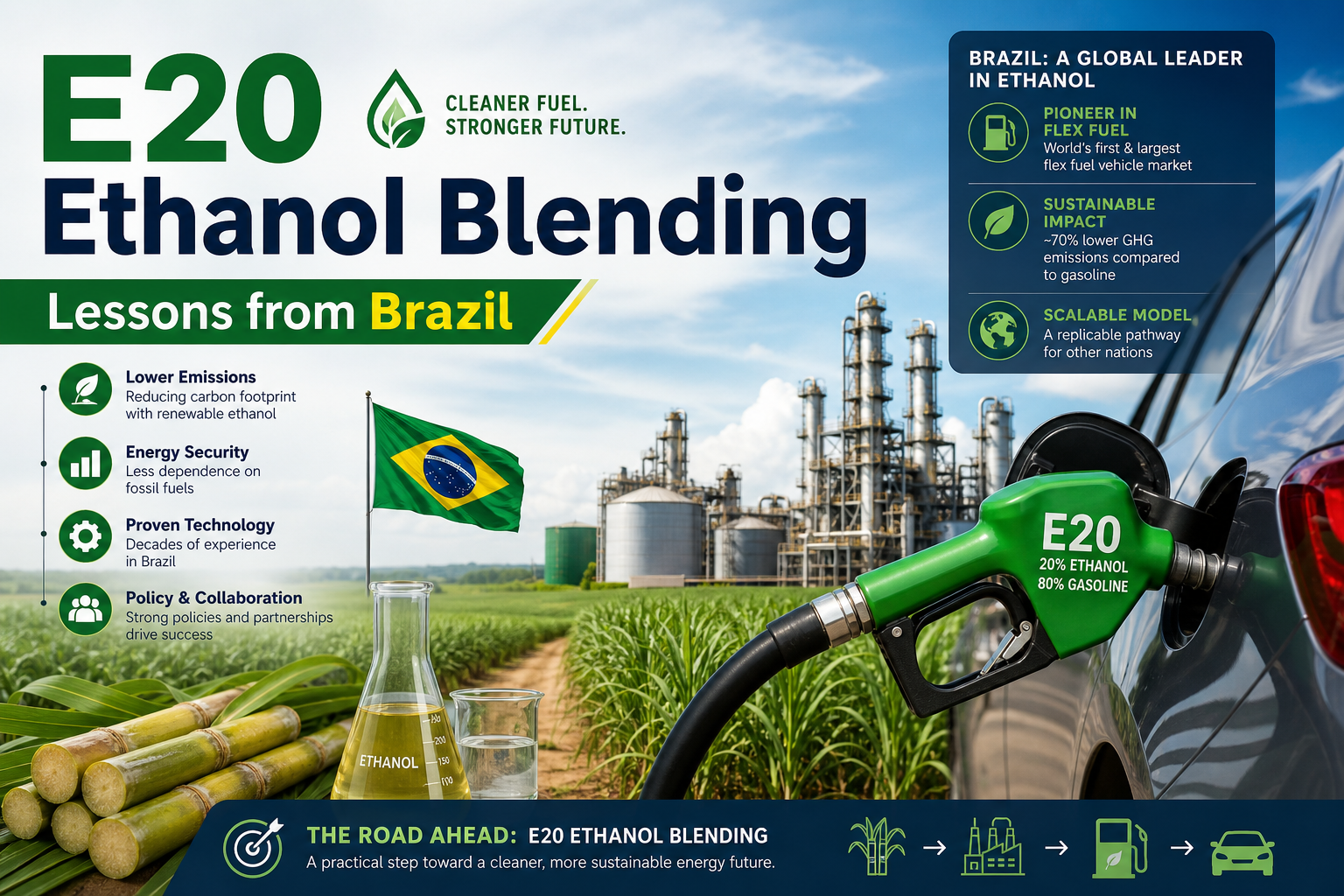
Recent updates regarding E20 Ethanol Blending highlight concerns over fuel efficiency after the nationwide rollout of 20% ethanol-blended petrol. The accompanying analysis compares India’s ethanol programme with Brazil’s long-standing biofuel transition and argues that India should adopt a calibrated approach supported by flex-fuel technologies and diversified feedstocks.
Key Dimensions of E20 Ethanol Blending
Ethanol is an alcohol-based renewable biofuel produced from agricultural feedstocks such as sugarcane, maize and agricultural residues. Blending ethanol with petrol reduces dependence on imported crude oil, lowers greenhouse gas emissions and supports cleaner transportation.
India’s Ethanol Blended Petrol (EBP) Programme, launched in 2003, achieved the E10 target ahead of schedule and has expanded to E20 (20% blending) across the country. The long-term objective is to enhance energy security while supporting farmers and the biofuel industry.
Lessons from Brazil
Brazil is considered a global leader in ethanol adoption due to decades of policy stability, widespread availability of flex-fuel vehicles, strong domestic ethanol production and a gradual increase in blending levels. Most passenger vehicles in Brazil are capable of operating on varying ethanol-petrol mixtures.
Unlike Brazil, India is rapidly increasing blending levels while the share of flex-fuel vehicles remains limited. This has led to concerns about mileage, engine compatibility and consumer awareness, especially for older vehicles.
Benefits and Challenges
Benefits:
- Reduced crude oil imports
- Improved energy security
- Lower vehicular emissions
- Additional income for farmers through biofuel feedstocks
- Promotion of circular economy and diversification of the energy mix
Challenges:
- Food-versus-fuel concerns
- Availability of sustainable feedstocks
- Vehicle compatibility
- Storage infrastructure
- Consumer acceptance
- Possible reduction in fuel economy for some vehicles
For broader understanding of ethanol as a transport fuel, refer to global developmental tracking frameworks.
Way Forward
India should expand second-generation ethanol production from agricultural residues, encourage flex-fuel vehicle adoption, diversify biofuel feedstocks beyond sugarcane and strengthen public awareness regarding compatible vehicles. Integration of ethanol, compressed biogas, electric mobility and hydrogen can create a balanced clean mobility ecosystem.
Prelims Practice Corner
Q1. E20 fuel refers to:
- (a) 20% biodiesel and 80% petrol
- (b) 20% ethanol and 80% petrol
- (c) 20% methanol and 80% petrol
- (d) Pure ethanol fuel
Answer & Explanation
Answer: (b)
E20 consists of 20% ethanol blended with 80% petrol.
Q2. Which of the following is a major advantage of ethanol blending?
- (a) Increased crude oil imports
- (b) Higher greenhouse gas emissions
- (c) Improved energy security and reduced oil imports
- (d) Elimination of renewable energy
Answer & Explanation
Answer: (c)
Ethanol blending reduces dependence on imported petroleum while supporting cleaner fuels and domestic agriculture.
Mains Practice Question
“India’s ethanol blending programme can strengthen energy security, but its long-term success depends on technology, sustainable feedstocks and consumer acceptance.” Discuss with lessons from Brazil. (150 Words, 10 Marks)
FAQs
Why is Brazil often cited as a model for ethanol blending?
Brazil has decades of policy continuity, a mature ethanol industry, widespread flex-fuel vehicles and a gradual transition strategy that has enabled high ethanol use while maintaining consumer confidence.
Related Current Affairs
Preparing for UPSC, PCS or HCS?
Talk to a mentor at Chetan Bharat Learning, Chandigarh. Free guidance on choosing the right exam and building a study plan.
Chat on WhatsAppCall 97793 53345UPSC / IAS / PCS coaching in Chandigarh · Trusted by aspirants across Punjab & Haryana
Leave a Reply
You must be logged in to post a comment.