
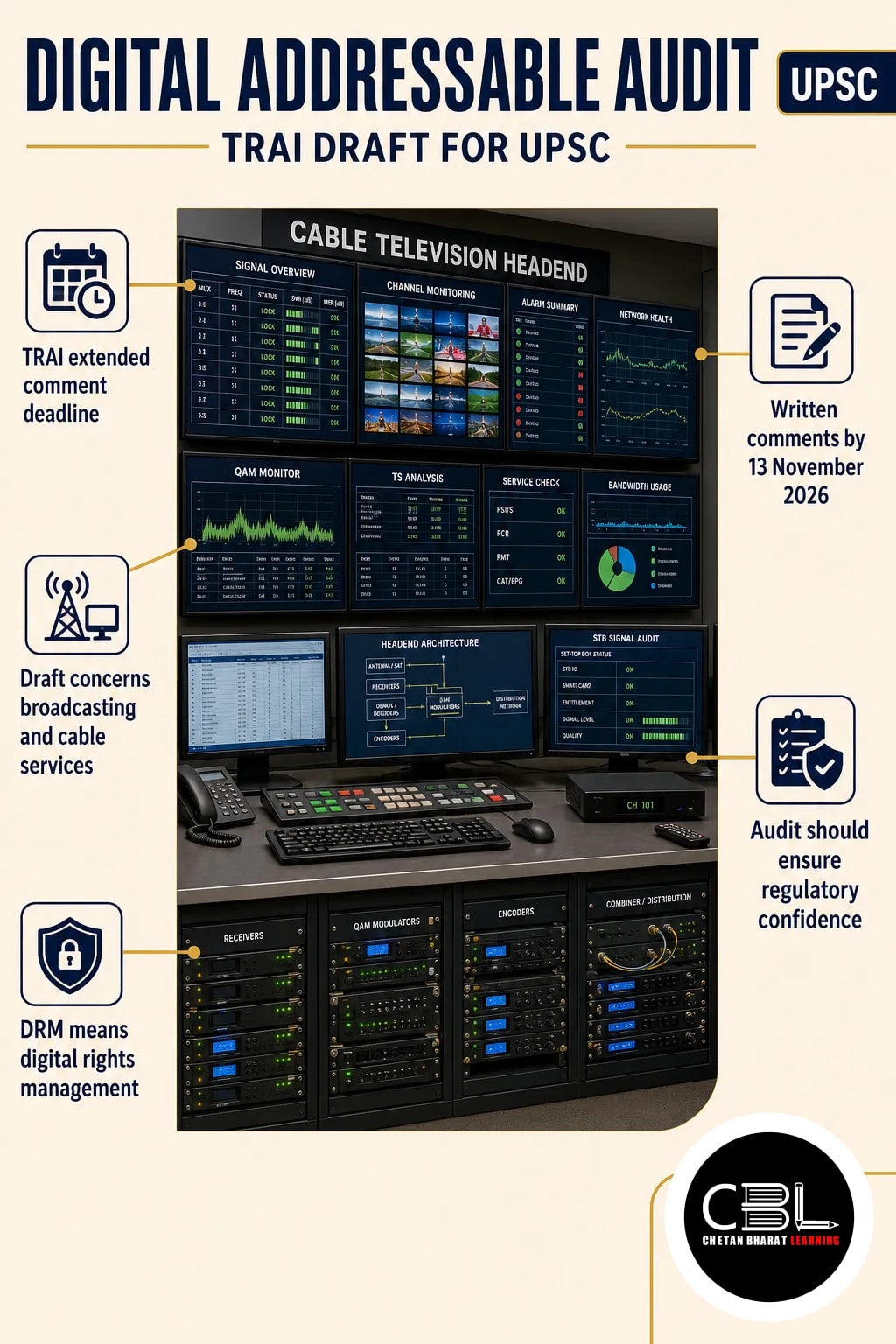
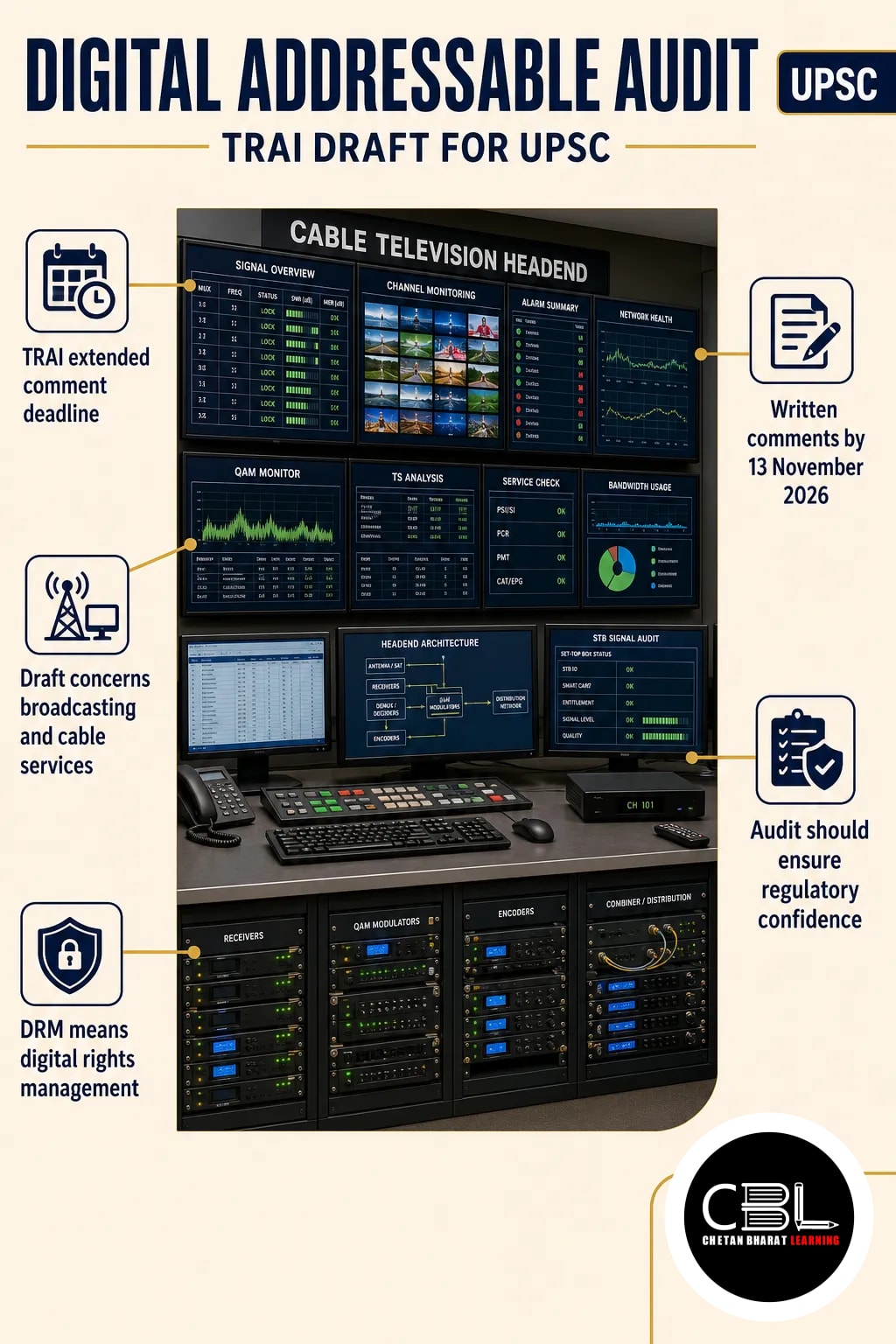
Digital addressable audit is in focus after India’s telecom regulator extended the consultation on a draft manual for broadcasting and cable services. The development adds to questions about digital technology and regulation.
Quick answer: The Telecom Regulatory Authority of India (TRAI) has extended the deadline for written comments on its draft digital addressable audit manual from 30 October to 13 November 2026. Released on 9 October, the draft concerns digital rights management (DRM)-based systems in broadcasting and cable services. Stakeholders sought more time to examine technical, operational and regulatory issues.
What is the digital addressable audit consultation?
It is TRAI’s invitation for comments on a draft audit manual for DRM-based digital addressable systems in broadcasting and cable services. The manual remains a draft; the deadline extension is not an announcement that final audit requirements have taken effect.
Digital addressability broadly allows a service to distinguish and manage access for individual subscribers or devices. DRM refers to technologies used to control access to and use of digital content. An audit can assess whether a system operates as required; however, the press release does not detail the draft’s audit tests or obligations.
Why did TRAI extend the deadline?
TRAI granted more time because stakeholders requested a detailed examination of technical, operational and regulatory aspects. It also stated that it would not consider further requests for an extension.
| Consultation fact | Detail |
|---|---|
| Draft issued | 9 October 2026 |
| Original closing date | 30 October 2026 |
| Revised closing date | 13 November 2026 |
| Submission | Written comments, preferably electronically, to advbcs-2@trai.gov.in and jtadvbcs-3@trai.gov.in |
TRAI is a statutory regulator established under the Telecom Regulatory Authority of India Act, 1997. For another aspect of its work, see CBL’s coverage of TRAI’s telecom drive tests.
Why does auditing digital systems matter?
Auditing can make complex digital processes more accountable by providing a basis for checking how a system works. For broadcasting and cable services, the policy significance lies in balancing verifiable access controls with practical compliance.
- Technical assurance: Clear tests can help an auditor assess whether access controls function consistently.
- Operational clarity: Defined records and responsibilities can make discrepancies easier to investigate.
- Regulatory confidence: Consistent evidence can help the regulator evaluate compliance without relying solely on an operator’s assertion.
- Subscriber interests: Reliable access management can support scrutiny of disputes about authorised services.
These are potential benefits, not findings about a particular provider. Moreover, the press release does not specify which safeguards or tests the draft proposes.
What are the regulatory challenges?
The central challenge is to make audit requirements technically meaningful and workable across different operating arrangements. TRAI’s extension recognises the need to examine these interconnected dimensions.
- Technical detail: An audit standard must define what evidence establishes that controls work, while allowing for changes in technology.
- Implementation costs: Extensive testing and record-keeping may impose different burdens on operators of different sizes.
- Audit independence: A credible process needs clear responsibilities and a way to address conflicts of interest.
- Information protection: Auditors may need system records; therefore, access should be limited to what their task requires.
- Remedies and review: A finding is useful only if affected parties understand how to respond and seek review.
These are issues for policy analysis rather than confirmed defects in the draft. The source does not establish its detailed provisions or assess its adequacy.
What should effective consultation and implementation consider?
Effective consultation should turn stakeholder feedback into clear, testable and proportionate requirements. First, stakeholders can explain where proposed tests are ambiguous or difficult to apply. They can also distinguish essential safeguards from procedures that add cost without improving verification.
Second, TRAI could consider publishing a reasoned response to major comments and clarifying how the final manual differs from the draft. In addition, implementation guidance could address auditor responsibilities, confidentiality and a process for correcting findings. These are suggested governance measures, not announced decisions.
Finally, evaluation should consider both compliance and user outcomes. A digital addressable audit framework is more useful when its checks are understandable to operators and capable of independent verification.
Source: Press Information Bureau, 31 October 2026
State PCS General Studies can test TRAI’s statutory status, consultation dates and the meaning of DRM. In addition, candidates can use the case to discuss transparency and accountability in technology regulation.
Prelims Practice Corner
Mains Practice Questions
Frequently Asked Questions
What is the deadline for comments on the draft audit manual?
The deadline is 13 November 2026. TRAI extended it from 30 October because stakeholders sought more time for detailed examination.
What does DRM mean in the TRAI draft?
DRM means digital rights management. It refers to technologies that control access to and use of digital content.
Has TRAI finalised the audit manual?
No, the announcement concerns a draft open for written comments. Therefore, the extension should not be treated as notification of a final manual.
Related Current Affairs
Preparing for UPSC, PCS or HCS?
Talk to a mentor at Chetan Bharat Learning, Chandigarh. Free guidance on choosing the right exam and building a study plan.
Chat on WhatsAppCall 97793 53345UPSC / IAS / PCS coaching in Chandigarh · Trusted by aspirants across Punjab & Haryana

 Ananya RanaIAS · AIR 60
 Aditya SharmaIAS · AIR 70
 Ria Kaur SethiIPS · AIR 89
 Aman AloonIRS · AIR 295
 Sumer Singh VirkIRS · AIR 335
 Shivani PanchalIAS

Leave a Reply
You must be logged in to post a comment.