

UPSC Mapping
| Prelims | Infrastructure & Transport |
|---|---|
| Mains | GS Paper 3 (Infrastructure) |
| Report Number | 392nd |
|---|---|
| Key Proposal | All-India Passenger Permit |
| Budget Allocation | 25% for public transport |
What is the Bus Transport Overhaul?
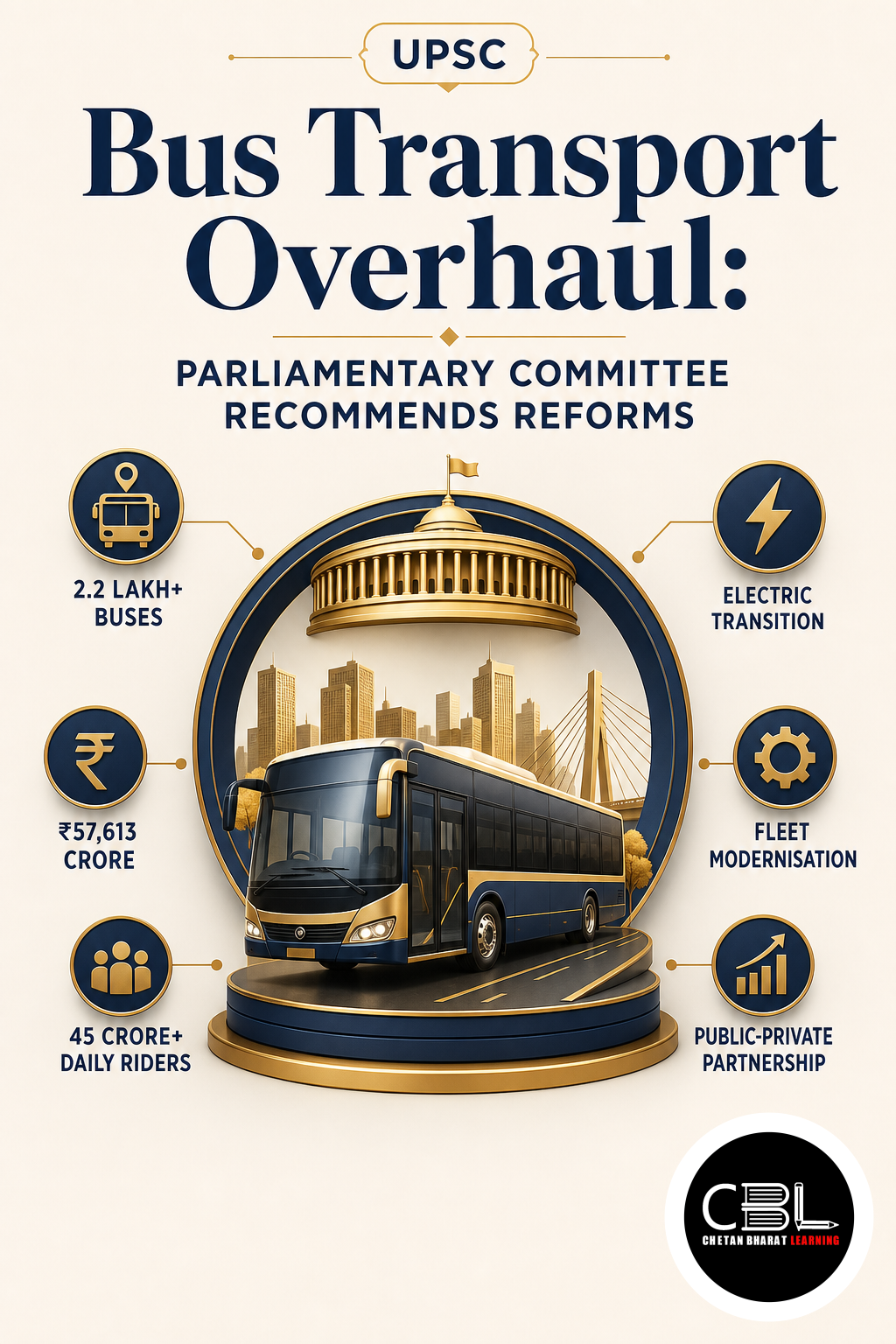
The Bus Transport Overhaul refers to a comprehensive set of reforms proposed by the Parliamentary Standing Committee to modernise India’s bus transport system, which remains fragmented and underfunded. Key proposals include replacing the All-India Tourist Permit with a single All-India Passenger Permit within a year, eliminating physical inter-state check-posts using VAHAN, FASTag, and other digital tools.
The committee also recommends creating a National Bus Digital Grid for tracking and unified ticketing, alongside a National Tourist Bus Grid connecting buses with railways, metros, and airports. A National Bus Terminals Authority, akin to the Airports Authority of India, is proposed to manage infrastructure funding.
Why is Bus Transport Overhaul in News?
The Bus Transport Overhaul is in the news because the committee tabled its 392nd report with concrete recommendations to address long-standing issues in the bus sector. The proposals come against the backdrop of a fragmented permit system, outdated fleets, and inadequate public transport infrastructure.
The committee also suggested allocating 25% of the road-sector budget to public transport infrastructure and introducing a fleet-transition compact to promote commercial leasing, accelerate end-of-life vehicle scrapping, and incentivise electric bus adoption. For more details, refer to this PIB release.
Key Features of Bus Transport Overhaul
- Unified Permit System: Single All-India Passenger Permit replacing tourist permits; elimination of physical check-posts.
- Digital Integration: National Bus Digital Grid for tracking and unified ticketing; National Tourist Bus Grid connecting multimodal transport.
- Infrastructure Funding: National Bus Terminals Authority; 25% of road-sector budget for public transport.
- Fleet Modernisation: Fleet-transition compact for commercial leasing, scrapping, and electric bus adoption.
- Gender-Inclusive Mobility: Peak-hour bus services staffed entirely by women, with CCTV and emergency alert systems.
Challenges in Bus Transport Overhaul
- State-Level Adoption: Bus transport is a state subject; cooperation from states is essential for permit reforms and infrastructure.
- Funding: Allocating 25% of the road-sector budget requires re-prioritisation and may face resistance from other sectors.
- Fleet Modernisation: Transitioning to electric buses requires significant capital investment and charging infrastructure.
- Digital Infrastructure: Creating a unified digital grid across states requires interoperability and standardisation.
- Gender-Inclusive Services: Deploying women-only staffed buses requires recruitment, training, and safety measures.
Way Forward for Bus Transport Overhaul
To realise the Bus Transport Overhaul, the central government should engage in structured consultations with states to build consensus on permit reforms and funding. A phased approach—starting with digital integration and pilot projects for electric buses—can ensure smooth implementation.
Public-private partnerships can accelerate infrastructure development and fleet modernisation. Gender-inclusive mobility should be implemented with robust safety protocols and awareness campaigns. Regular monitoring and evaluation, along with transparent performance metrics, will ensure the reforms deliver tangible benefits. For international best practices, refer to the ITDP.
Prelims Practice Corner
Q1. Which parliamentary committee tabled the 392nd report on bus transport overhaul?
- (a) Committee on Transport and Tourism
- (b) Standing Committee on Infrastructure
- (c) Public Accounts Committee
- (d) Committee on Urban Development
Answer: (a) The Department-related Parliamentary Standing Committee on Transport, Tourism and Culture tabled the report.
Q2. What does the committee recommend replacing the All-India Tourist Permit with?
- (a) State-level permits
- (b) All-India Passenger Permit
- (c) Digital permits only
- (d) No changes
Answer: (b) The recommendation is to replace tourist permits with a single All-India Passenger Permit.
Q3. What percentage of the road-sector budget should be allocated to public transport?
- (a) 10%
- (b) 15%
- (c) 25%
- (d) 30%
Answer: (c) The committee recommends allocating 25% to public transport infrastructure.
Q4. What is the National Bus Digital Grid?
- (a) A digital platform for bus tracking and ticketing
- (b) A network of bus terminals
- (c) A database of bus operators
- (d) A GPS system for buses
Answer: (a) It is a digital grid for tracking and unified ticketing of bus services.
Q5. What is one of the gender-inclusive mobility proposals?
- (a) Free bus passes for women
- (b) Peak-hour buses staffed entirely by women
- (c) Separate buses for women
- (d) Discounted fares for women
Answer: (b) The proposal includes deploying peak-hour bus services staffed entirely by women with CCTV surveillance.
Mains Practice Questions
Q1. Discuss the key recommendations of the Parliamentary Committee on bus transport overhaul and their potential impact on India’s public transport system. (250 words, 15 marks)
Answer Structure
Intro: Introduce the report and its significance.
Body: Discuss key proposals: unified permit, digital grid, funding, fleet modernisation, gender inclusivity. Analyse the potential benefits and implementation challenges.
Conclusion: Emphasise the need for state-centre coordination and phased implementation.
Q2. What is the importance of bus transport in India’s urban mobility, and what reforms are needed to improve it? (150 words, 10 marks)
Answer Structure
Intro: Highlight the role of buses in mass transit.
Body: Discuss the current challenges: fragmented permits, outdated fleets, inadequate infrastructure. Suggest reforms: unified permits, digital integration, electric fleet transition, and gender inclusivity.
Conclusion: Conclude that bus transport overhaul is crucial for sustainable urban development.
FAQs on Bus Transport Overhaul
What is the bus transport overhaul proposal?
It is a comprehensive set of reforms by a Parliamentary Committee, including unified permits, digital grids, fleet modernisation, and gender-inclusive mobility.
What is the All-India Passenger Permit?
It is a proposed single permit replacing tourist permits, allowing seamless interstate bus operations.
How will the overhaul be funded?
The committee recommends establishing a National Bus Terminals Authority and allocating 25% of the road-sector budget to public transport.
Related Current Affairs
Preparing for UPSC, PCS or HCS?
Talk to a mentor at Chetan Bharat Learning, Chandigarh. Free guidance on choosing the right exam and building a study plan.
Chat on WhatsAppCall 97793 53345UPSC / IAS / PCS coaching in Chandigarh · Trusted by aspirants across Punjab & Haryana
Leave a Reply
You must be logged in to post a comment.