
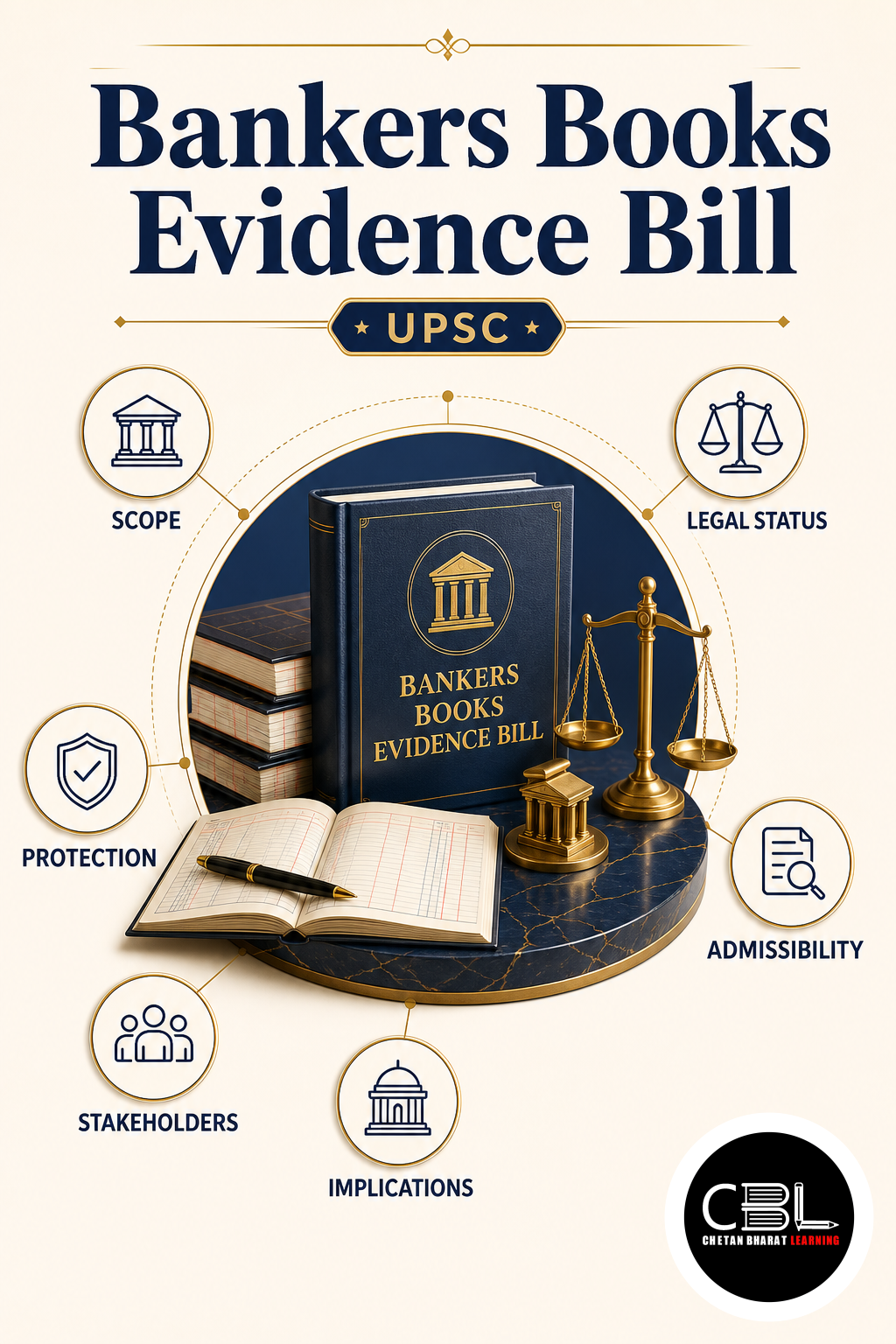

UPSC Mapping
| Prelims | Banking Laws, Digital Evidence, Electronic Records |
|---|---|
| Mains | GS Paper III – Banking, Digital Governance and Financial Sector Reforms |
Quick Facts
| Replaces | Bankers’ Books Evidence Act, 1891 |
|---|---|
| Focus | Digital Banking & Electronic Evidence |
What is Bankers Books Evidence Bill?
The Bankers Books Evidence Bill is a modern legal framework that recognises authenticated electronic banking records as legally admissible evidence. It replaces the Bankers’ Books Evidence Act, 1891, which was enacted during British rule. The earlier law focused mainly on physical account books and paper records. The new legislation adopts a technology-neutral approach by recognising authenticated electronic records alongside traditional records.
Why is Bankers Books Evidence Bill in News?
The Lok Sabha passed the Bill by voice vote despite opposition from several members. The legislation updates banking evidence laws to reflect the realities of digital banking and electronic transactions.
Key Features
- Digital evidence recognised: Authenticated electronic banking records become legally admissible evidence.
- Technology-neutral framework: The law covers both physical and electronic banking records.
- Modern banking systems: UPI, RTGS, NEFT, IMPS, core banking systems and digital account statements are included.
- Broader definition of bankers’ books: Includes electronic transaction logs, databases and digital customer records.
- Supports Digital India: Links with digital governance and paperless administration.
Challenges
- Cybersecurity: Digital records remain vulnerable to hacking and data breaches.
- Data privacy: Customer banking information requires strong protection.
- Authenticity: Electronic records must remain secure and tamper-resistant.
- Digital infrastructure: Reliable technological systems are necessary for implementation.
- Legal coordination: The Bill is linked with Bharatiya Sakshya Adhiniyam, 2023 and other digital laws.
Way Forward
Recognising authenticated electronic banking records strengthens financial investigations, improves judicial efficiency and promotes paperless governance. Effective cybersecurity, privacy safeguards and secure digital infrastructure will be essential for successful implementation.
Prelims Practice Corner
Question 1
The Bankers Books Evidence Bill replaces which law? (a) Banking Regulation Act (b) Bankers’ Books Evidence Act, 1891 (c) RBI Act (d) Negotiable Instruments Act
Answer: (b)
Question 2
The Bill primarily recognises? (a) Gold reserves (b) Electronic banking records (c) Tax records (d) Election records
Answer: (b)
Question 3
Which payment system is mentioned in the infographic? (a) UPI (b) Bitcoin (c) SWIFT only (d) Aadhaar Pay only
Answer: (a)
Question 4
The material links the Bill with? (a) Bharatiya Sakshya Adhiniyam, 2023 (b) Forest Act (c) Companies Act only (d) GST Act
Answer: (a)
Question 5
Which is identified as a major implementation challenge? (a) Monsoon (b) Cybersecurity (c) Tourism (d) Fisheries
Answer: (b)
Mains Practice Questions
Question 1
Discuss how the Bankers Books Evidence Bill reflects the changing nature of digital banking in India. (10 marks)
Answer Structure
- Intro: Explain the need for modern banking evidence laws.
- Body: Electronic records, digital banking, judicial efficiency, governance benefits.
- Conclusion: Highlight the importance of secure implementation.
Question 2
Examine the opportunities and challenges associated with recognising electronic banking records as legal evidence. (15 marks)
Answer Structure
- Intro: Define digital evidence.
- Body: Advantages, cybersecurity, privacy, infrastructure, legal safeguards.
- Conclusion: Balance innovation with secure governance.
FAQs on Bankers Books Evidence Bill
Why is the Bankers Books Evidence Bill important for UPSC?
It connects banking reforms, digital governance, electronic evidence and financial regulation under GS Paper III.
What major reform does the Bill introduce?
It recognises authenticated electronic banking records as legally admissible evidence.
What challenges are highlighted?
The infographic identifies cybersecurity, data privacy, authenticity of digital records and digital infrastructure as key implementation challenges.
Related Current Affairs
Preparing for UPSC, PCS or HCS?
Talk to a mentor at Chetan Bharat Learning, Chandigarh. Free guidance on choosing the right exam and building a study plan.
Chat on WhatsAppCall 97793 53345UPSC / IAS / PCS coaching in Chandigarh · Trusted by aspirants across Punjab & Haryana
Leave a Reply
You must be logged in to post a comment.