

UPSC Mapping
| Prelims | Mains |
|---|---|
| International Relations | GS Paper 2 |
| Target | Location | Trigger | US Strategy |
|---|---|---|---|
| IRGC Facilities | Gulf Coast | Shipping Attacks | Maximum Pressure |
What is US Iran strikes?
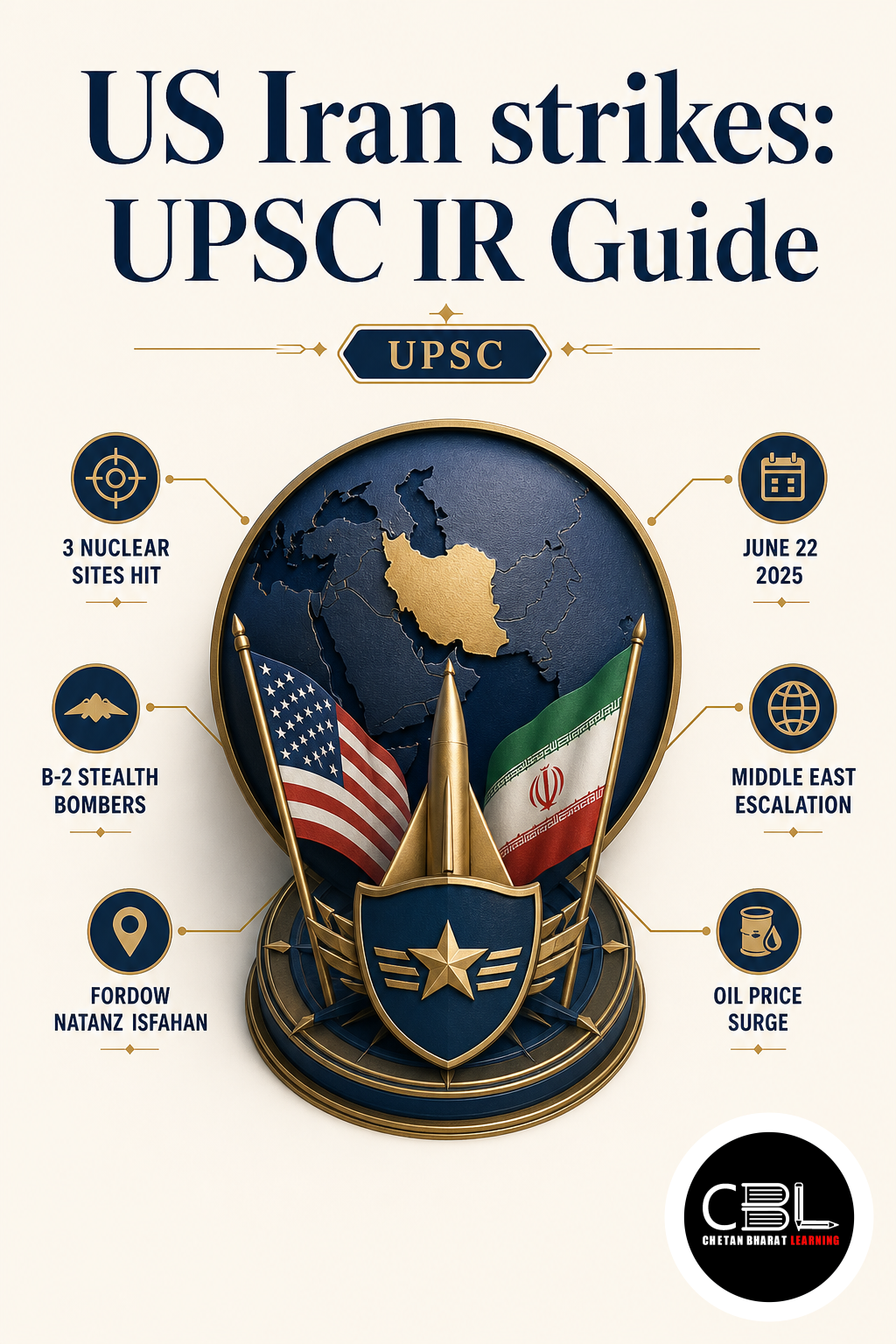
The US Iran strikes represent a series of targeted military actions against Iranian naval infrastructure. Washington launched these attacks to deter further disruptions to commercial shipping in the Strait of Hormuz. The Pentagon specifically targeted launch sites responsible for harassing international vessels transiting these narrow waterways.
Tehran views these military actions as direct violations of its national sovereignty and territorial integrity. The Iranian leadership subsequently threatened to completely block oil exports from the entire Persian Gulf. This aggressive posturing immediately triggered severe volatility in global crude oil markets and supply chains.
Why are US Iran strikes in News?
The American administration recently launched a fresh barrage of airstrikes targeting multiple coastal Iranian cities. Explosions were reported in strategic locations including Bandar Abbas and the critical port of Chabahar. You can review the official geopolitical briefs via the MEA portal for precise diplomatic statements.
Simultaneously, the US Treasury announced sweeping new bank sanctions designed to economically isolate the Iranian regime. Financial experts warn that this maximum pressure campaign could completely sever Tehran from remaining global trade networks. The collapse of the previous June memorandum has effectively eliminated all diplomatic off-ramps for peace negotiations.
Key Features
- Targeted Strikes: The US military specifically destroyed missile launch sites threatening commercial vessels transiting the narrow waterways.
- Economic Asphyxiation: Washington imposed severe secondary bank sanctions to completely isolate the regime from foreign currency reserves.
- Chokepoint Defense: Naval forces actively patrol the strategic straits to guarantee the uninterrupted flow of global energy supplies.
- Diplomatic Collapse: The expiration of the sixty-day negotiation window effectively ended all temporary ceasefire agreements between the rivals.
Challenges
- Energy Shock: A complete blockade of the Gulf would instantly remove millions of barrels from the global daily supply.
- Escalation Risk: Retaliatory attacks on regional military bases could trigger a devastating full-scale regional war.
- Supply Chain Disruption: Rerouting global shipping away from the Middle East drastically increases freight costs and delivery timelines.
- Alliance Friction: Divergent energy needs frequently strain diplomatic relations between Western nations and emerging Asian economies.
You can explore similar geopolitical crises in our international relations section for deeper insights.
Way Forward
The international community must urgently establish backchannel communication networks to prevent accidental military miscalculations. Reviving multilateral diplomatic frameworks remains the only viable method to de-escalate this dangerous maritime standoff. Providing neutral mediation will drastically reduce the likelihood of a catastrophic regional conflict.
Check the latest UN Security Council updates for strategic peacekeeping mandates. The global community must periodically review the baseline methodologies to ensure they reflect current maritime security realities. Continuous diplomatic engagement regarding the US Iran strikes will guarantee that the region avoids complete economic collapse.
Prelims Practice Corner
Q1. Which specific Iranian military branch was primarily targeted by the recent American airstrikes?
(a) Regular Army (b) IRGC (c) Basij Militia (d) Air Force
Answer: (b) The US military targeted Islamic Revolutionary Guard Corps facilities responsible for maritime harassment.
Q2. Which critical maritime chokepoint is at the center of this specific geopolitical crisis?
(a) Bab-el-Mandeb (b) Suez Canal (c) Strait of Hormuz (d) Malacca Strait
Answer: (c) The conflict heavily centers on securing commercial shipping transiting the Strait of Hormuz.
Q3. What primary economic weapon did the US Treasury recently deploy against Tehran?
(a) Tariff hikes (b) Bank sanctions (c) Export quotas (d) Currency pegging
Answer: (b) Washington imposed severe secondary bank sanctions to economically isolate the Iranian regime.
Q4. Which Iranian port city reportedly experienced explosions during the latest military escalation?
(a) Tehran (b) Isfahan (c) Chabahar (d) Shiraz
Answer: (c) Explosions were reported in strategic coastal locations including the critical port of Chabahar.
Q5. What happened to the June memorandum intended to halt the regional conflict?
(a) It was extended (b) It collapsed after sixty days (c) It was ratified by the UN (d) It merged with another treaty
Answer: (b) The expiration of the sixty-day negotiation window effectively ended all temporary ceasefire agreements.
Mains Practice Questions
Q1. Discuss the impact of recurring military conflicts in the Persian Gulf on India’s energy security and macroeconomic stability. (10 marks)
Answer Structure:
Intro: Define the strategic importance of the Strait of Hormuz for India’s massive crude oil import requirements.
Body: Discuss the vulnerabilities of supply chain disruptions, imported inflation, and the necessity of strategic petroleum reserves and source diversification.
Conclusion: Conclude that proactive energy diplomacy and accelerating the domestic green transition are essential for long-term macroeconomic resilience.
Q2. Economic sanctions and military strikes often fail to resolve deep-rooted geopolitical disputes in West Asia. Critically analyze. (15 marks)
Answer Structure:
Intro: Introduce the recent escalation of US Iran strikes and the strategy of maximum economic pressure against regional actors.
Body: Analyze the limitations of coercive diplomacy, the risk of asymmetric retaliation, and the subsequent disruption of global maritime trade and energy markets.
Conclusion: Suggest that inclusive multilateral dialogue and addressing core security anxieties remain the only sustainable pathways to regional peace.
FAQs on US Iran strikes
Why is the Strait of Hormuz so critical to the global economy?
This narrow waterway serves as the primary transit route for nearly a third of the world’s seaborne oil trade. Any disruption here instantly triggers massive spikes in global energy prices and severe supply chain bottlenecks.
How do secondary bank sanctions affect neutral trading nations?
These financial restrictions penalize foreign entities that continue conducting business with the sanctioned regime. This forces neutral nations and private corporations to completely sever their commercial ties to avoid losing access to Western financial systems.
What role does the Chabahar port play in this specific geopolitical context?
This strategic coastal facility provides crucial maritime access for regional trade and humanitarian corridors. Military instability near this port severely complicates overland connectivity projects linking South Asia with Central Asian markets.
Related Current Affairs
Preparing for UPSC, PCS or HCS?
Talk to a mentor at Chetan Bharat Learning, Chandigarh. Free guidance on choosing the right exam and building a study plan.
Chat on WhatsAppCall 97793 53345UPSC / IAS / PCS coaching in Chandigarh · Trusted by aspirants across Punjab & Haryana
Leave a Reply
You must be logged in to post a comment.