

UPSC Mapping
| Exam | Topic |
|---|---|
| Prelims | Environment / Disaster Management |
| Mains | GS Paper III – Environment, Disaster Management |
Quick Facts
| Category | Detail |
|---|---|
| Region | Parts of Europe |
| Trigger | Extreme heat |
| Secondary risk | Unexploded ordnance |
Article
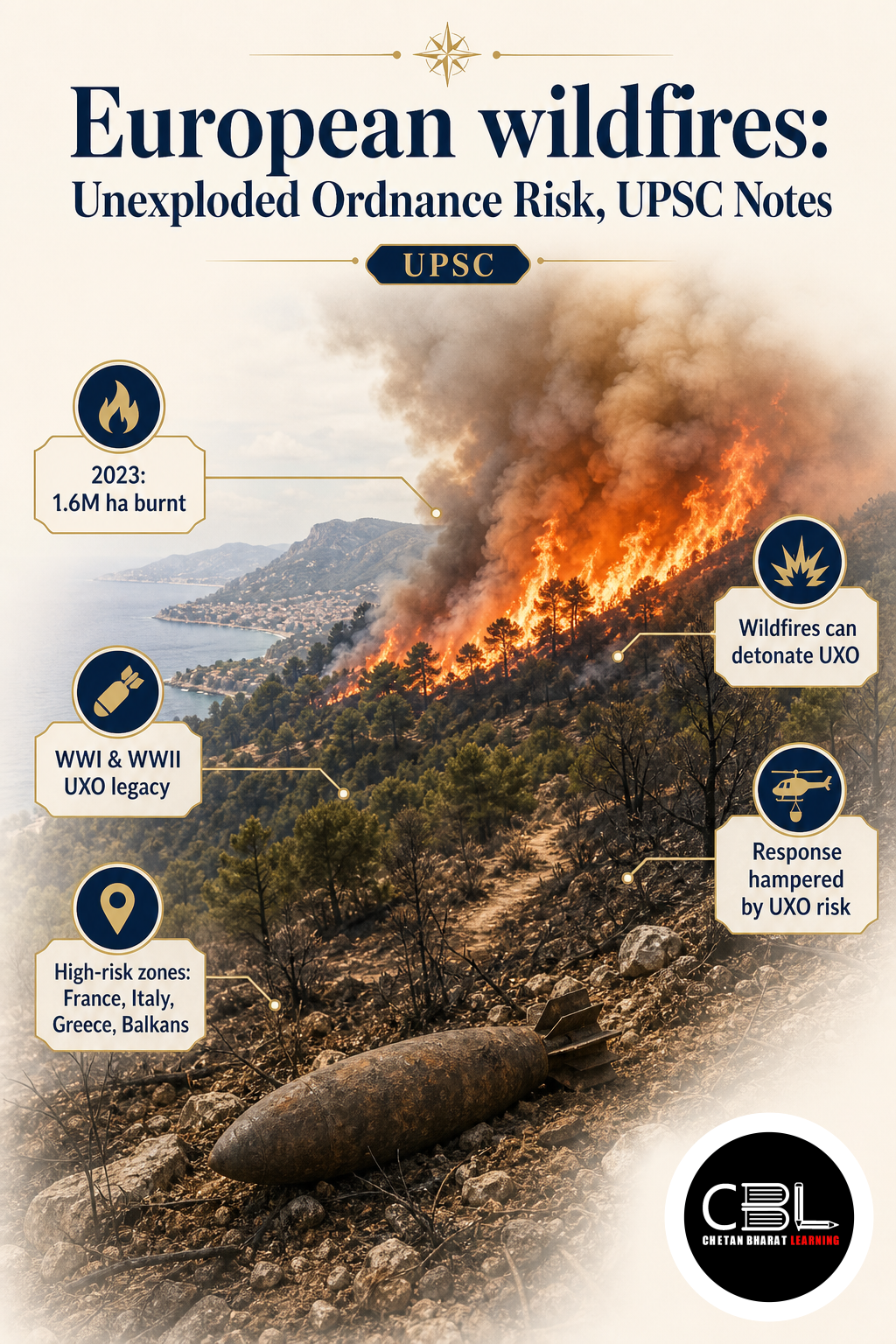
European wildfires continue to burn across parts of Europe as extreme heat dangerously exposes unexploded ordnance from past world wars. This dual hazard complicates firefighting and public safety in affected regions. Aspirants can track such environmental risks in the daily current affairs archive.
What is European Wildfires?
European wildfires are uncontrolled fires that occur in forests, scrublands and dry vegetation across Europe during periods of extreme heat and low rainfall. They can spread quickly and threaten human settlements, biodiversity and infrastructure. In recent years, climate change has increased the frequency and intensity of fire seasons across southern and central Europe.
This year, the fires have produced an additional hazard because they are exposing unexploded ordnance left from past world wars. Such materials can include artillery shells, bombs and grenades buried in soil. Heat and disturbed vegetation may bring them to the surface or make them unstable, creating serious risks for firefighters and residents.
Why is European Wildfires in News?
European wildfires are in news because extreme heat and fires continue to burn across parts of Europe, dangerously exposing unexploded ordnance from past world wars. This combination makes emergency response more complex because responders must deal with both fire control and explosive threats. The news highlights the long-term environmental legacy of war combined with modern climate stress.
The Al Jazeera report draws attention to the hidden danger beneath fire-affected landscapes. Unexploded ordnance requires specialised teams and can force temporary evacuations even after flames are contained.
Key Features
- Extreme heat: High temperatures are driving fire ignition and rapid spread across dry landscapes.
- Unexploded ordnance: Fires have exposed wartime explosives, adding a major safety hazard.
- Multiple regions affected: Wildfires are burning across different parts of Europe simultaneously.
- Climate link: Rising temperatures and prolonged dry spells are extending the fire season.
- Emergency complexity: Firefighting teams must coordinate with bomb disposal units to manage dual risks.
Challenges
- Fire containment: Dry vegetation and strong winds make fires difficult to control.
- Explosive hazards: Unexploded ordnance can detonate when heated or disturbed, endangering responders.
- Air quality: Smoke from large fires worsens respiratory illness and reduces visibility.
- Biodiversity loss: Wildfires destroy habitats and can accelerate soil erosion and desertification.
- Resource strain: Multiple simultaneous fires stretch fire engines, aircraft and emergency personnel thin.
Way Forward
European governments should strengthen early warning systems and pre-deploy firefighting resources before peak heat periods. Land surveys in historically conflict-affected zones can identify unexploded ordnance before wildfire season begins. Public communication should include clear guidance on evacuation routes and explosive awareness.
The World Meteorological Organization can support climate forecasting and heatwave alerts through regional cooperation. Long-term climate adaptation, afforestation with fire-resistant species and ordnance clearance must proceed together to reduce future risk.
Prelims Practice Corner
- Q1. European wildfires in recent news are being intensified by which weather condition? (a) Heavy snowfall (b) Extreme heat (c) Cyclone (d) Flooding — Answer: (b) Extreme heat.
- Q2. The fires are dangerously exposing which legacy hazard? (a) Ancient fossils (b) Unexploded ordnance from world wars (c) Radioactive waste (d) Methane deposits — Answer: (b) Unexploded ordnance from world wars.
- Q3. Unexploded ordnance includes which category of materials? (a) Fertiliser bags (b) Artillery shells and bombs (c) Firewood (d) Medical waste — Answer: (b) Artillery shells, bombs and grenades.
- Q4. Wildfires are mainly studied under which disaster category? (a) Geological (b) Biological (c) Climatological (d) Industrial — Answer: (c) Climatological or natural hazard.
- Q5. Which organisation is best suited for climate-related heatwave alerts? (a) WTO (b) WMO (c) IMF (d) ILO — Answer: (b) World Meteorological Organization.
Mains Practice Questions
- Q1. Examine the link between climate change and increasing wildfire risk in Europe. (15 marks)
Answer Structure:
Intro: Define wildfires and mention current extreme heat.
Body: Cover temperature rise, dry spells, land-use change, longer fire seasons and associated hazards.
Conclusion: Suggest climate adaptation and mitigation. - Q2. Discuss the challenges of managing unexploded ordnance exposed by wildfires in Europe. (10 marks)
Answer Structure:
Intro: Mention the current exposure of wartime ordnance.
Body: Analyse detection, safety zones, evacuation needs, coordination with fire services and long-term clearance.
Conclusion: Recommend specialised training and risk mapping.
FAQs on European Wildfires
Why are European wildfires in the news?
European wildfires are in the news because extreme heat and fires are exposing unexploded ordnance from past world wars.
What secondary hazard do the wildfires create?
The wildfires expose unexploded ordnance such as artillery shells and bombs, making emergency response more dangerous.
What is the main driver of the current wildfire season?
Extreme heat and dry conditions across parts of Europe are the main drivers of the current fire season.
Related Current Affairs
Preparing for UPSC, PCS or HCS?
Talk to a mentor at Chetan Bharat Learning, Chandigarh. Free guidance on choosing the right exam and building a study plan.
Chat on WhatsAppCall 97793 53345UPSC / IAS / PCS coaching in Chandigarh · Trusted by aspirants across Punjab & Haryana
Leave a Reply
You must be logged in to post a comment.