
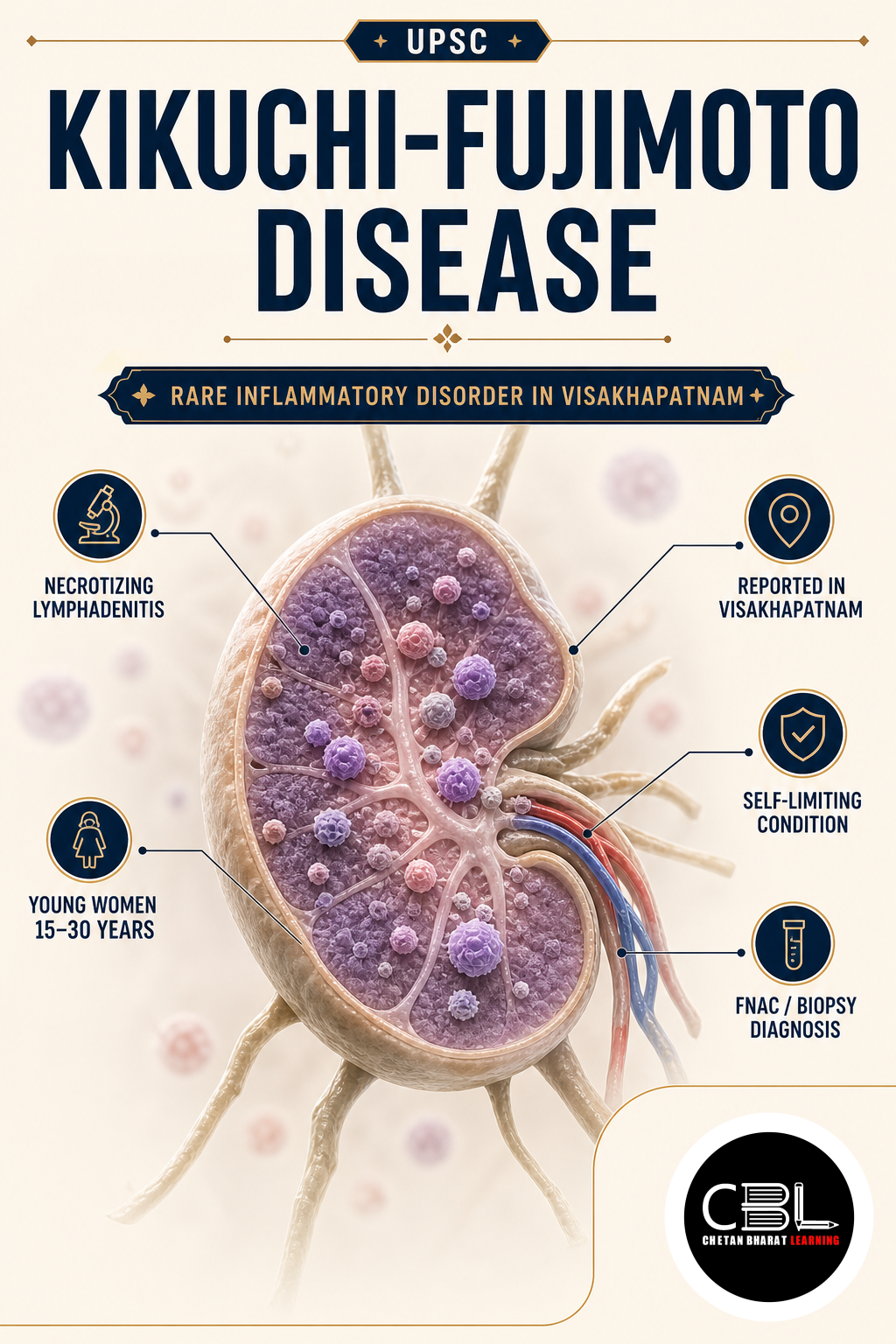
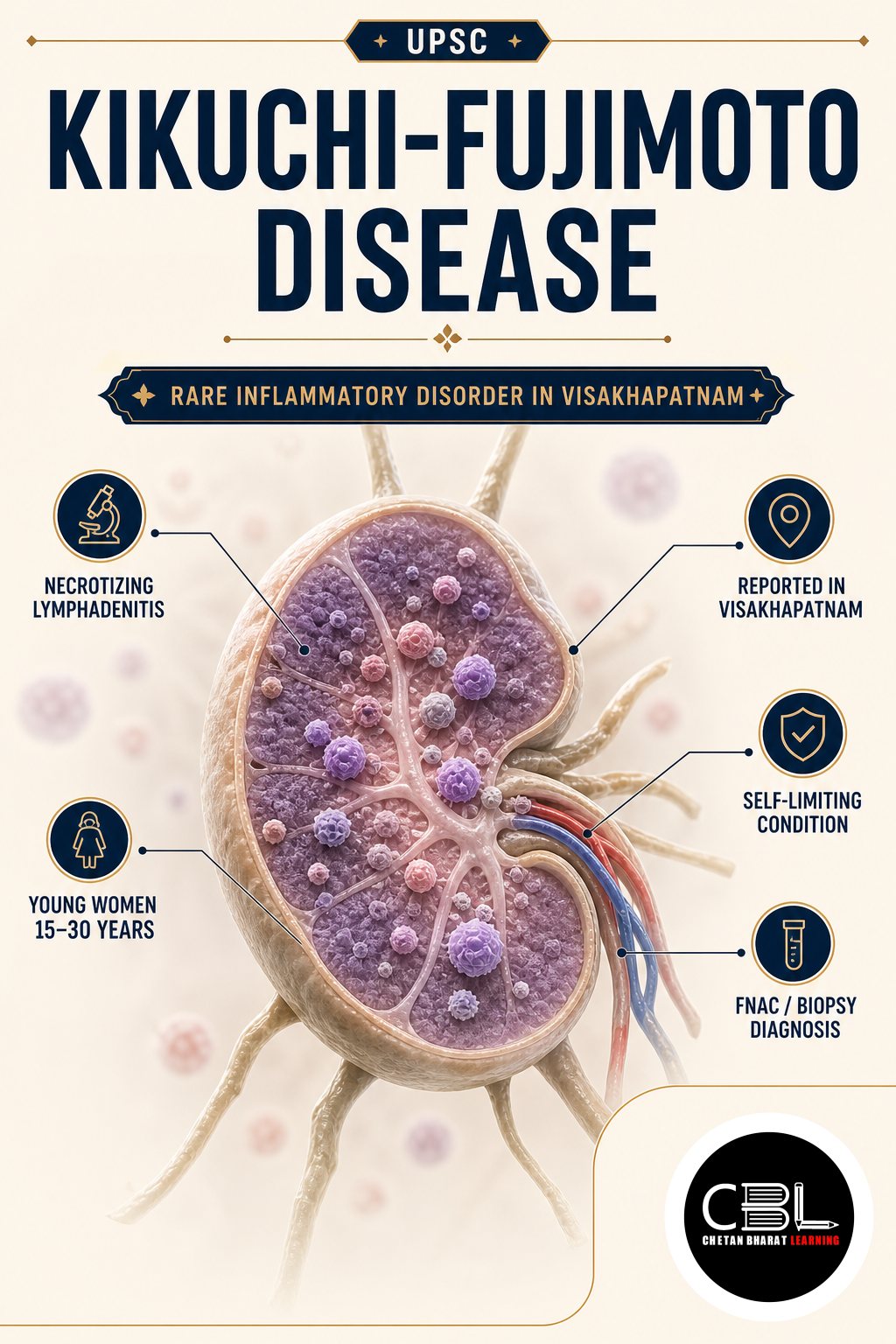
Kikuchi-Fujimoto Disease (KFD), also called histiocytic necrotizing lymphadenitis, has been diagnosed in a patient from Visakhapatnam. It is a rare, benign, self-limiting inflammatory disorder of the lymph nodes, first identified in Japan in 1972. For more such health updates, explore the health archive.
What is Kikuchi-Fujimoto Disease?
Kikuchi-Fujimoto Disease is a rare, benign, self-limiting inflammatory disorder of the lymph nodes, also known as histiocytic necrotizing lymphadenitis. It was first identified in Japan in 1972 and shows a higher prevalence among young adults in East Asia. The exact etiology remains unknown, but it may be triggered by an abnormal immune response to certain infectious agents.
Symptoms include swollen lymph nodes, fever, fatigue, night sweats, unexplained weight loss, and skin issues (redness, raised bumps, facial rashes, or hives). It closely mimics lymphoma, tuberculosis, and systemic lupus erythematosus (SLE). No specific cure exists; management focuses on symptom relief.
Why is Kikuchi-Fujimoto Disease in News?
Kikuchi-Fujimoto Disease is in the news because a patient from Visakhapatnam has been diagnosed with this rare condition. The diagnosis highlights the need for awareness among clinicians, as KFD can mimic more serious conditions like lymphoma and tuberculosis.
The case also underscores the importance of accurate diagnosis and the role of pathology in differentiating KFD from other causes of lymphadenopathy. For more details, refer to this PIB release.
Key Features of Kikuchi-Fujimoto Disease
Kikuchi-Fujimoto Disease has several distinctive features:
- Rare Disorder: Uncommon, benign inflammatory lymphadenopathy.
- Self-Limiting: Resolves on its own without specific treatment.
- Symptoms: Swollen lymph nodes, fever, fatigue, night sweats, weight loss.
- Differential Diagnosis: Mimics lymphoma, TB, and SLE.
- Management: Symptom relief, no cure exists.
Challenges in Kikuchi-Fujimoto Disease
Kikuchi-Fujimoto Disease presents several challenges:
- Awareness: Lack of awareness among clinicians can lead to misdiagnosis.
- Mimics: It closely mimics lymphoma, TB, and SLE, requiring careful differential diagnosis.
- Diagnostic Tools: Diagnosis often requires lymph node biopsy and histopathology.
- No Specific Treatment: Management is limited to symptom relief.
- Rarity: Being rare, it is often not considered in initial diagnostic workup. For more on rare diseases, visit the health section.
Way Forward for Kikuchi-Fujimoto Disease
To improve outcomes for Kikuchi-Fujimoto Disease, clinicians should be trained to consider KFD in the differential diagnosis of lymphadenopathy, especially in young adults. Establishing clinical guidelines and diagnostic criteria can aid in accurate identification.
Research into the etiology and potential triggers of KFD can lead to better understanding and management. For international best practices, refer to the WHO.
FAQs on Kikuchi-Fujimoto Disease
What is Kikuchi-Fujimoto Disease?
It is a rare, benign, self-limiting inflammatory disorder of the lymph nodes.
What are the symptoms?
Swollen lymph nodes, fever, fatigue, night sweats, weight loss, and skin issues.
Is KFD curable?
No specific cure exists, but it is self-limiting and resolves on its own.
Related Current Affairs
Preparing for UPSC, PCS or HCS?
Talk to a mentor at Chetan Bharat Learning, Chandigarh. Free guidance on choosing the right exam and building a study plan.
Chat on WhatsAppCall 97793 53345UPSC / IAS / PCS coaching in Chandigarh · Trusted by aspirants across Punjab & Haryana
Leave a Reply
You must be logged in to post a comment.