
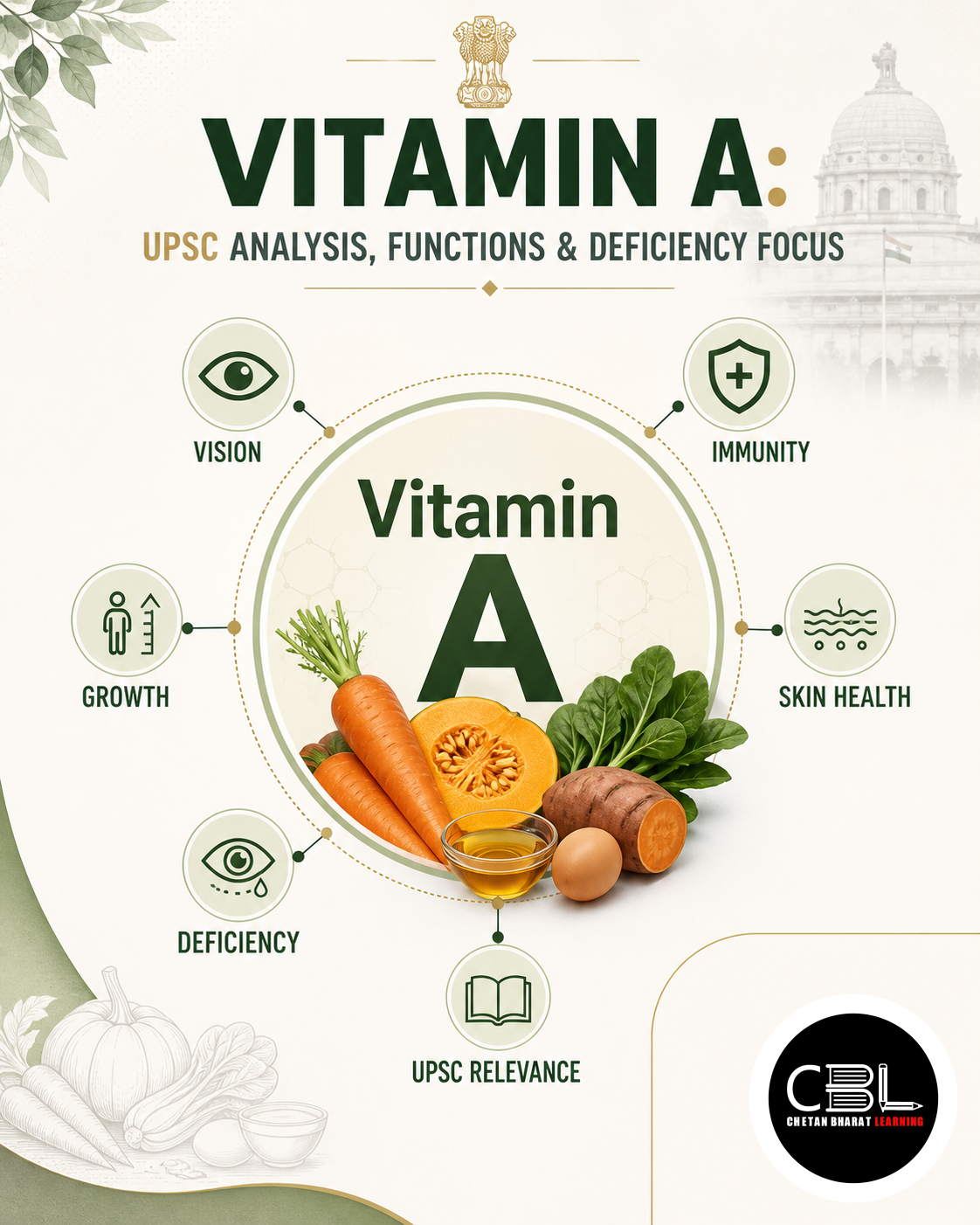

Vitamin A has recently been in the news after research found that higher levels of the vitamin were associated with better lung function among children and adults suffering from asthma. The findings highlight the importance of adequate micronutrient intake in supporting respiratory health, immunity and overall well-being. For more science and health updates, visit the daily current affairs archive.
What is Vitamin A?
Vitamin A is a fat-soluble vitamin that is primarily stored in the liver and is essential for normal growth, vision, immunity and reproduction. Rather than being a single nutrient, it is a group of fat-soluble compounds that includes retinol, retinal and retinyl esters.
Dietary Vitamin A is obtained in two forms. Preformed Vitamin A is found in animal-based foods such as meat, fish, eggs and dairy products, whereas provitamin A carotenoids, especially beta-carotene, are present in fruits and vegetables. The human body converts these compounds into the active forms retinal and retinoic acid for physiological functions.
Why is Vitamin A in News?
Recent research has shown that higher Vitamin A levels are associated with improved lung function among both children and adults with asthma. The findings indicate that adequate nutritional status may contribute to respiratory health alongside conventional medical treatment.
The study has renewed attention towards micronutrient deficiencies and balanced nutrition as important components of preventive healthcare. Official health guidance can be accessed through the World Health Organization.
Key Features of Vitamin A
Vitamin A performs several vital physiological functions in the human body.
- Vision: Vitamin A produces pigments in the retina and supports normal vision, particularly under low-light conditions.
- Immune function: It promotes the development and distribution of T lymphocytes, helping the body fight infections.
- Cell growth and development: The vitamin supports normal cell differentiation, fetal growth and reproductive health.
- Skin and tissue protection: It helps maintain healthy skin, lungs, intestines, urinary bladder and the inner ear by protecting epithelial tissues.
- Food sources: Rich sources include liver, fish, cod liver oil, eggs, dairy products, carrots, sweet potatoes, mangoes, spinach, broccoli and other dark green leafy vegetables.
Deficiency and Toxicity
Both inadequate and excessive intake of Vitamin A can adversely affect human health.
- Night blindness: One of the earliest symptoms of deficiency is reversible night blindness.
- Xerophthalmia: Severe deficiency may cause irreversible corneal damage known as xerophthalmia, potentially leading to blindness.
- Skin disorders: Deficiency may also result in hyperkeratosis, causing dry and scaly skin.
- Supplementation: Vitamin A deficiency can be treated through appropriate supplementation under medical guidance.
- Toxicity: Excessive intake of Vitamin A, particularly from supplements, can cause serious adverse effects and may become life-threatening in extremely high doses.
Challenges
Maintaining optimal Vitamin A nutrition requires addressing several public health challenges.
- Micronutrient deficiencies: Vitamin A deficiency continues to affect vulnerable populations, especially children and pregnant women.
- Dietary imbalance: Poor dietary diversity reduces access to Vitamin A-rich foods.
- Awareness gaps: Limited public awareness may delay early diagnosis and treatment.
- Supplement misuse: Excessive self-medication with Vitamin A supplements increases the risk of toxicity.
- Public health delivery: Effective nutrition programmes require strong healthcare systems and community outreach. Explore related health topics in the current affairs archive.
Way Forward
Balanced diets rich in fruits, vegetables, dairy products and other Vitamin A sources should remain the primary strategy for preventing deficiency. Nutrition education, food fortification and targeted supplementation programmes can further improve public health outcomes.
Strengthening awareness regarding both deficiency and toxicity will encourage safe consumption practices and support evidence-based nutritional interventions. Additional nutrition guidance is available through the Indian Council of Medical Research.
FAQs on Vitamin A
What type of vitamin is Vitamin A?
Vitamin A is a fat-soluble vitamin stored mainly in the liver and is essential for vision, immunity and normal growth.
Which foods are rich in Vitamin A?
Rich dietary sources include liver, fish, eggs, dairy products, carrots, sweet potatoes, spinach, broccoli, mangoes and other orange or dark green vegetables.
Why is Vitamin A important for UPSC?
Vitamin A is relevant because it connects nutrition, public health, human physiology and disease prevention, making it important for both Prelims and GS Paper III.
Related Current Affairs
Preparing for UPSC, PCS or HCS?
Talk to a mentor at Chetan Bharat Learning, Chandigarh. Free guidance on choosing the right exam and building a study plan.
Chat on WhatsAppCall 97793 53345UPSC / IAS / PCS coaching in Chandigarh · Trusted by aspirants across Punjab & Haryana
Leave a Reply
You must be logged in to post a comment.