
UPSC Syllabus Mapping
- GS Paper: GS-II & GS-III
- Subject: Governance, Food Security and Public Distribution System
- Syllabus Pointers: Prep with our comprehensive UPSC Current Affairs Hub analysis guidelines.
Article
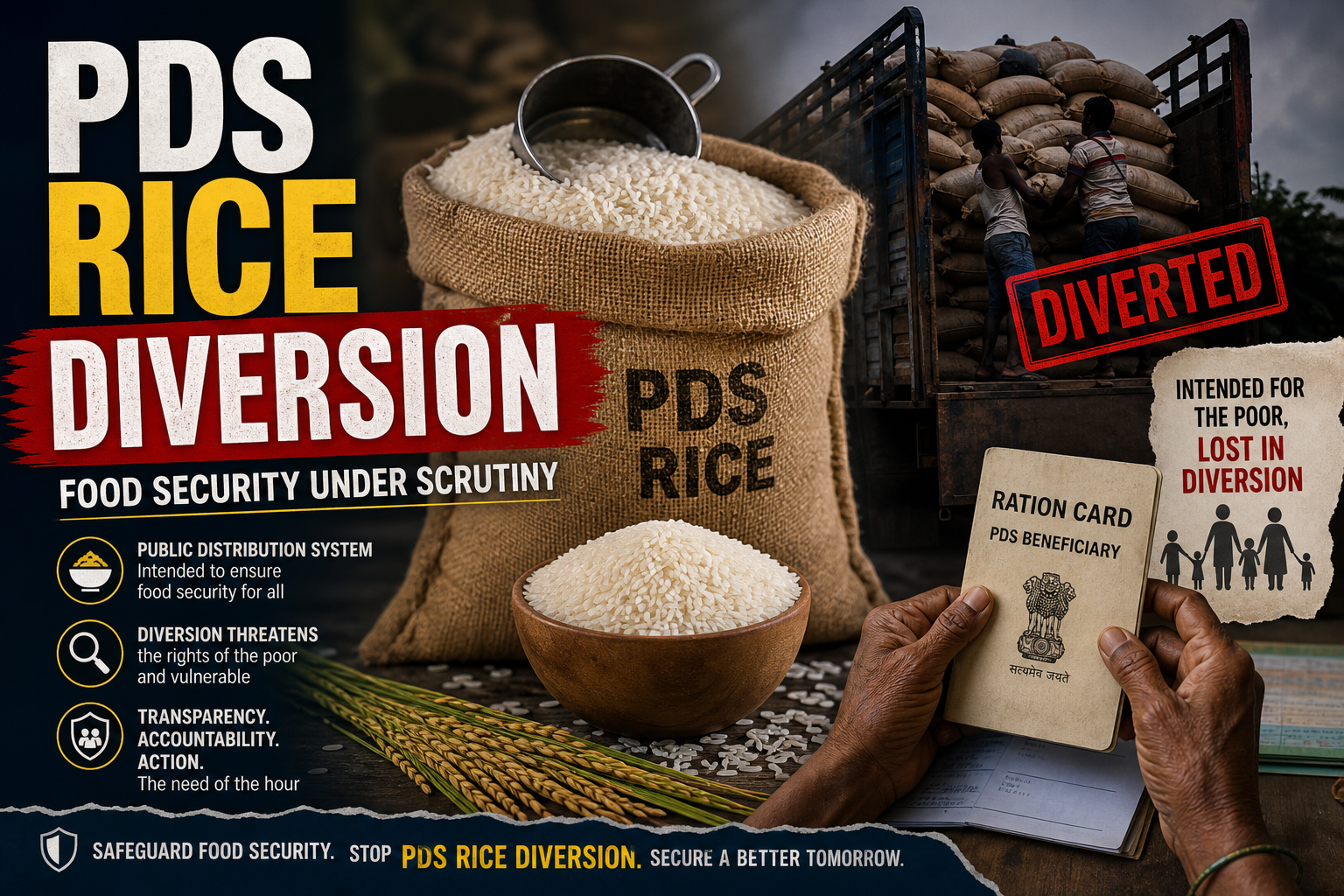
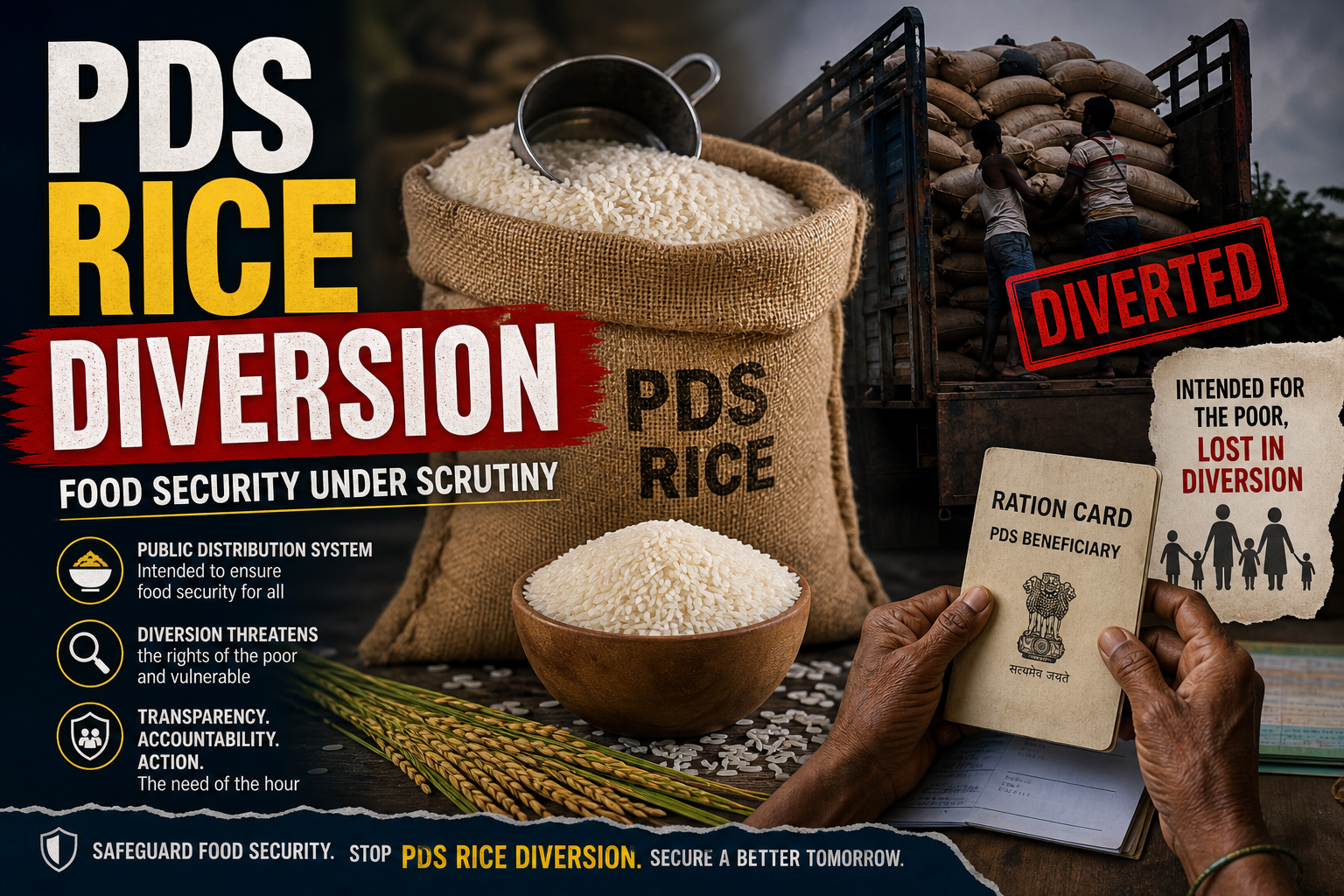
Recent updates regarding PDS Rice Diversion highlight the suspension of senior Food Corporation of India (FCI) officials over alleged diversion of rice meant for poor beneficiaries in the North-East to private entities. The case raises serious concerns regarding leakages, accountability and transparency within India’s food security architecture.
Key Dimensions of PDS Rice Diversion
Food Security exists when all people have physical, social and economic access to sufficient, safe and nutritious food at all times. India’s food security system is built on four pillars—availability, accessibility, affordability and stability.
The Public Distribution System (PDS) distributes subsidised food grains through Fair Price Shops under the National Food Security Act (NFSA), 2013. The Food Corporation of India (FCI) procures food grains at Minimum Support Price (MSP), maintains buffer stocks and supplies grains to states for distribution.
Why is PDS Rice Diversion a Serious Issue?
Diversion of subsidised rice deprives vulnerable households of their legal food entitlements and weakens the objective of food security. It also results in misuse of public resources, distorts markets and erodes public trust in welfare schemes.
The North-East is particularly vulnerable because of difficult terrain, higher transportation costs and greater dependence on centrally supplied food grains. Leakages in this region can have a disproportionate impact on food availability.
Governance Challenges and Reforms
The incident highlights administrative lapses, weak monitoring, accountability deficits and the need for stronger digital tracking across procurement, storage and distribution.
Government reforms such as One Nation One Ration Card (ONORC), Aadhaar-based authentication, electronic Point of Sale (e-POS) devices and end-to-end computerisation have significantly improved transparency. However, effective implementation, independent audits and timely disciplinary action remain essential.
For broader background on India’s Public Distribution System, refer to global developmental tracking frameworks.
Way Forward
India should strengthen vigilance within FCI and state agencies, expand digital monitoring of grain movement, institutionalise third-party social audits and improve coordination among FCI, state governments and beneficiary databases. Technology, transparency and accountability must remain central to ensuring food security for vulnerable households.
Prelims Practice Corner
Q1. The Public Distribution System (PDS) primarily aims to:
- Promote food exports
- Supply subsidised food grains to eligible beneficiaries
- Regulate agricultural exports
- Provide crop insurance
Answer: (b) PDS distributes subsidised food grains through Fair Price Shops to eligible households under the National Food Security Act.
Q2. The Food Corporation of India (FCI) is primarily responsible for:
- Conducting population census
- Procuring, storing and distributing food grains
- Regulating banking institutions
- Managing highways
Answer: (b) FCI procures food grains at MSP, maintains buffer stocks and supports food distribution across the country.
Mains Practice Question
“Leakages in the Public Distribution System undermine both food security and public trust in welfare programmes.” Examine the governance challenges and suggest reforms to strengthen India’s food security architecture. (150 Words, 10 Marks)
FAQs
- Why is the recent PDS rice diversion case important for UPSC?
It connects governance, public administration, food security, welfare delivery, transparency and accountability—topics that frequently appear in both Prelims and Mains.
Related Current Affairs
Preparing for UPSC, PCS or HCS?
Talk to a mentor at Chetan Bharat Learning, Chandigarh. Free guidance on choosing the right exam and building a study plan.
Chat on WhatsAppCall 97793 53345UPSC / IAS / PCS coaching in Chandigarh · Trusted by aspirants across Punjab & Haryana
Leave a Reply
You must be logged in to post a comment.