
Introduction
India has achieved a major milestone in one of its most ambitious infrastructure projects with the successful breakthrough of the Zojila Tunnel. The strategic 13-kilometre tunnel, being constructed between Kashmir and Ladakh, is expected to provide year-round connectivity to one of the country’s most remote and strategically significant regions.
For decades, heavy snowfall at the Zojila Pass has disrupted transportation between the Kashmir Valley and Ladakh during winter months. The tunnel promises to end this seasonal isolation and significantly improve mobility, economic activity, tourism, and national security.
The recent breakthrough marks a crucial step toward completing a project that has been awaited for nearly 50 years by the people of Ladakh.
What is the Zojila Tunnel Project?
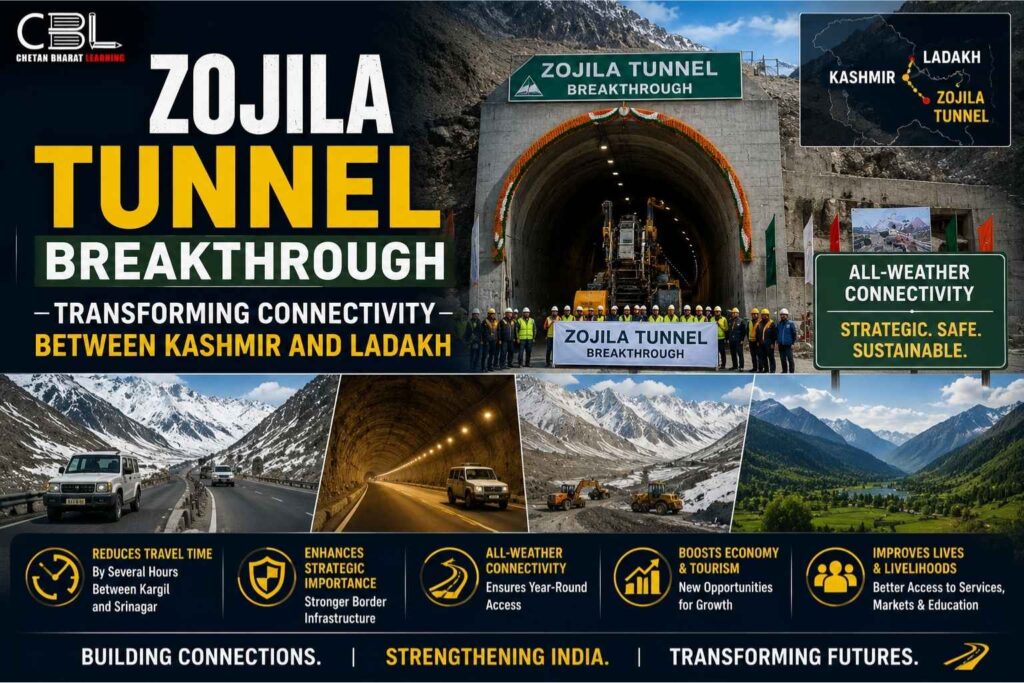
The Zojila Tunnel is being built on National Highway-1 (NH-1), which connects Srinagar in Jammu & Kashmir with Leh in Ladakh.
The project consists of a 13.15-kilometre tunnel that will provide all-weather road connectivity between Sonamarg and Minamarg. Once operational, the tunnel will become one of the longest bi-directional road tunnels in Asia at such a high altitude.
The project is part of India’s larger effort to strengthen connectivity in border regions and ensure uninterrupted transportation throughout the year.
The recent breakthrough was achieved after engineers successfully connected the tunnel from both ends, marking the completion of one of the most challenging phases of construction.
Why is the Zojila Tunnel Strategically Important?
The importance of the Zojila Tunnel extends far beyond transportation.
Ladakh shares sensitive borders with both China and Pakistan, making reliable connectivity essential for India’s security interests. During winter, heavy snowfall often blocks the Zojila Pass, affecting the movement of people, supplies, and defence personnel.
Once completed, the tunnel will ensure uninterrupted access to Ladakh throughout the year. This will enable faster deployment of military equipment, emergency supplies, and security forces whenever required.
As a result, the tunnel is considered a critical component of India’s border infrastructure strategy and national security framework.
A Solution to Ladakh’s Long-Standing Connectivity Challenges
For several months every year, large parts of Ladakh remain cut off from the Kashmir Valley because of extreme weather conditions.
Road closures create difficulties for residents who depend on uninterrupted transportation for education, healthcare, business, and essential supplies. Air travel remains expensive and is often not accessible to everyone.
The Zojila Tunnel is expected to address these challenges by ensuring all-weather road connectivity. Residents will have easier access to hospitals, schools, government services, and markets throughout the year.
The project will therefore improve both accessibility and quality of life for people living in the region.
Economic Benefits of the Tunnel
Improved infrastructure often acts as a catalyst for economic growth, and the Zojila Tunnel is expected to deliver significant economic benefits.
Reliable transportation networks reduce travel costs and improve market access. Farmers, traders, local entrepreneurs, and transport operators will benefit from faster and more efficient movement of goods.
The tunnel will facilitate year-round trade between Kashmir and Ladakh while encouraging investments in logistics, warehousing, transportation, and retail sectors.
Better connectivity is also likely to create employment opportunities and stimulate regional economic development.
Boosting Tourism in Ladakh
Tourism is one of the most important contributors to Ladakh’s economy.
Every year, thousands of tourists visit the region to experience its natural beauty, adventure activities, monasteries, and unique cultural heritage. However, harsh winters and road closures often limit tourist arrivals.
The Zojila Tunnel will improve accessibility and make travel safer and more convenient throughout the year.
As a result, tourism activity is expected to increase significantly. Hotels, restaurants, transport services, and local businesses may benefit from higher visitor numbers, leading to greater income generation and job creation.
Reduction in Travel Time
One of the most immediate benefits of the tunnel will be a substantial reduction in travel time.
Currently, travelling through the Zojila Pass can be challenging due to steep terrain, snowfall, and difficult road conditions. Reports suggest that the tunnel could reduce travel time from more than two hours to around fifteen minutes in certain stretches.
This improvement will save time, reduce fuel consumption, and enhance overall transportation efficiency.
Faster connectivity will also strengthen trade and improve access to essential services.
Engineering Excellence in the Himalayas
Constructing a tunnel through the Himalayan mountain range is an extraordinary engineering challenge.
Engineers have had to work in difficult geological conditions, extreme temperatures, and high-altitude terrain. The project has required advanced tunnelling techniques and careful planning to overcome these obstacles.
The recent breakthrough demonstrates India’s growing capability in executing large-scale infrastructure projects under challenging environmental conditions.
It also highlights the country’s commitment to modernizing transportation networks in strategically important regions.
Contribution to National Infrastructure Development
The Zojila Tunnel reflects India’s broader focus on strengthening infrastructure across the country.
Over the last decade, significant investments have been made in highways, railways, airports, border roads, and tunnels. These projects aim to improve connectivity, boost economic growth, and enhance national integration.
The Zojila Tunnel stands out because it simultaneously addresses transportation, security, tourism, and regional development objectives.
Its successful completion will serve as an important model for future infrastructure projects in mountainous and border regions.
Why the Zojila Tunnel Matters for UPSC Aspirants
The Zojila Tunnel is an important topic for UPSC aspirants because it connects multiple areas of the UPSC syllabus, including Infrastructure Development, Internal Security, Border Area Development, Geography, Economic Development, and Disaster Management.
Questions related to strategic infrastructure projects, border connectivity, and regional development frequently appear in both UPSC Prelims and Mains examinations. Understanding the significance of the Zojila Tunnel can help aspirants develop a multidimensional perspective on governance and development.
Students preparing through UPSC Coaching in Chandigarh often study such projects as practical examples of how infrastructure can support national security and economic growth. Similarly, candidates enrolled in IAS Coaching in Chandigarh can use the Zojila Tunnel as a contemporary case study while writing answers on connectivity, border management, and regional development.
FAQs
What is the Zojila Tunnel?
The Zojila Tunnel is a 13.15-kilometre strategic road tunnel being constructed on NH-1 to provide all-weather connectivity between Kashmir and Ladakh.
Why is the Zojila Tunnel important?
The tunnel will improve transportation, strengthen national security, boost tourism, and support economic development in Ladakh.
How will the tunnel benefit local residents?
It will provide year-round connectivity, improve access to healthcare and education, and reduce dependence on expensive air travel.
What is the strategic significance of the project?
The tunnel will ensure uninterrupted movement of defence personnel and supplies in a region that shares borders with China and Pakistan.
When is the tunnel expected to be completed?
The project is targeted for completion by 2028, with major construction milestones already achieved.
Conclusion
The successful breakthrough in the Zojila Tunnel project represents a historic achievement in India’s infrastructure development journey. By providing all-weather connectivity between Kashmir and Ladakh, the tunnel will transform transportation, strengthen border security, and improve the lives of thousands of people living in the region.
Beyond its engineering significance, the project will contribute to tourism growth, economic development, and national integration. As India continues to invest in strategic infrastructure, the Zojila Tunnel stands as a powerful example of how connectivity can drive both development and security in remote regions.
For aspirants preparing through UPSC Coaching in Chandigarh and IAS Coaching in Chandigarh, the Zojila Tunnel remains an important current affairs topic that combines geography, governance, infrastructure, and national security into a single case study.
Leave a Reply
You must be logged in to post a comment.