
Why Wetlands Matter More Than Ever
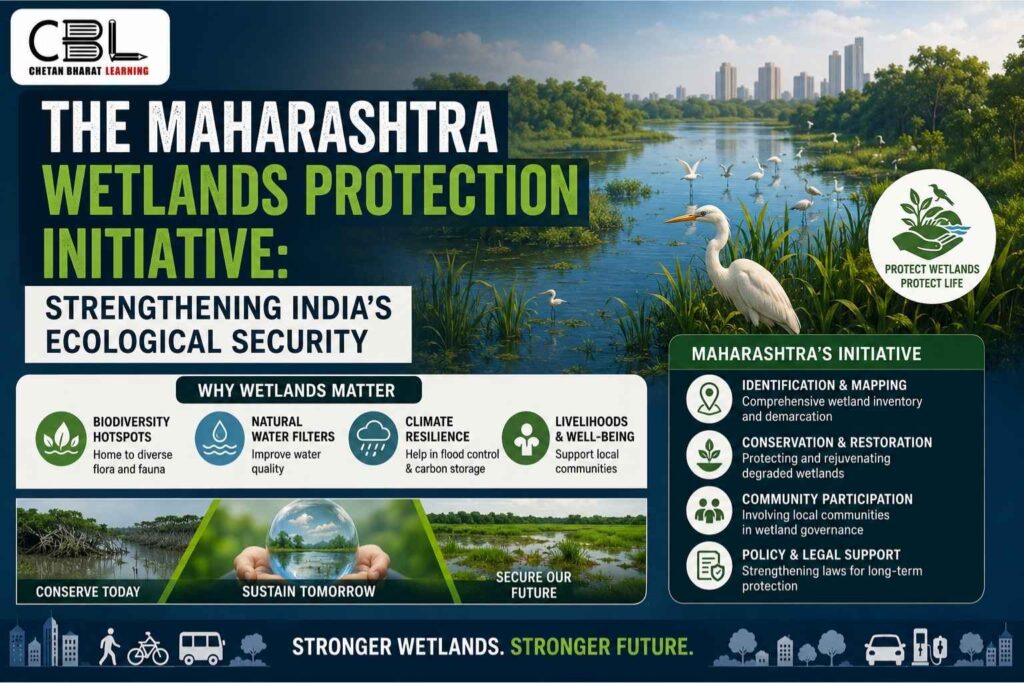
Maharashtra’s decision to complete the documentation of more than 23,000 wetlands marks one of the most important environmental governance initiatives in recent years. The move is expected to strengthen legal protection for wetlands and improve ecological conservation across the state.
Wetlands are often called the “kidneys of the ecosystem” because they help:
- Recharge groundwater
- Reduce flood risks
- Support biodiversity
- Improve water quality
- Regulate local climate systems
As climate change intensifies and urbanisation expands rapidly, wetland conservation is becoming essential for India’s environmental security and sustainable development.
Students preparing through UPSC Coaching in Chandigarh and IAS Coaching in Chandigarh should closely follow topics like wetland governance, biodiversity conservation, climate resilience, and environmental sustainability because these themes are highly important for GS Paper 3, Essay, and UPSC Interview preparation.
Maharashtra’s Wetlands Documentation Drive
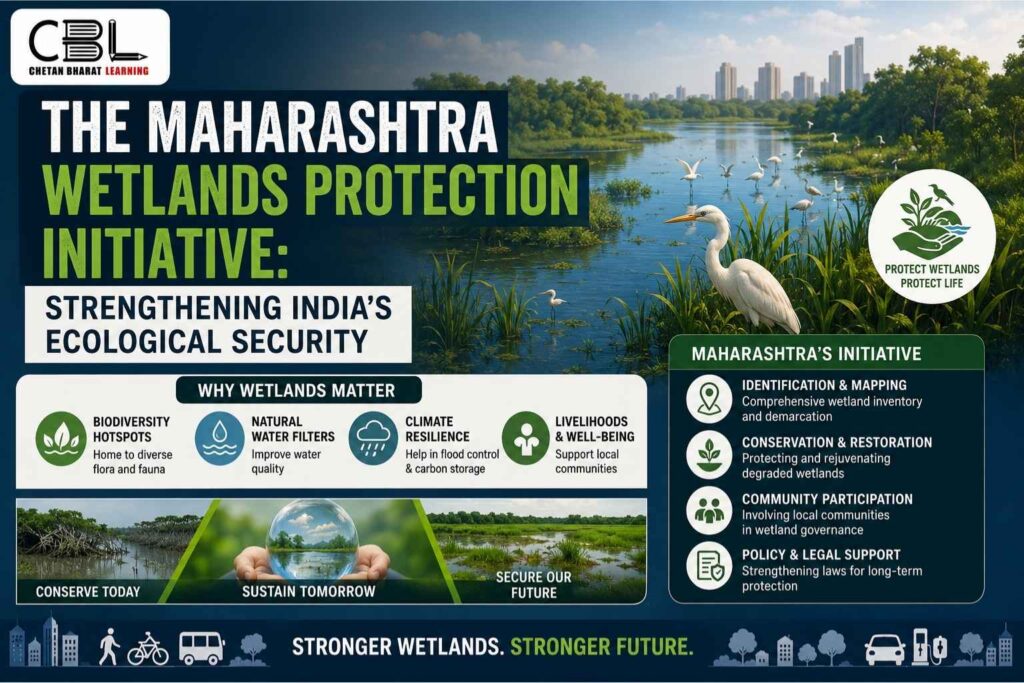
The National Centre for Sustainable Coastal Management (NCSCM) has completed the documentation and ground-truthing of approximately 23,415 wetlands across Maharashtra.
This initiative aims to:
✔ Identify wetland boundaries
✔ Verify ecological conditions
✔ Prevent illegal encroachment
✔ Bring wetlands under legal protection
The wetlands were documented using:
- Satellite imagery
- GIS mapping
- Physical verification (ground-truthing)
This process is important because many wetlands disappear gradually due to:
- Urban encroachment
- Construction activity
- Dumping of waste
- Real-estate expansion
The documentation exercise creates an official ecological record, making future protection measures legally enforceable.
What Is Ground Truthing?
Ground truthing refers to the physical verification of geographical data collected through satellite imagery and remote sensing technologies.
In wetland management, ground truthing helps authorities:
- Confirm exact wetland boundaries
- Assess biodiversity conditions
- Verify ecological characteristics
- Identify encroachment risks
Without physical verification, satellite-based environmental records often remain incomplete or inaccurate.
Why Wetlands Are Critical for India’s Ecological Balance
1. Natural Flood Protection
Wetlands absorb excess rainwater and reduce flood intensity during heavy monsoon events.
Cities experiencing rapid urbanisation often face severe flooding because wetlands are:
- Filled for construction
- Encroached upon
- Converted into dumping grounds
Protecting wetlands strengthens urban climate resilience.
2. Groundwater Recharge
Wetlands allow rainwater to seep naturally into underground aquifers, improving groundwater availability.
This is particularly important for drought-prone and water-stressed regions.
3. Biodiversity Conservation
Wetlands support:
- Migratory birds
- Fish species
- Amphibians
- Aquatic vegetation
- Sensitive ecological habitats
They are among the most productive ecosystems in the world.
4. Climate Regulation and Carbon Storage
Wetlands act as natural carbon sinks by storing large amounts of carbon in soil and vegetation.
This helps reduce greenhouse gas concentrations and supports climate mitigation efforts.
Legal Protection Under Wetlands Rules
The documentation exercise is expected to help Maharashtra formally notify wetlands under the Wetlands (Conservation and Management) Rules.
Once notified:
✔ Construction activities can be restricted
✔ Encroachments can be monitored
✔ Illegal dumping can be penalized
✔ Ecological degradation can be controlled
Legal notification transforms wetlands from “unprotected spaces” into regulated ecological assets.
The Urban Wetland Crisis in India
Rapid urbanisation has severely damaged wetlands in many Indian cities.
Major threats include:
- Real-estate expansion
- Infrastructure projects
- Waste disposal
- Pollution
- Illegal land reclamation
In many urban regions, wetlands are incorrectly viewed as “vacant land” rather than ecological infrastructure.
The Maharashtra initiative attempts to reverse this mindset by treating wetlands as essential public ecological resources.
India’s Wetland Governance Framework
India’s wetland governance framework includes:
- Wetlands Rules, 2017
- Ramsar Convention commitments
- National Wetland Inventory and Assessment Programme
India currently hosts several internationally important Ramsar wetlands, reflecting the growing importance of ecological diplomacy and conservation governance.
Climate Change and Wetland Protection
Wetlands are becoming increasingly important in climate adaptation strategies because they:
- Reduce disaster risks
- Improve water security
- Support local livelihoods
- Protect biodiversity
- Enhance ecosystem resilience
As climate variability increases, wetland conservation is no longer optional — it is becoming a critical governance priority.
Prelims Pointers
Important Facts
- Maharashtra documented over 23,000 wetlands
- NCSCM conducted the exercise
- Wetlands Rules, 2017 govern wetland conservation
Key Ecological Functions
- Flood control
- Groundwater recharge
- Carbon sequestration
- Biodiversity protection
Important International Framework
- Ramsar Convention on Wetlands
Mains Perspective
Possible Question
“Wetlands are ecological infrastructure essential for climate resilience and sustainable urbanisation.” Discuss.
Key Dimensions to Include
- Urban flooding
- Climate adaptation
- Biodiversity conservation
- Groundwater security
- Ecological governance
- Sustainable development
Frequently Asked Questions (FAQ)
Why are wetlands important?
Wetlands help regulate water systems, support biodiversity, recharge groundwater, and reduce flood risks.
What is ground truthing in environmental governance?
Ground truthing is the physical verification of environmental data collected through satellite imagery and GIS mapping.
How does wetland conservation help climate resilience?
Wetlands absorb excess rainfall, store carbon, reduce disaster risks, and strengthen ecosystem stability during climate stress.
Why is Maharashtra’s initiative significant?
The initiative creates a legally verifiable ecological database that can help prevent future wetland destruction and environmental degradation.
Conclusion: Wetlands as Ecological Infrastructure
Maharashtra’s wetland documentation initiative represents a major step toward strengthening ecological governance in India.
The exercise highlights a critical shift in environmental thinking:
Wetlands are no longer being treated as unused land — they are increasingly recognized as ecological infrastructure essential for:
- Climate resilience
- Water security
- Biodiversity protection
- Sustainable urban development
As India faces rising environmental pressures, wetland conservation will become central to future governance, planning, and climate adaptation strategies.
“Protecting wetlands is not only about conserving biodiversity — it is about securing the ecological foundations of India’s future development.”
Related Current Affairs
Preparing for UPSC, PCS or HCS?
Talk to a mentor at Chetan Bharat Learning, Chandigarh. Free guidance on choosing the right exam and building a study plan.
Chat on WhatsAppCall 97793 53345UPSC / IAS / PCS coaching in Chandigarh · Trusted by aspirants across Punjab & Haryana
Leave a Reply
You must be logged in to post a comment.