
The RBI remittance cap proposal has brought overseas transfers under scrutiny. For more context, explore CBL’s economy current affairs.
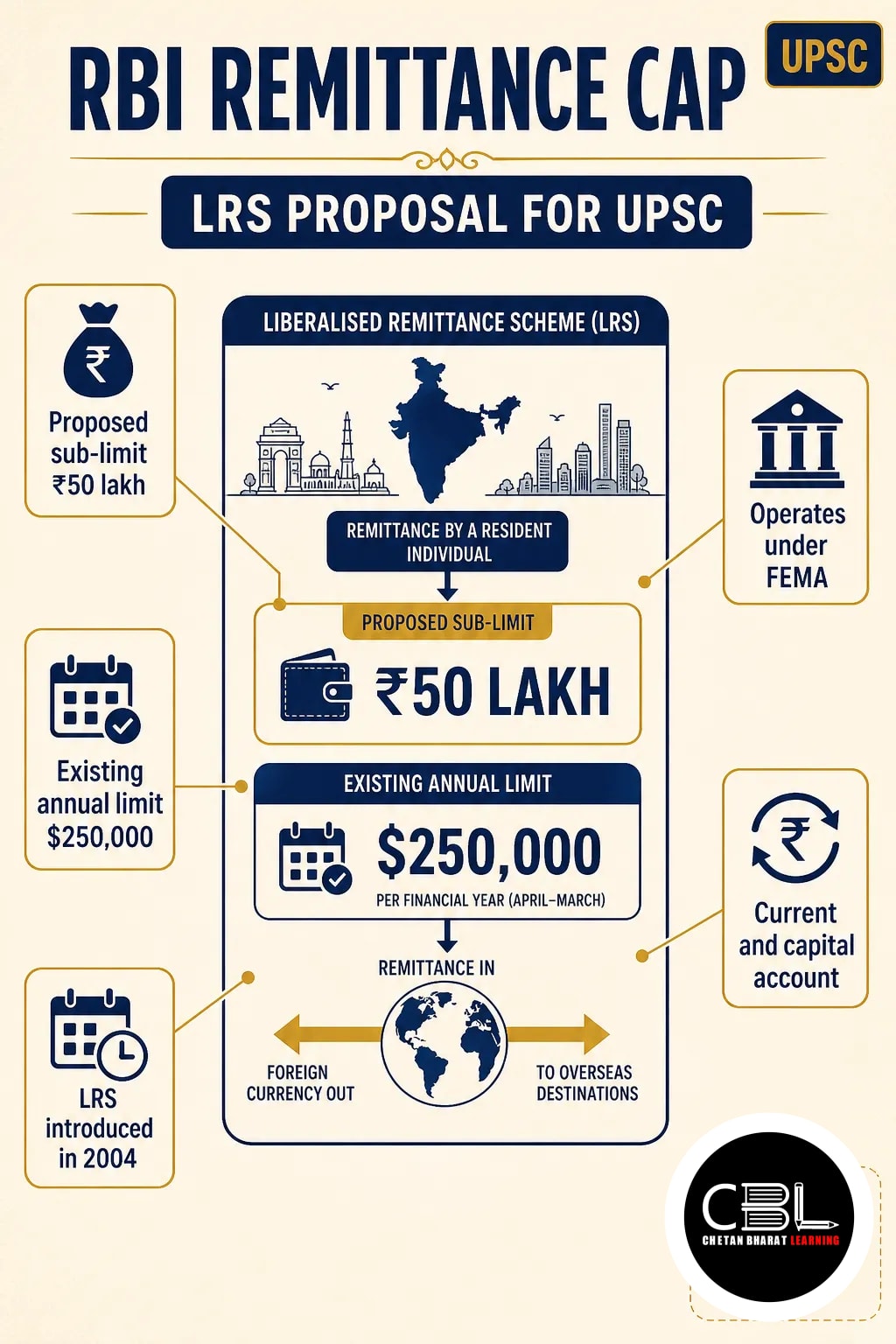
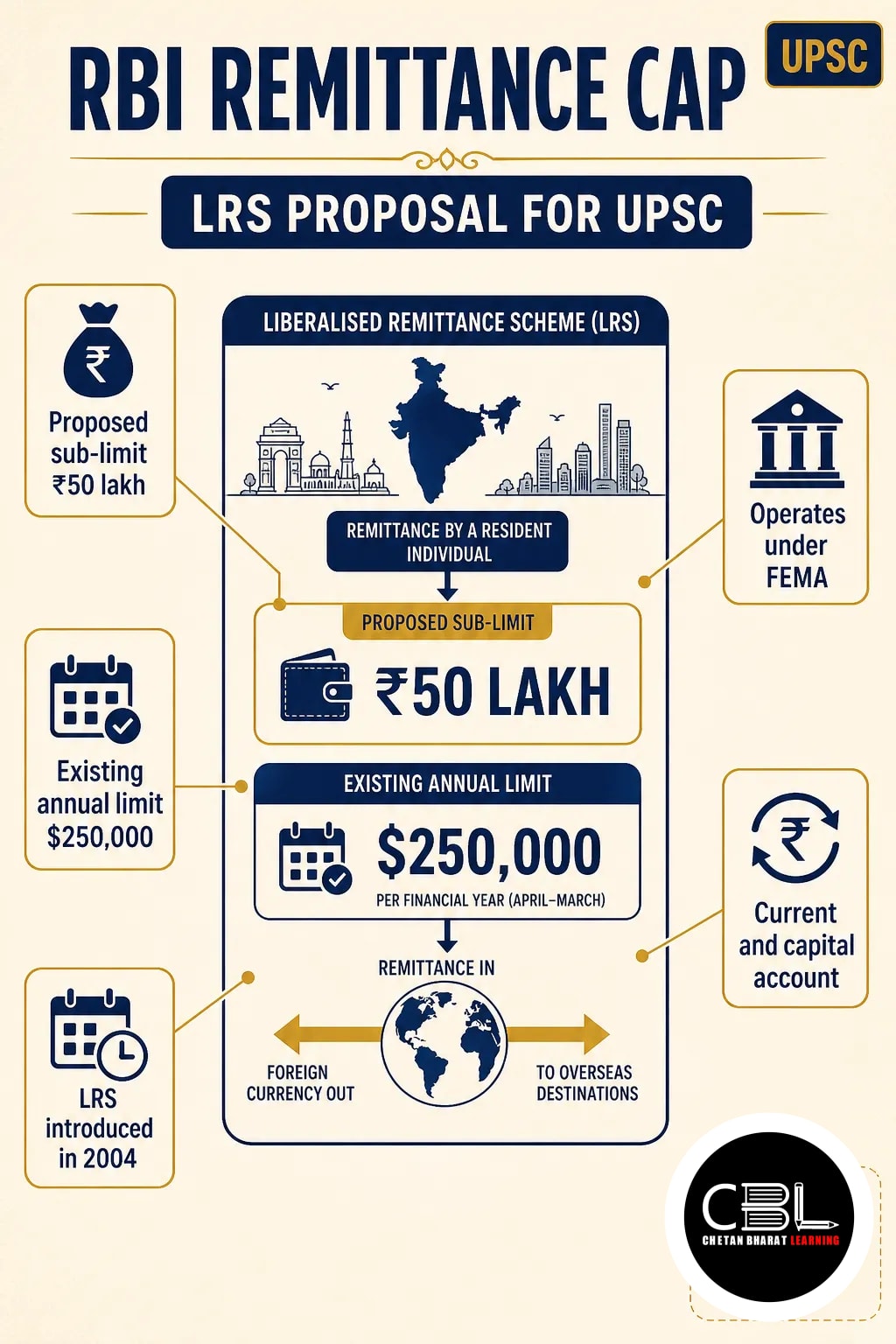
Quick answer: The Reserve Bank of India (RBI) has reportedly proposed a ₹50 lakh sub-limit on select overseas transfers within the Liberalised Remittance Scheme (LRS). The existing LRS limit is $250,000 per financial year for Indian residents. The proposal seeks to curb dollar outflows and support the rupee; it is not an announced rule.
What is the Liberalised Remittance Scheme?
The LRS permits Indian residents to send money abroad for eligible purposes within an annual limit. The RBI introduced it in 2004 under the Foreign Exchange Management Act (FEMA).
The scheme covers both current and capital account transactions. For background, see CBL’s guide to the LRS framework.
| Feature | Key fact |
|---|---|
| Existing limit | $250,000 per financial year |
| Beneficiaries | Indian residents |
| Legal framework | FEMA |
| Transaction types | Current and capital account |
What is the proposed RBI remittance cap?
The reported proposal would place a ₹50 lakh sub-limit on select remittances within the existing LRS ceiling. According to The Hindu, the RBI has proposed tighter limits to the Ministry of Finance.
The available report does not specify which transactions the sub-limit would cover. Therefore, aspirants should distinguish the proposal from the existing $250,000 annual limit. See also CBL’s earlier LRS remittance facts.
Which transactions does the LRS cover?
The LRS covers eligible spending abroad as well as specified overseas investments and assets. For example, current uses include travel, education and medical treatment.
Capital account transactions include opening overseas foreign currency accounts and buying property. In addition, residents may invest in foreign equity, mutual funds and listed debt securities. The scheme also permits interest-free loans for up to one year.
Why does the proposal matter?
The RBI remittance cap proposal seeks to reduce dollar outflows and support the rupee. Overseas transfers can require residents to purchase foreign currency; therefore, tighter limits may reduce such demand.
However, the effect would depend on the transactions covered and the final rules. For more context, read CBL’s analysis of outward remittance trends.
Source: The Hindu, 20 November 2026
- LRS Remittances 2026: Key Facts for UPSC (2 Nov 2026)
- Outward Remittances Rise: LRS Trends and Analysis (27 Aug 2026)
- Liberalised Remittance Scheme: UPSC Economy Analysis (23 Jul 2026)
Punjab PCS and Haryana HCS General Studies may test the LRS, FEMA and exchange-rate basics. Therefore, distinguish outward remittances from the proposed sub-limit and the existing annual ceiling.
Prelims Practice Corner
Mains Practice Questions
Frequently Asked Questions
What is the existing LRS remittance limit?
The limit is $250,000 per financial year for Indian residents. It covers eligible current and capital account transactions.
Has the ₹50 lakh remittance sub-limit become a rule?
No final rule is established in the available source. The Hindu describes it as a proposal to the Ministry of Finance.
Does the LRS cover overseas investments?
Yes, it covers specified overseas investments. For example, eligible capital account transactions include investments in foreign equity and listed debt securities.
Related Current Affairs
Preparing for UPSC, PCS or HCS?
Talk to a mentor at Chetan Bharat Learning, Chandigarh. Free guidance on choosing the right exam and building a study plan.
Chat on WhatsAppCall 97793 53345UPSC / IAS / PCS coaching in Chandigarh · Trusted by aspirants across Punjab & Haryana









Leave a Reply
You must be logged in to post a comment.