
UPSC Mapping
- Prelims: Environment & Polity
- Mains: GS Paper 2 (Polity) & GS Paper 3 (Environment)
Article
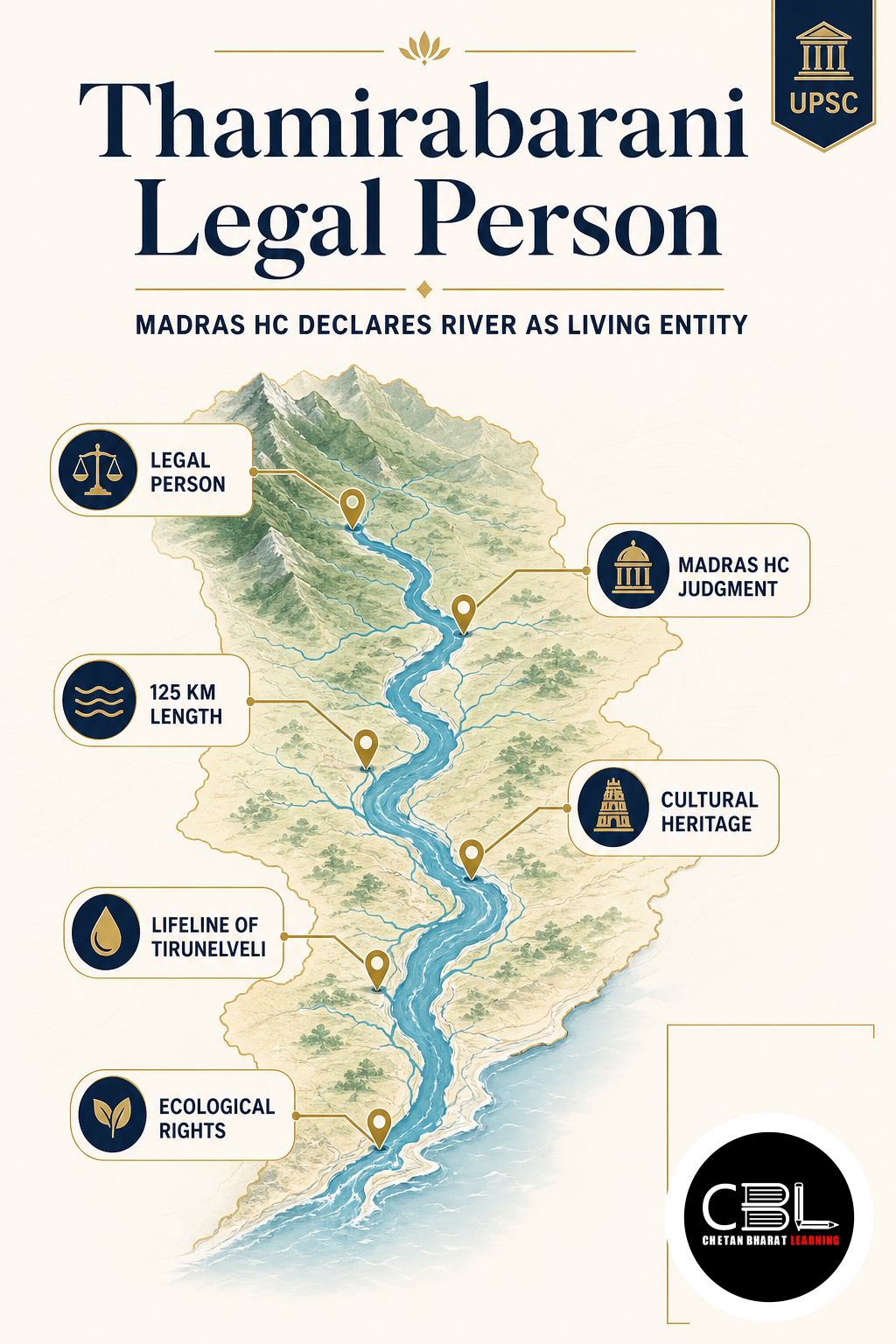
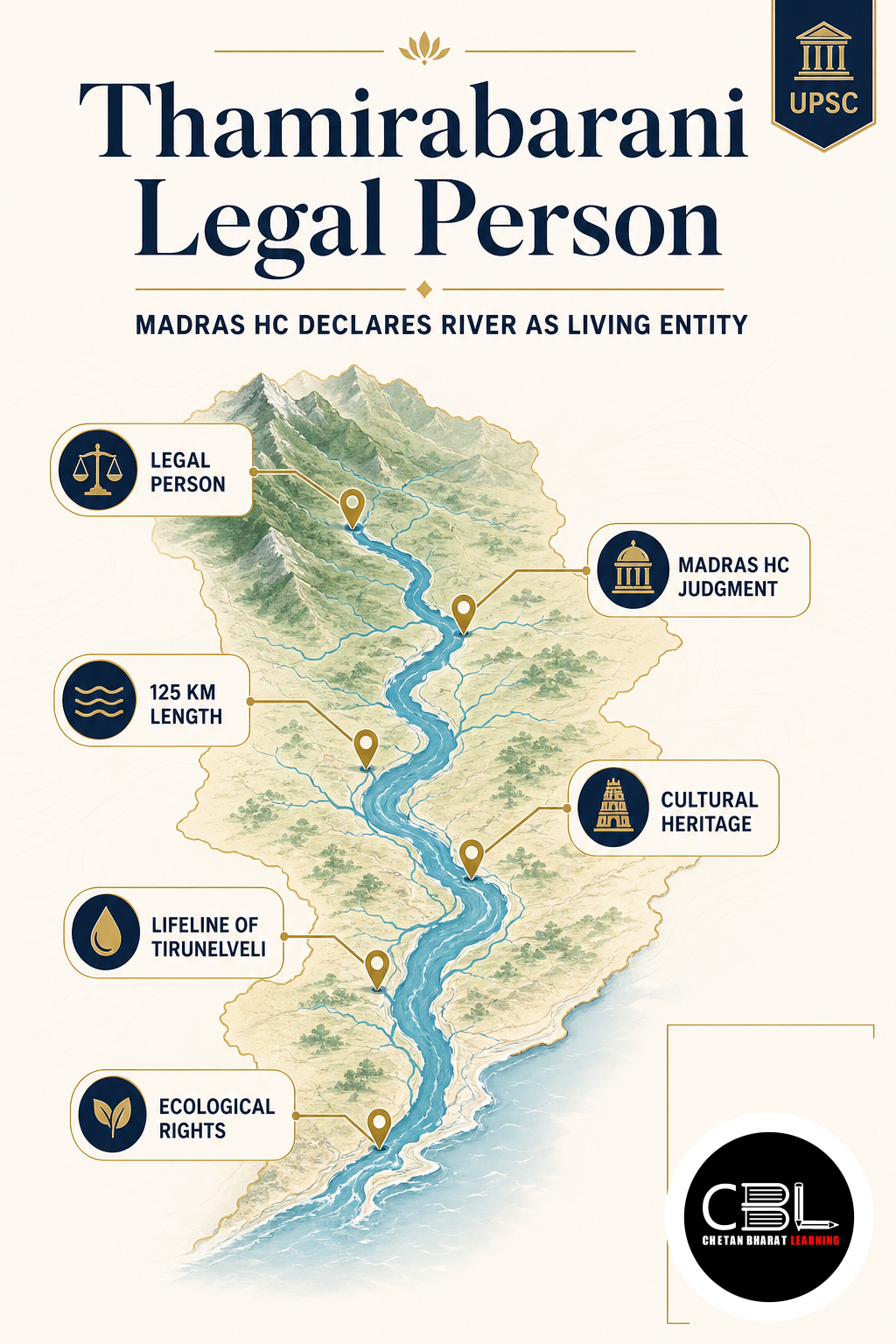
Thamirabarani Legal Person status has been declared by the Madras High Court, which ruled that the river is a ‘legal person’ to protect its rights against ritual pollution and waste dumping. The Court grounded its decision in the river’s standing as a Hindu deity, rather than relying on ‘rights of nature’ precedents. Indian jurisprudence has long recognised Hindu deities as juristic persons capable of holding property and paying taxes through human managers.
The Thamirabarani is the only major river flowing entirely within Tamil Nadu, originating at Agastyarkoodam peak in the Western Ghats and draining into the Gulf of Mannar. Ancient Sangam literature refers to it as Porunai, and excavations revealed an Iron Age settlement of the Porunai River civilization.
Quick Facts
| Court | Madras High Court |
|---|---|
| Basis | River as a Hindu deity |
| Ancient Name | Porunai |
What is Thamirabarani Legal Person?
Thamirabarani Legal Person refers to the Madras High Court’s ruling that the Thamirabarani (Porunai) River is a ‘legal person’ with rights that must be protected against ritual pollution and waste dumping. The Court grounded its decision in the river’s standing as a Hindu deity, rather than relying on ‘rights of nature’ precedents.
Why is Thamirabarani Legal Person in News?
Thamirabarani Legal Person is in the news because the Madras High Court declared the river a legal person to protect its rights. The decision follows similar precedents, such as the Uttarakhand High Court’s declaration of the Ganga and Yamuna as living legal entities, though the Supreme Court later stayed that order citing administrative challenges.
Key Features of Thamirabarani Legal Person
- Deity Basis: The ruling relies on the river’s standing as a Hindu deity, not ‘rights of nature’.
- Legal Personhood: The river can hold rights and sue for protection through human guardians.
- Guardian Doctrine: State officials act as guardians under the Parens Patriae doctrine.
- Precedent: Similar to Uttarakhand HC’s Ganga/Yamuna ruling, but grounded differently.
- Cultural and Ecological Significance: The river is part of Tamil Nadu’s cultural heritage and hosts diverse biodiversity.
Challenges in Thamirabarani Legal Person
- Enforcement: Implementing the personhood status requires clear mechanisms and monitoring.
- Judicial Restraint: The Supreme Court previously stayed similar rulings, citing administrative and interstate issues.
- Cultural Sensitivity: Grounding in deity status may not apply to all rivers.
- Conflict with Development: Protecting river rights may clash with development projects.
- Limited Scope: Personhood may not address pollution and encroachment without effective action.
Way Forward for Thamirabarani Legal Person
To make Thamirabarani Legal Person effective, the Tamil Nadu government should establish a river protection authority with clear powers and responsibilities. The guardians should be held accountable for protecting the river’s health and prosecuting violators.
Public awareness campaigns about the river’s legal status and ecological importance can garner support. Collaboration with civil society and scientific bodies can help monitor water quality and biodiversity. The legal framework could be expanded to other rivers with appropriate adaptations.
Prelims Practice Corner
-
Q1. Which court declared the Thamirabarani a legal person?
- (a) Supreme Court
- (b) Madras High Court
- (c) Uttarakhand High Court
- (d) Kerala High Court
Answer: (b) The Madras High Court issued the ruling.
-
Q2. On what basis did the Court grant legal personhood?
- (a) Rights of nature
- (b) River as a Hindu deity
- (c) UN conventions
- (d) Parliamentary legislation
Answer: (b) The Court grounded it in the river’s standing as a deity.
-
Q3. What is the ancient name of the Thamirabarani River?
- (a) Ganga
- (b) Yamuna
- (c) Porunai
- (d) Kaveri
Answer: (c) The river is referred to as Porunai in Sangam literature.
-
Q4. Which doctrine allows state officials to act as guardians for natural entities?
- (a) Parens Patriae
- (b) Res Judicata
- (c) Stare Decisis
- (d) Ultra Vires
Answer: (a) Parens Patriae allows the state to act as guardian.
-
Q5. Which previous river personhood ruling was stayed by the Supreme Court?
- (a) Narmada
- (b) Ganga and Yamuna
- (c) Godavari
- (d) Krishna
Answer: (b) The Uttarakhand HC’s Ganga-Yamuna ruling was stayed by the SC.
Mains Practice Questions
-
Q1. Discuss the concept of legal personhood for natural entities in India, with reference to the Thamirabarani ruling and its implications for environmental protection. (250 words, 15 marks)
Answer Structure:
- Intro: Introduce the Thamirabarani ruling and its significance.
- Body: Explain the legal framework of personhood for deities and natural entities. Analyse the ruling’s basis, its potential to protect rivers, and the challenges of enforcement. Compare with the Uttarakhand precedent and the SC’s stance.
- Conclusion: Suggest a balanced approach with clear guardianship and accountability mechanisms.
-
Q2. What is the doctrine of Parens Patriae, and how is it applied in the context of environmental protection? (150 words, 10 marks)
Answer Structure:
- Intro: Define Parens Patriae as the state’s power to act as guardian.
- Body: Explain that in environmental cases, the state can act to protect natural resources like rivers. The Thamirabarani ruling uses this doctrine to appoint guardians to protect the river.
- Conclusion: Conclude that this doctrine is a tool for environmental stewardship.
FAQs on Thamirabarani Legal Person
- What is a legal person?
- It is an entity that can have rights and obligations, like a human being, and can sue or be sued.
- Why did the Madras HC declare Thamirabarani a legal person?
- To protect it from pollution and degradation, using the river’s status as a Hindu deity.
- Is Thamirabarani the only river with legal personhood?
- No, the Uttarakhand HC previously declared Ganga and Yamuna as legal entities, but the SC stayed that order.
Related Current Affairs
Preparing for UPSC, PCS or HCS?
Talk to a mentor at Chetan Bharat Learning, Chandigarh. Free guidance on choosing the right exam and building a study plan.
Chat on WhatsAppCall 97793 53345UPSC / IAS / PCS coaching in Chandigarh · Trusted by aspirants across Punjab & Haryana
Leave a Reply
You must be logged in to post a comment.