

UPSC Mapping
| Prelims | International Relations |
|---|---|
| Mains | GS Paper II – International Relations, Energy Security |
What is Strait of Hormuz Crisis?
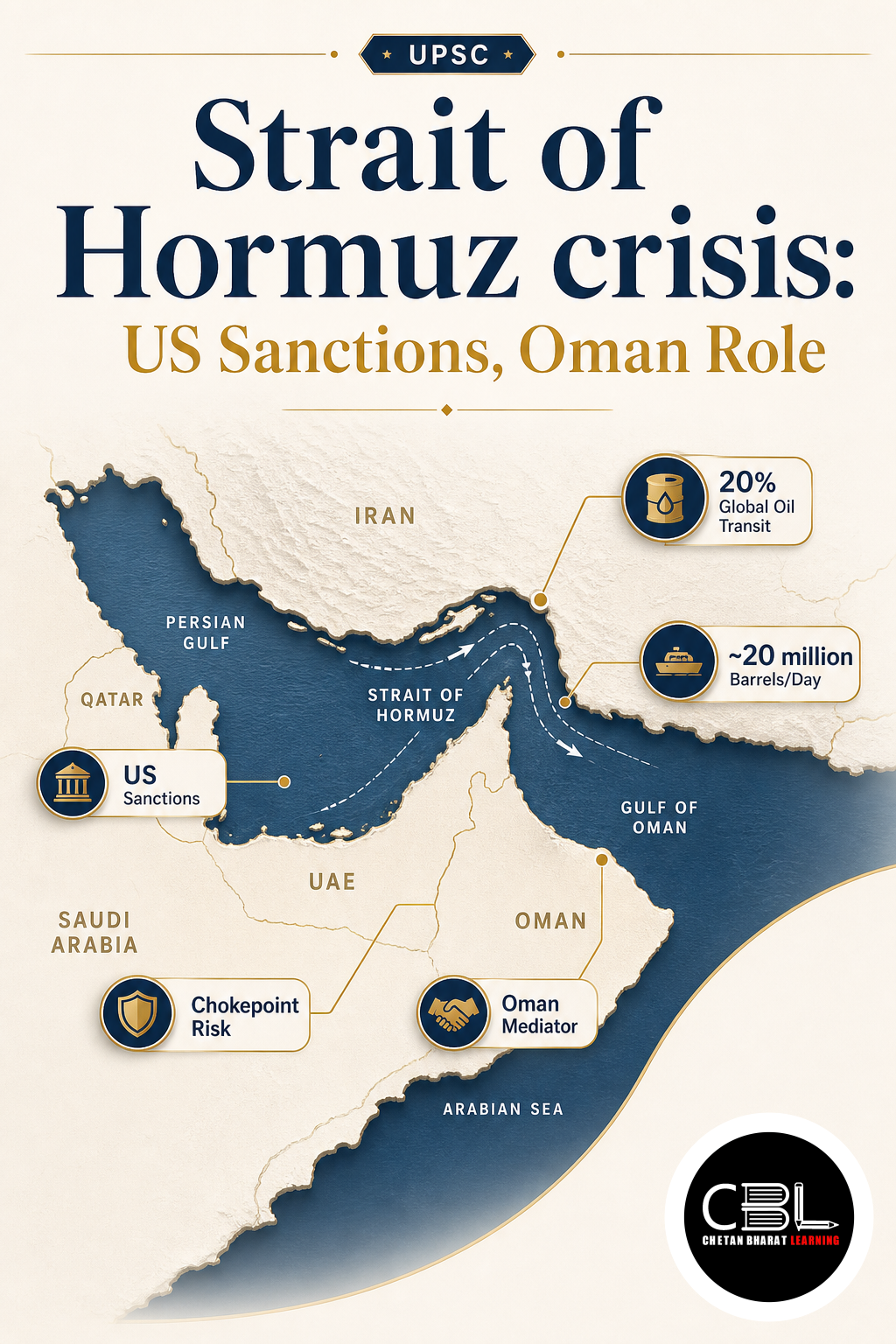
The Strait of Hormuz crisis is a recurring security flashpoint where Iran uses its strategic position to threaten or disrupt shipping in the narrow waterway connecting the Persian Gulf and the Gulf of Oman. The strait is only about 33 km wide at its narrowest point, and a large share of world crude oil passes through it. Disruption here can immediately raise energy prices and insurance costs.
In the current phase, Oman has stepped in as a mediator, hosting Iran-Oman talks to de-escalate tensions. Meanwhile, the United States has imposed financial sanctions and kept military assets nearby, increasing pressure on Tehran. The crisis illustrates how a geographic chokepoint can become a tool of leverage in international disputes.
Why is Strait of Hormuz Crisis in News?
The crisis is in news because Iran and Oman engaged in talks while the US intensified sanctions and military signalling. This combination of diplomacy and deterrence shapes the immediate outlook for the region. India and other energy importers are watching closely because any closure or disruption would severely affect oil supply and prices.
The Al Jazeera report notes that Oman has long maintained balanced ties with Iran and Western powers, making it a credible mediator. Sanctions may not achieve their goals if Iran can continue exports through informal channels or retaliate against shipping.
Key Features
- Strategic chokepoint: The Strait carries a significant portion of global oil and LNG trade, making it a vital economic artery.
- Iran’s leverage: Iran can threaten to mine or harass shipping, raising risks for tanker traffic and insurance markets.
- US sanctions: Washington aims to cut Iran’s revenue through financial curbs on its banks and energy exports.
- Oman’s mediation: Muscat offers a neutral channel for dialogue and has hosted recent Iran-Oman consultations.
- Energy price impact: Even a threat of disruption can raise global crude prices and affect India’s import bill.
Challenges
- Sanctions evasion: Iran can use informal routes, barter and opaque shipping to soften the impact of restrictions.
- Military escalation risk: US naval presence and Iranian asymmetric tactics could lead to miscalculation and conflict.
- Gulf instability: Tensions can spill over to neighbouring states and threaten their oil infrastructure.
- Diplomatic limits: Oman’s mediation may not bridge fundamental US-Iran differences on nuclear and security issues.
- India’s vulnerability: High dependence on Gulf oil leaves India exposed to any supply disruption or price spike.
Way Forward
The immediate need is for de-escalation through direct US-Iran communication and continued Omani mediation. India should engage with all parties to protect its energy security and advocate for freedom of navigation. Diversifying oil sources, building strategic reserves and promoting alternative routes can reduce long-term risk.
The PIB release suggests India is monitoring the situation closely. A broader diplomatic framework that addresses Iranian security concerns and US sanctions relief is essential for lasting stability.
Prelims Practice Corner
-
Q1. Where is the Strait of Hormuz located?
(a) Between Red Sea and Arabian Sea (b) Between Persian Gulf and Gulf of Oman (c) Between Black Sea and Mediterranean Sea (d) Between Gulf of Aden and Arabian Sea
Answer: (b) Between Persian Gulf and Gulf of Oman.
-
Q2. Which country is actively mediating in the current crisis?
(a) Saudi Arabia (b) Qatar (c) Oman (d) Kuwait
Answer: (c) Oman.
-
Q3. What is Iran’s main strategic leverage in the crisis?
(a) Nuclear weapons (b) Threat to disrupt shipping in the Strait (c) Alliance with NATO (d) Control of Suez Canal
Answer: (b) Threat to disrupt shipping.
-
Q4. Which US measure is being used against Iran?
(a) Diplomatic recognition (b) Financial sanctions and military pressure (c) Free trade agreement (d) Cultural exchange
Answer: (b) Financial sanctions and military pressure.
-
Q5. India’s main concern in the Strait of Hormuz is related to which sector?
(a) Information technology (b) Energy security (c) Pharmaceuticals (d) Tourism
Answer: (b) Energy security.
Mains Practice Questions
-
Q1. Evaluate the effectiveness of US sanctions and military pressure in resolving the Strait of Hormuz crisis. (15 marks)
Answer Structure:
- Intro: Mention current US measures and Iran threat.
- Body: Cover sanctions evasion, military escalation risk, diplomatic limits and Omani mediation.
- Conclusion: Suggest balanced approach with dialogue.
-
Q2. Discuss the impact of the Strait of Hormuz crisis on India’s energy security and foreign policy. (10 marks)
Answer Structure:
- Intro: State India’s dependence on Gulf oil.
- Body: Analyse price impact, supply risk, strategic reserves, diversification and diplomatic engagement.
- Conclusion: Recommend energy diversification and regional cooperation.
FAQs on Strait of Hormuz Crisis
Why is the Strait of Hormuz strategically important?
It carries a major share of global oil and LNG trade, making it a critical chokepoint for energy security.
What role is Oman playing in the crisis?
Oman is acting as a mediator, hosting Iran-Oman talks to reduce tensions and facilitate dialogue.
How does the crisis affect India?
India’s heavy dependence on Gulf oil makes it vulnerable to price spikes and supply disruptions, affecting its economy and energy security.
Related Current Affairs
Preparing for UPSC, PCS or HCS?
Talk to a mentor at Chetan Bharat Learning, Chandigarh. Free guidance on choosing the right exam and building a study plan.
Chat on WhatsAppCall 97793 53345UPSC / IAS / PCS coaching in Chandigarh · Trusted by aspirants across Punjab & Haryana
Leave a Reply
You must be logged in to post a comment.