
Why Is This News Important?
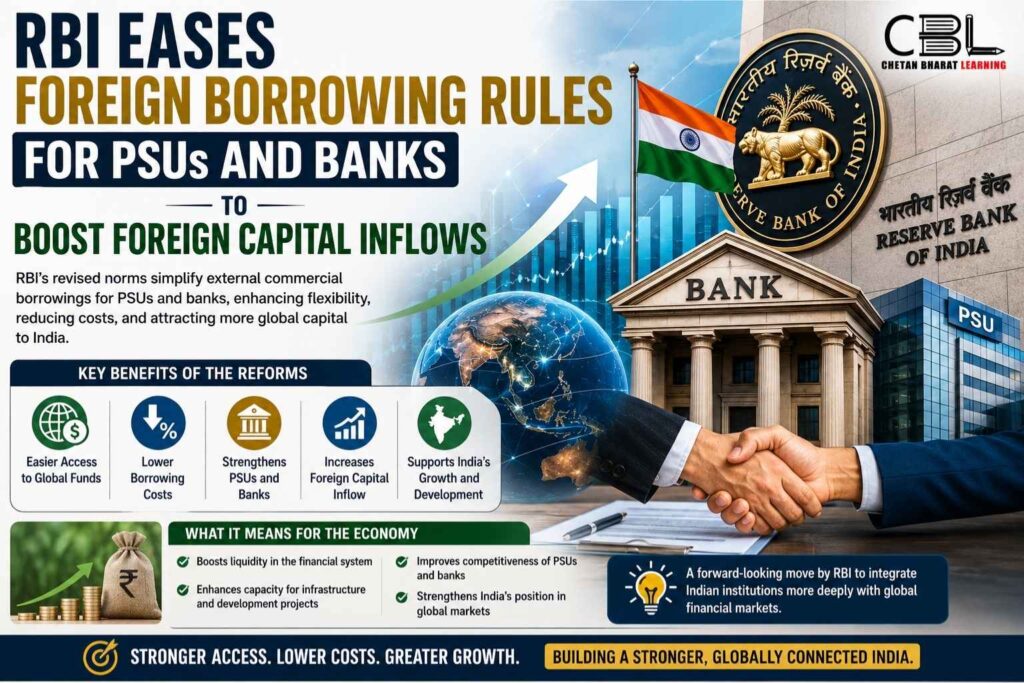
The Reserve Bank of India (RBI) has announced new measures to encourage foreign capital inflows into the country. The central bank has eased borrowing norms for Public Sector Undertakings (PSUs) and banks, making it easier and more affordable for them to raise funds from overseas markets.
The move comes at a time when India is focusing on maintaining strong economic growth, increasing investments, and strengthening financial stability despite global economic uncertainties.
For UPSC aspirants, this development is important under Indian Economy, Banking and Finance, Capital Markets, and Economic Growth.
What Has RBI Announced?
The RBI has introduced a concessional foreign exchange swap facility that will remain available until September 2026. This facility aims to reduce the cost of raising foreign currency funds for PSUs and banks.
The central bank has also encouraged External Commercial Borrowings (ECBs) by lowering hedging costs and making foreign borrowing more attractive. These measures are expected to increase the availability of affordable overseas capital for infrastructure, energy, and development projects.
The decision complements the government’s broader efforts to attract foreign investment and improve liquidity in the economy.
Why Is This Move Significant?
India requires massive investments to achieve its long-term development goals. Public sector enterprises play a crucial role in building infrastructure, expanding energy networks, and supporting industrial growth.
By making overseas borrowing cheaper, the RBI is helping these institutions access larger pools of global capital. This can accelerate project implementation and improve investment activity across multiple sectors.
The move is also expected to improve investor confidence and strengthen India’s position as an attractive destination for international capital.
How Will It Benefit the Indian Economy?
Lower borrowing costs can encourage PSUs and banks to raise more funds for productive investments. Increased capital availability can boost infrastructure projects, manufacturing activities, and public sector development initiatives.
Higher investment generally leads to greater economic activity, employment generation, and income growth. Strong foreign capital inflows can also support the rupee and improve overall financial stability.
As India continues to pursue rapid development, access to affordable long-term capital remains a key requirement for sustaining growth momentum.
What Are the Risks?
While foreign borrowing provides several benefits, it is not without challenges.
Currency fluctuations can increase repayment costs if the rupee weakens against foreign currencies. Global financial market volatility and changing interest rates can also affect borrowing conditions.
Therefore, proper risk management and prudent borrowing practices will remain essential to ensure financial stability.
What Is External Commercial Borrowing (ECB)?
External Commercial Borrowings (ECBs) are loans raised by Indian entities from foreign lenders.
These borrowings are commonly used for:
- Infrastructure development
- Capital expenditure
- Expansion projects
- Industrial investments
- Long-term financing requirements
ECBs help organizations access global financial markets and diversify funding sources.
Why Is This Important for UPSC?
This topic is relevant for:
- Indian Economy
- RBI and Monetary Policy
- Banking Sector Reforms
- Capital Flows
- Infrastructure Financing
- Economic Development
Questions related to foreign investment, RBI policies, and economic reforms frequently appear in UPSC examinations.
Prelims Pointers
| Topic | Key Fact |
|---|---|
| Institution | Reserve Bank of India (RBI) |
| Beneficiaries | PSUs and Banks |
| Objective | Increase Foreign Capital Inflows |
| Instrument | External Commercial Borrowings (ECBs) |
| Validity | Till September 2026 |
Mains Perspective
Possible UPSC Question
“Discuss the significance of RBI’s decision to ease foreign borrowing norms for PSUs and banks. How can foreign capital inflows contribute to India’s economic growth?”
Key Dimensions
- Foreign Capital Inflows
- Banking Reforms
- Infrastructure Financing
- Investment Growth
- Economic Development
- Financial Stability
FAQ
Why has RBI eased foreign borrowing norms?
The RBI has eased norms to attract foreign capital, reduce borrowing costs, and support investment-led growth.
What are ECBs?
External Commercial Borrowings are loans raised by Indian entities from foreign lenders.
Who will benefit from these measures?
Public Sector Undertakings (PSUs) and banks will benefit from easier access to foreign funds.
How can this help the economy?
The measures can increase investments, support infrastructure development, and strengthen economic growth.
Conclusion
The RBI’s decision to ease foreign borrowing norms for PSUs and banks is a significant step towards attracting foreign capital and supporting investment-led growth. By lowering funding costs and improving access to international capital markets, the move can boost infrastructure development, strengthen financial stability, and contribute to India’s long-term economic progress.
For UPSC aspirants, this development highlights the importance of capital flows, monetary policy, and financial sector reforms in shaping the Indian economy. Stay updated with such important Economy Current Affairs topics through UPSC Coaching in Chandigarh and IAS Coaching in Chandigarh at Chetan Bharat Learning.
Related Current Affairs
Preparing for UPSC, PCS or HCS?
Talk to a mentor at Chetan Bharat Learning, Chandigarh. Free guidance on choosing the right exam and building a study plan.
Chat on WhatsAppCall 97793 53345UPSC / IAS / PCS coaching in Chandigarh · Trusted by aspirants across Punjab & Haryana
Leave a Reply
You must be logged in to post a comment.