
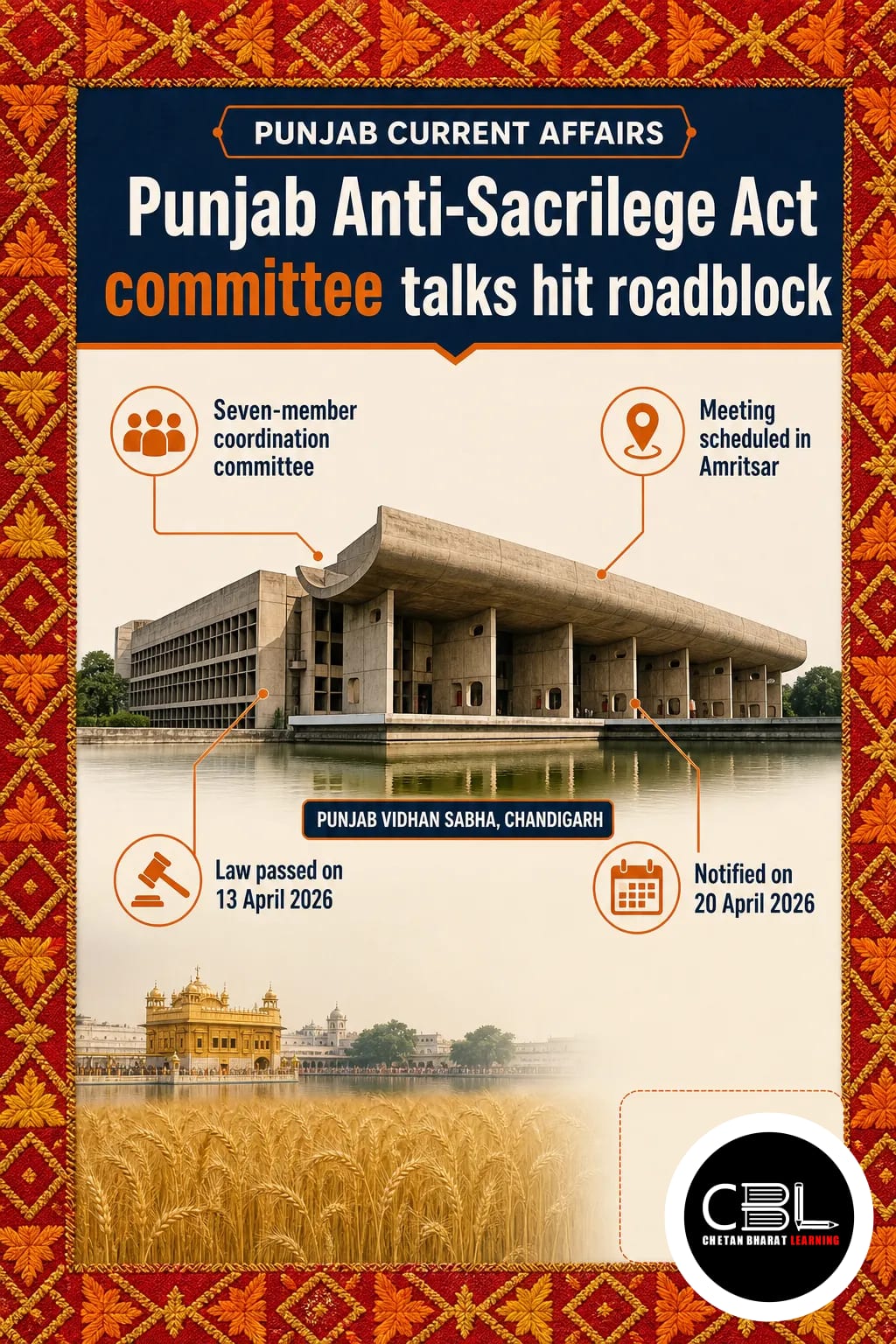
The Punjab Anti-Sacrilege Act committee could not hold its first meeting with the Akal Takht-formed panel in Amritsar. The panel wanted the law put on hold before formal talks. Follow Punjab current affairs for state exam updates.
Quick answer: The Punjab Anti-Sacrilege Act committee invited the Akal Takht-formed panel to a Wednesday meeting in Amritsar, but its representatives did not attend. The government committee has seven members. The disputed 2026 amendment provides imprisonment from 10 years to life and fines from ₹5 lakh to ₹25 lakh for specified offences.
| Point | Details |
|---|---|
| Government panel | Seven-member coordination committee |
| Venue | Meeting scheduled in Amritsar |
| Passage | Law passed on 13 April 2026 |
| Notification | Notified on 20 April 2026 |
| Penalties | 10 years to life imprisonment; fines from ₹5 lakh to ₹25 lakh |
Why did the committee meeting stall?
The meeting stalled because the Akal Takht-formed panel did not send representatives. It had already declined to attend and sought a pause on the law before formal negotiations. The two sides had exchanged several letters before the scheduled meeting.
Meanwhile, members of the Punjab Anti-Sacrilege Act committee attended the venue and expressed disappointment. They argued that direct dialogue could address the objections. The government panel decided to send another invitation for a future meeting.
Former Akal Takht Jathedar Giani Raghubir Singh and Damdami Taksal head Harnam Singh Dhuma were among the government committee members. Raghubir Singh said any decision to stay the law belonged to the government, not the committee.
What does the 2026 amendment provide?
The Jagat Jot Sri Guru Granth Sahib Satkar (Amendment) Act, 2026 addresses incidents of sacrilege. The Punjab Vidhan Sabha passed it on 13 April 2026 during a special session. It was notified on 20 April 2026.
For offences involving desecration, conspiracy or abetment concerning Sri Guru Granth Sahib, the law provides 10 years to life imprisonment. It also specifies fines from ₹5 lakh to ₹25 lakh. The legislation amended the existing 2008 Satkar Act.
What are the objections to the law?
Akal Takht Sahib and other religious bodies raised objections to several provisions and the consultation process. Critics said the Sikh Panth, Akal Takht Sahib and the Shiromani Gurdwara Parbandhak Committee were not consulted sufficiently.
Meanwhile, Punjab Advocate General and committee member Maninderjit Singh cited legal constraints on directly staying an Assembly-passed law. He also cautioned that a stay could affect provisions of the older Act. For the earlier stage of the talks, see the committee meeting update.
- Amritsar is the headquarters of Amritsar district.
- Punjab has a unicameral legislature, the Vidhan Sabha.
- Article 165 of the Constitution provides for an Advocate General for each state.
Source: Indian Express Chandigarh, 23 November 2026
Prelims Practice Corner
Frequently Asked Questions
Why did the Akal Takht panel not attend the meeting?
The panel wanted the law put on hold before formal negotiations. It had already declined to attend the meeting.
When was the Punjab Anti-Sacrilege Act notified?
The 2026 amendment was notified on 20 April 2026. The Punjab Vidhan Sabha had passed it on 13 April 2026.
What penalties does the amendment provide?
It provides 10 years to life imprisonment and fines from ₹5 lakh to ₹25 lakh for specified offences. These concern desecration, conspiracy or abetment involving Sri Guru Granth Sahib.
Related Current Affairs
Preparing for UPSC, PCS or HCS?
Talk to a mentor at Chetan Bharat Learning, Chandigarh. Free guidance on choosing the right exam and building a study plan.
Chat on WhatsAppCall 97793 53345UPSC / IAS / PCS coaching in Chandigarh · Trusted by aspirants across Punjab & Haryana


Leave a Reply
You must be logged in to post a comment.