
UPSC Mapping
| Prelims | Zoonotic Diseases, Public Health, Infectious Diseases |
|---|---|
| Mains | GS Paper II – Health and Public Health |
Quick Facts
| Disease Type | Bacterial Zoonosis |
|---|---|
| Causative Agent | Leptospira |
| Common Name | Rat Fever |
| High-Risk Season | Monsoon |
Introduction
Leptospirosis is in the news after Kerala reported a rise in deaths due to the disease, with a higher case-fatality rate than previous years. Aspirants should regularly follow the daily current affairs archive to revise important diseases frequently asked in UPSC Prelims. Leptospirosis becomes endemic in Kerala during the monsoon season.
What is Leptospirosis?
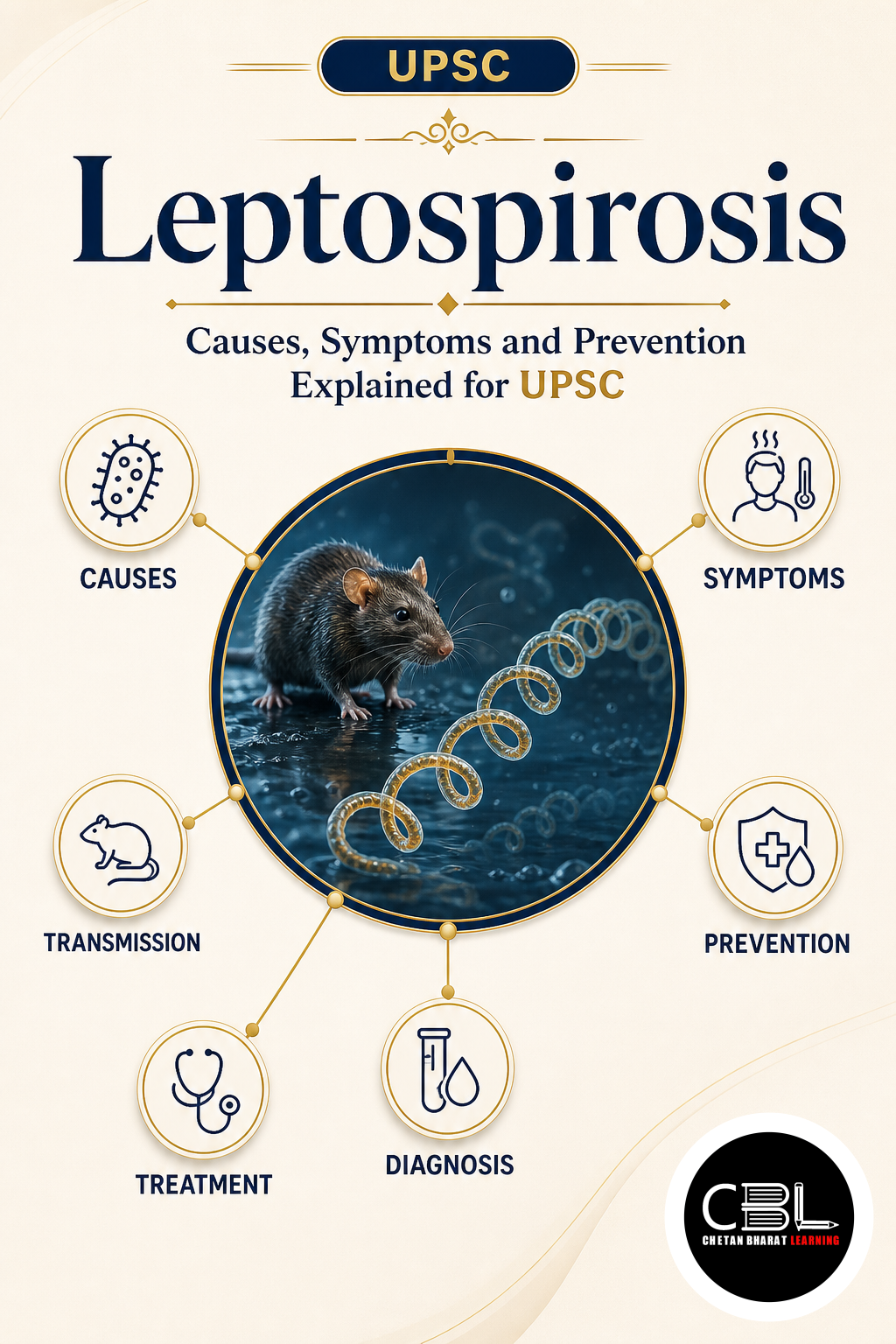
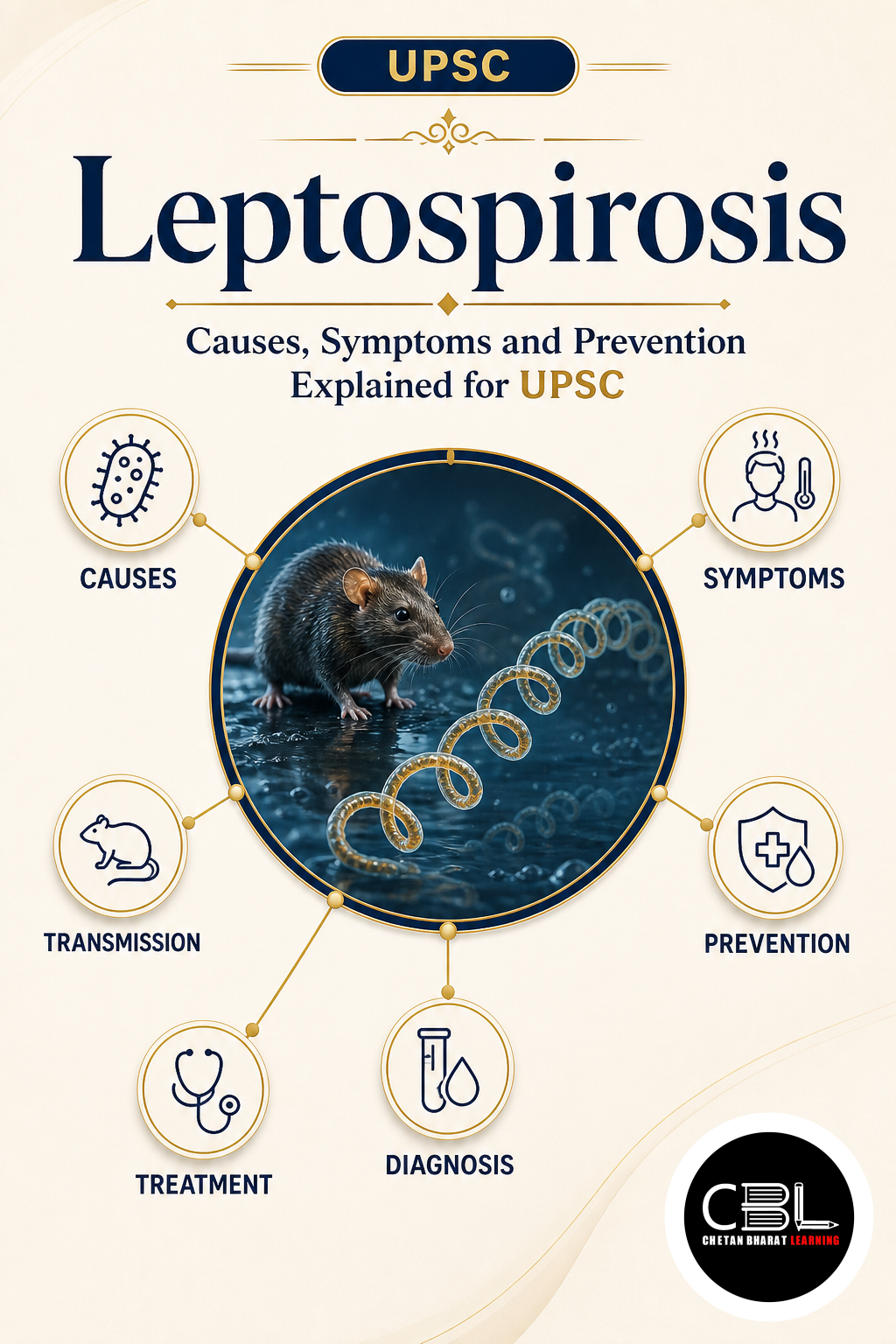
Leptospirosis is a bacterial zoonotic disease caused by the spirochete bacterium Leptospira, commonly known as rat fever. It is endemic in tropical and subtropical regions, with seasonal peaks during heavy rainfall and flooding.
Why is Leptospirosis in News?
Kerala has reported an increase in deaths and a higher case-fatality rate from leptospirosis, underscoring the need for enhanced disease surveillance, sanitation and early diagnosis during the monsoon season. More information is available through the Ministry of Health and Family Welfare.
Key Features
- Causative organism: Spirochete bacterium Leptospira.
- Mode of transmission: Direct contact with urine of infected animals or through contaminated water, soil or food.
- Animal reservoirs: Rats, cattle, pigs and dogs.
- Symptoms: Mild fever, muscle pain, vomiting; severe cases may cause jaundice, kidney failure, liver damage, meningitis, lung hemorrhage and Weil’s disease.
- Treatment and prevention: Antibiotics; prevention via rodent control, sanitation, protective clothing and avoiding contaminated water.
Challenges
- Seasonal outbreaks: Heavy rainfall and flooding increase transmission risk.
- Zoonotic spread: Multiple animal reservoirs complicate control efforts.
- Delayed diagnosis: Early symptoms resemble other infectious diseases.
- Public awareness: Need for education on preventive measures.
- Environmental sanitation: Effective hygiene and rodent control are essential.
Way Forward
Strengthening disease surveillance, improving sanitation and promoting awareness can reduce the burden of leptospirosis, especially during the monsoon season. Early diagnosis and timely antibiotic treatment are key to preventing severe complications. Further details are available from the National Centre for Disease Control.
Prelims Practice Corner
- Q1. Leptospirosis is caused by:
- Virus
- Fungus
- Leptospira bacterium
- Protozoa
Answer: (c) Leptospira bacterium
- Q2. Leptospirosis spreads primarily through:
- Mosquito bites
- Contaminated water or urine of infected animals
- Airborne droplets
- Tick bites
Answer: (b) Contaminated water or urine of infected animals
- Q3. Which of the following animals is a common reservoir of leptospirosis?
- Rats
- Cattle
- Dogs
- All of the above
Answer: (d) All of the above
- Q4. Weil’s disease is:
- A viral fever
- A fungal infection
- Severe form of leptospirosis
- A mosquito-borne disease
Answer: (c) Severe form of leptospirosis
- Q5. Which season is associated with peak leptospirosis cases in Kerala?
- Winter
- Summer
- Monsoon
- Spring
Answer: (c) Monsoon
Mains Practice Questions
- Discuss the causes, transmission and prevention of leptospirosis in India. (10 Marks)
- Intro: Define leptospirosis as a zoonotic bacterial disease.
- Body: Explain transmission, symptoms, seasonal outbreaks and preventive measures.
- Conclusion: Highlight the need for surveillance and sanitation.
- Explain the importance of integrated public health measures in controlling zoonotic diseases. (15 Marks)
- Intro: Define zoonotic diseases.
- Body: Disease surveillance, sanitation, vector and reservoir control, awareness and early treatment.
- Conclusion: Emphasise a One Health approach for disease prevention.
FAQs on Leptospirosis
What is leptospirosis?
Leptospirosis is a bacterial zoonotic disease caused by the spirochete bacterium Leptospira and is commonly known as rat fever.
How does leptospirosis spread?
It spreads through direct contact with the urine of infected animals or through contaminated water, soil or food.
What is Weil’s disease?
Weil’s disease is the severe and potentially fatal form of leptospirosis that can lead to jaundice, kidney failure and other serious complications.
Related Current Affairs
Preparing for UPSC, PCS or HCS?
Talk to a mentor at Chetan Bharat Learning, Chandigarh. Free guidance on choosing the right exam and building a study plan.
Chat on WhatsAppCall 97793 53345UPSC / IAS / PCS coaching in Chandigarh · Trusted by aspirants across Punjab & Haryana
Leave a Reply
You must be logged in to post a comment.