
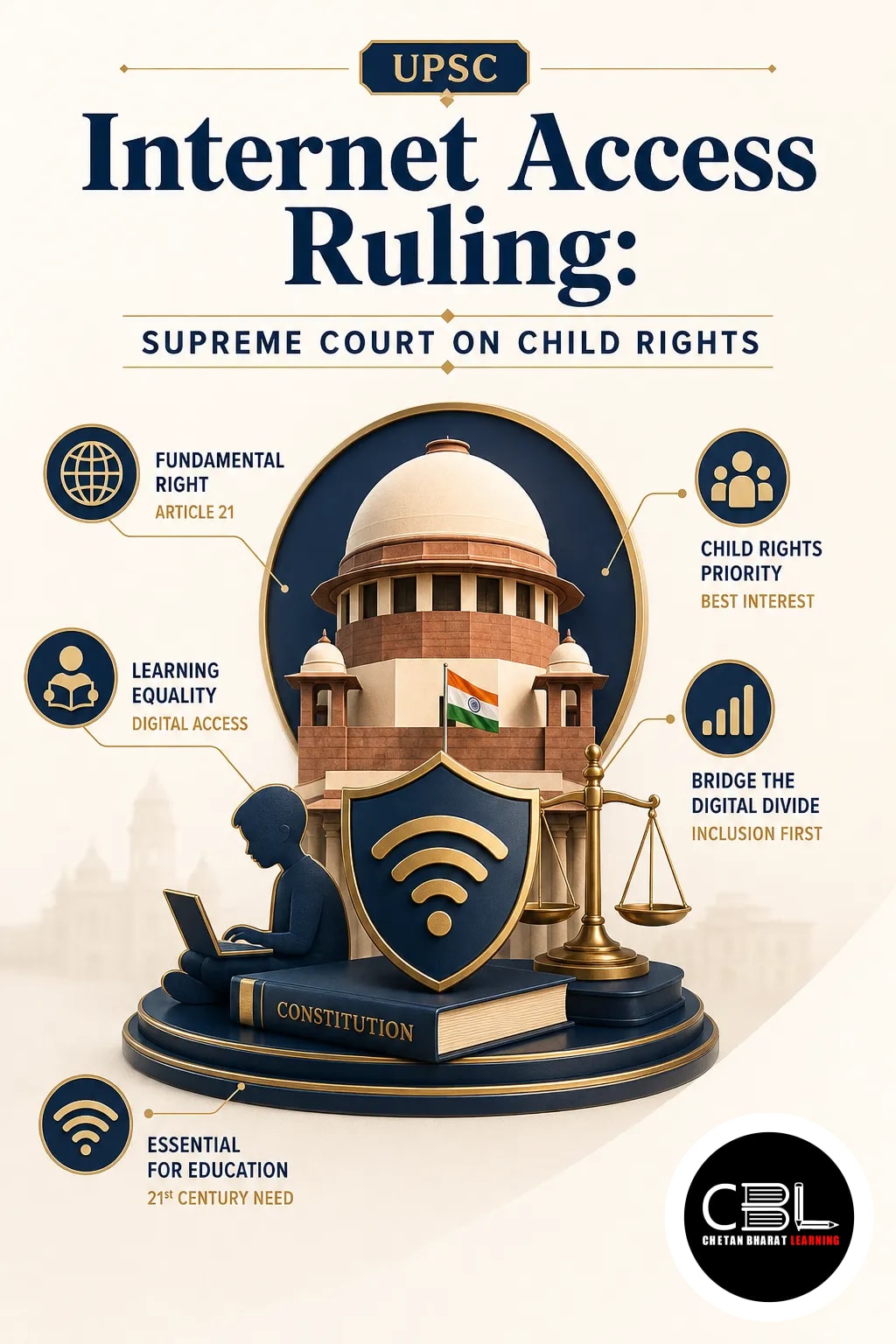
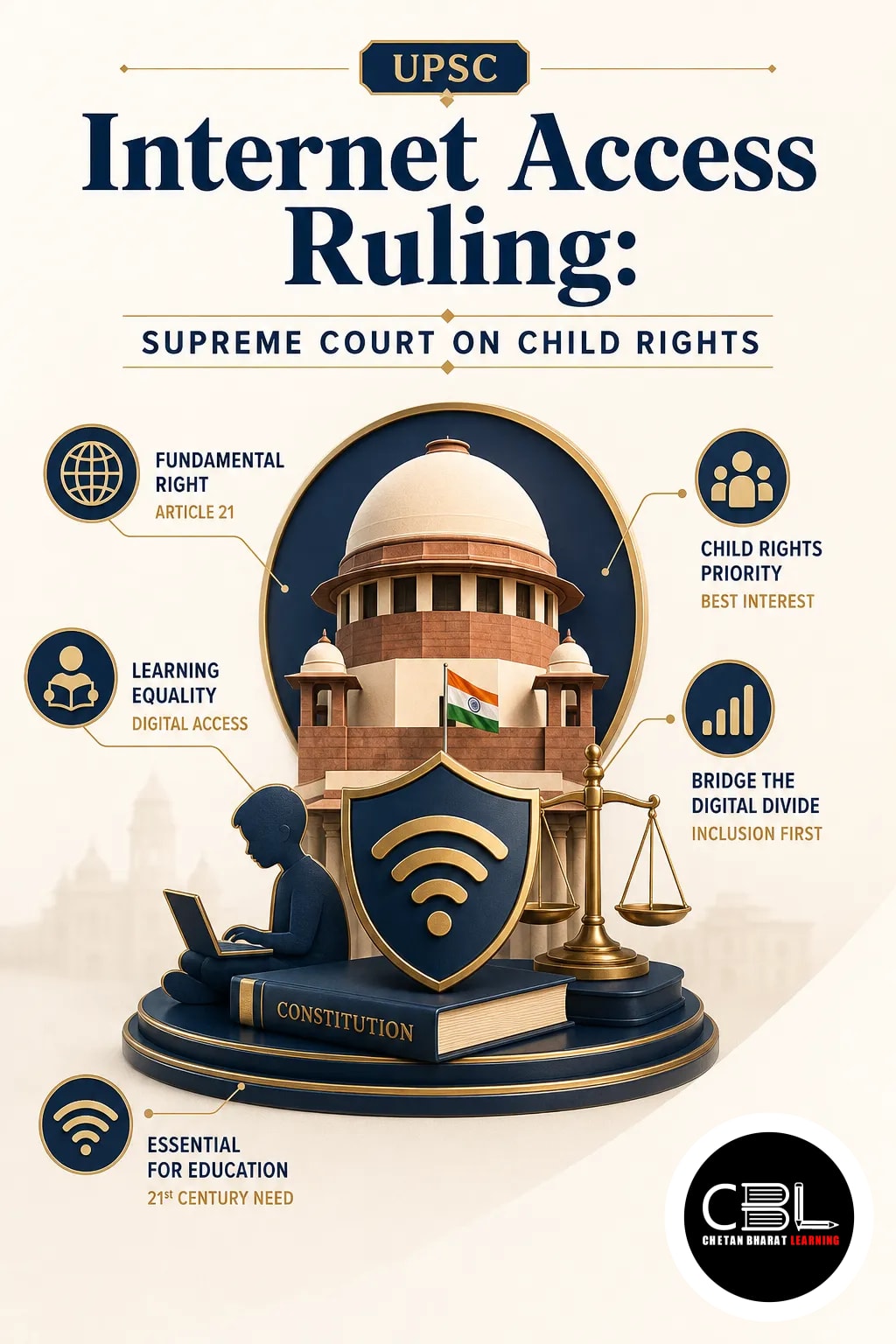
Internet access gained fresh constitutional attention after a Supreme Court ruling on children’s rights. For a broader legal context, see the Digital India law debate.
What the Court Held
The ruling treats internet access as tied to constitutional protections, especially where children need it for learning and development. It places the issue within the wider framework of life, dignity, and education.
The Court’s approach matters because digital access now affects classroom participation, public services, and the ability to exercise rights. In that sense, the judgment gives digital inclusion a stronger rights-based footing.
Background of the Case
The case arose from concerns that children cannot meaningfully access education when internet-based services are out of reach. Courts have earlier linked digital access with practical enjoyment of rights, especially in education and speech.
This ruling extends that conversation to children more directly. It recognises that unequal access can deepen exclusion in a society where schools, applications, and information increasingly depend on connectivity.
Constitutional and Legal Provisions
| Article/Act | What it says |
|---|---|
| Article 14 | Guarantees equality before law and equal protection of laws. |
| Article 19 | Protects freedoms such as speech and expression, which now often operate online. |
| Article 21 | Protects life and personal liberty, and has been read to include dignity and meaningful access. |
| Article 21A | Provides for the right to education for children aged 6 to 14 years. |
| Constitutional principles | The Court may rely on child welfare, non-discrimination, and access to opportunity. |
Implications
- Education access: Schools, assignments, and online learning become harder to deny when connectivity is treated as rights-linked.
- State responsibility: Governments may need more careful policy design for public internet access and child-friendly digital inclusion.
- Equality concerns: The ruling strengthens arguments against digital exclusion in rural and low-income households.
- Rights jurisprudence: It may influence future cases on connectivity, online services, and welfare delivery.
Criticism and Concerns
- Implementation gap: Declaring a right is easier than ensuring affordable, safe, and reliable access for every child.
- Content safety: Broader access also raises concerns about harmful material, privacy, and age-appropriate use.
- Infrastructure divide: Connectivity remains uneven across regions, schools, and households.
- Regulatory balance: Policymakers must protect rights without creating excessive restrictions on lawful online access.
Source: Indian Express Explained, 2026-10-19
- Digital India Act: Replacing the IT Act for a Safer Internet (10 Sep 2026)
- SARAL AI: Making Indian Research More Accessible (21 Sep 2026)
This issue is relevant for state PCS questions on fundamental rights, child welfare, and digital governance. It also helps in understanding how courts shape access to education and public services in a technology-driven state administration.
FAQ
Why does the Court’s view matter for children?
It links internet access with education and equal opportunity. That makes digital exclusion a constitutional concern, not only a policy issue.
Does this mean every person has an unlimited right to internet?
The ruling, as described, focuses on children and rights-linked access. Practical limits, safety rules, and administrative design will still matter.
How is this useful for UPSC preparation?
It connects fundamental rights, child welfare, and digital governance. The topic can appear in both Prelims and GS Paper II.
Related Current Affairs
Preparing for UPSC, PCS or HCS?
Talk to a mentor at Chetan Bharat Learning, Chandigarh. Free guidance on choosing the right exam and building a study plan.
Chat on WhatsAppCall 97793 53345UPSC / IAS / PCS coaching in Chandigarh · Trusted by aspirants across Punjab & Haryana
Leave a Reply
You must be logged in to post a comment.