
UPSC Syllabus Mapping
GS Paper: GS-II
Subject: International Relations
Syllabus Pointers:
Prep with our comprehensive UPSC Current Affairs Hub analysis guidelines.
Article
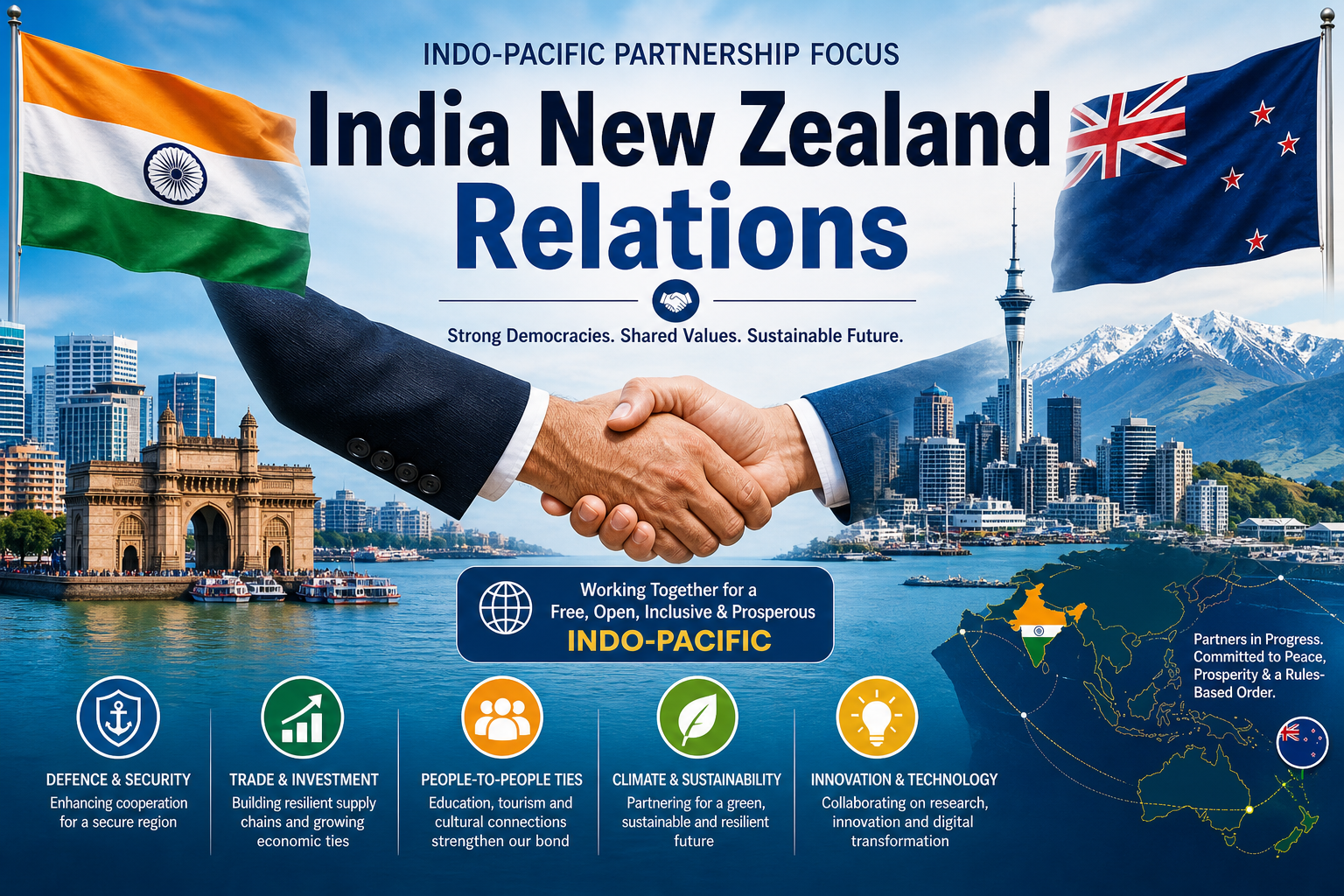
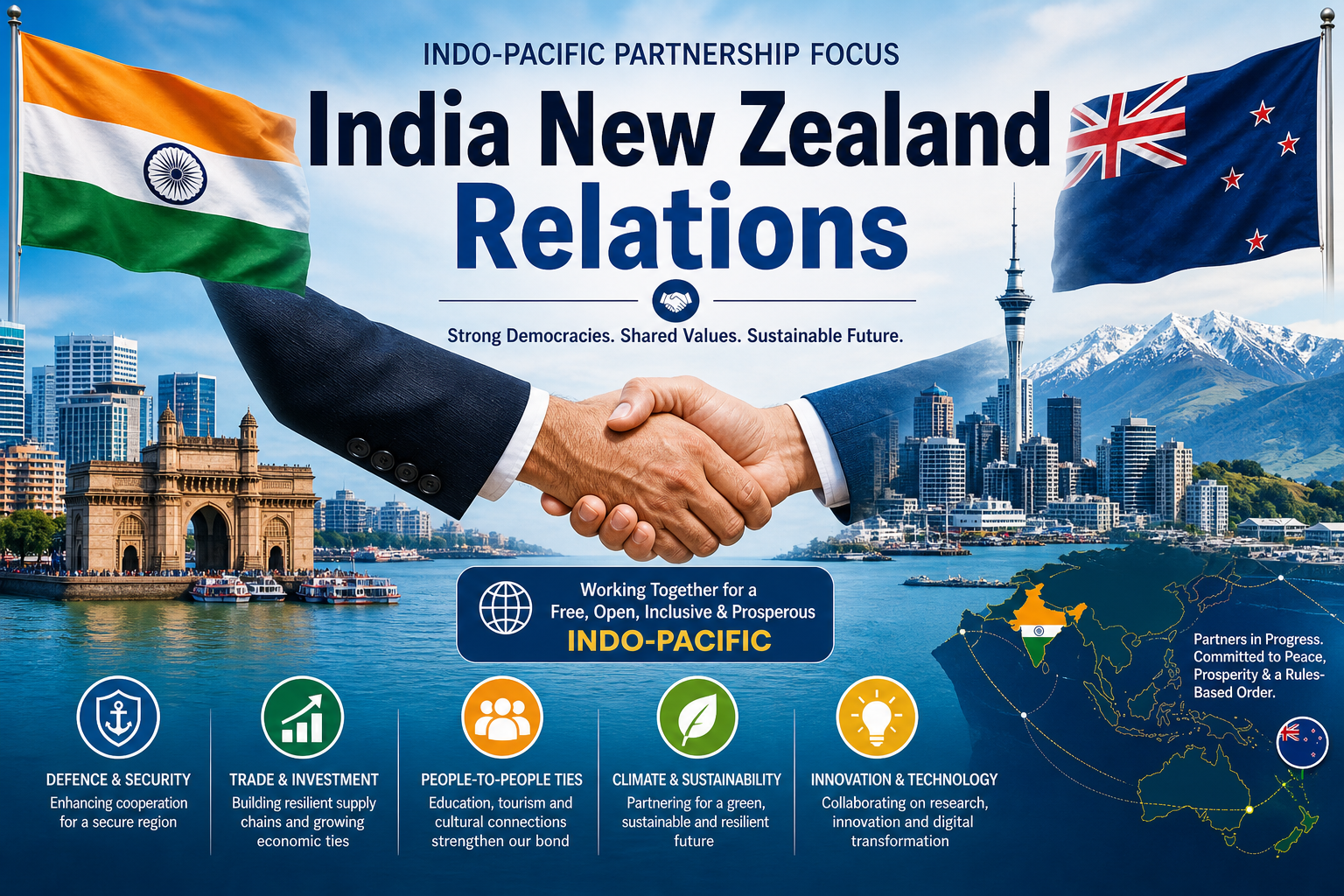
Recent updates regarding India New Zealand Relations mark a significant diplomatic milestone as the Prime Minister of India undertook the first visit by an Indian Prime Minister to New Zealand in four decades. The visit focuses on strengthening trade, technology, agriculture, education, sports cooperation and Indo-Pacific strategic engagement while advancing negotiations on a Free Trade Agreement (FTA).
Key Dimensions of India New Zealand Relations
India and New Zealand established diplomatic relations in 1952. Both are parliamentary democracies, members of the Commonwealth and supporters of a rules-based international order in the Indo-Pacific.
The current visit seeks to deepen cooperation in trade and investment, agricultural technology, education, research, defence dialogue, tourism, sports diplomacy and people-to-people exchanges. It follows the resumption of negotiations on an India–New Zealand Free Trade Agreement (FTA).
Why is New Zealand Important for India?
New Zealand is an advanced economy with strengths in agriculture, food processing, education, renewable energy and innovation. Greater economic engagement helps India diversify trade partnerships, attract investment and access high-quality technologies.
The partnership also aligns with India’s Act East Policy and broader Indo-Pacific strategy, which seeks a free, open and rules-based maritime region while strengthening cooperation with like-minded democracies.
Strategic Significance
- Economic Diplomacy: India increasingly uses trade, investment, technology partnerships and market access as instruments of foreign policy to strengthen strategic relationships.
- Indo-Pacific Cooperation: Both countries support freedom of navigation, resilient supply chains, maritime security and sustainable development. The partnership complements India’s vision of MAHASAGAR (Mutual and Holistic Advancement for Security and Growth Across Regions) and promotes a stable regional order.
For broader understanding of free trade agreements, refer to global developmental tracking frameworks.
Way Forward
Both countries should accelerate FTA negotiations, expand cooperation in agriculture, clean technologies, education, digital innovation and resilient supply chains. Stronger maritime cooperation, research partnerships and people-to-people exchanges will reinforce India’s strategic presence in the Indo-Pacific while creating new economic opportunities.
Prelims Practice Corner
| Question | Options | Answer |
|---|---|---|
| Which of the following best describes a Free Trade Agreement (FTA)? |
|
(b) An FTA reduces tariffs and other trade barriers to facilitate greater trade and investment between participating countries. |
| India’s MAHASAGAR vision primarily relates to: |
|
(b) MAHASAGAR focuses on maritime security, regional cooperation and sustainable growth across the Indo-Pacific. |
Mains Practice Question
‘India’s engagement with New Zealand reflects the growing importance of economic diplomacy and Indo-Pacific partnerships in its foreign policy.’ Discuss. (150 Words, 10 Marks)
FAQs
- Why is the recent India–New Zealand engagement significant? It revives high-level political engagement after four decades and broadens cooperation in trade, technology, education, agriculture, maritime security and Indo-Pacific affairs.
Related Current Affairs
Preparing for UPSC, PCS or HCS?
Talk to a mentor at Chetan Bharat Learning, Chandigarh. Free guidance on choosing the right exam and building a study plan.
Chat on WhatsAppCall 97793 53345UPSC / IAS / PCS coaching in Chandigarh · Trusted by aspirants across Punjab & Haryana
Leave a Reply
You must be logged in to post a comment.