
Important For:
UPSC / HCS / PCS Aspirants
GS Paper 3: Environment, Biodiversity, Conservation
Essay Topics: Human Development vs Wildlife Conservation
Why in News?
Human-wildlife conflict (HWC) is increasing across India due to:
➣ Habitat destruction
➣ Urban expansion
➣ Climate change
➣ Agricultural encroachment
Experts are now focusing on:
➤ Sustainable coexistence between humans and wildlife.
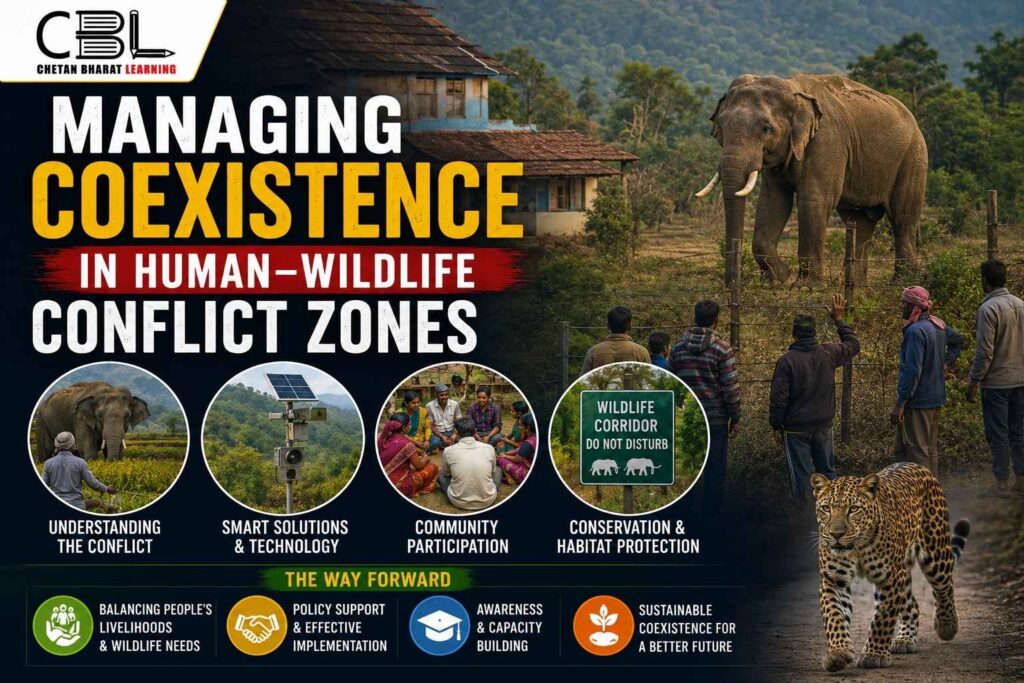
What is Human-Wildlife Conflict?
Human-wildlife conflict occurs when:
➤ Interaction between humans and wild animals leads to:
- Injury
- Crop loss
- Property damage
- Threats to wildlife survival
Why is Human-Wildlife Conflict Increasing?
1. Habitat Loss
Forests are shrinking due to:
- Urbanisation
- Infrastructure projects
- Mining
- Agriculture expansion
2. Fragmented Wildlife Corridors
Animal movement routes are blocked by:
✔ Roads
✔ Railways
✔ Human settlements
3. Climate Change
Changing rainfall and temperature patterns affect:
- Water availability
- Food sources
- Migration behaviour
4. Competition for Resources
Humans and wildlife increasingly compete for:
➤ Land
➤ Water
➤ Food
Major Human-Wildlife Conflict Areas in India
Commonly affected regions include:
- Elephant corridors
- Tiger landscapes
- Forest fringe villages
- Western Ghats
- Central India
Impacts of Human-Wildlife Conflict
On Humans
- Crop destruction
- Livestock loss
- Economic hardship
- Human casualties
On Wildlife
- Retaliatory killings
- Habitat fragmentation
- Population decline
Approaches for Sustainable Coexistence
1. Community Participation
Local communities should be involved in:
✔ Conservation planning
✔ Forest management
✔ Monitoring systems
2. Scientific Land-Use Planning
Development projects must consider:
➤ Wildlife movement corridors.
3. Early Warning Systems
Technology-based systems help track:
- Elephant movement
- Wildlife migration
- Conflict hotspots
4. Compensation Mechanisms
Quick compensation for:
✔ Crop loss
✔ Livestock damage
✔ Human injury
reduces tensions.
5. Habitat Restoration
Protecting forests and water sources reduces conflict pressure.
Government Initiatives
India has introduced:
- Project Tiger
- Project Elephant
- Wildlife corridors
- Eco-sensitive zones
to support conservation efforts.
Why Coexistence is Important
Experts argue:
➤ Conflict cannot be eliminated completely.
The goal should be:
✔ Long-term coexistence
✔ Ecological balance
✔ Sustainable conservation
Key Insight
Human-wildlife conflict is not only:
➤ An environmental issue
but also:
➤ A governance and development challenge.
Special Note for Aspirants
Students preparing through UPSC Coaching Chandigarh and IAS Coaching Chandigarh should focus on:
- Biodiversity conservation
- Climate change impacts
- Sustainable development
- Community-led conservation
These themes are highly important for:
✔ GS Paper 3
✔ Essay
✔ Interview preparation
Analytical Insight
Conservation policies will succeed only when:
➤ Local communities become partners in wildlife protection instead of victims of conservation failures.
PRELIMS PRACTICE QUESTIONS
Q1. Human-wildlife conflict mainly increases due to:
A. Ocean currents
B. Habitat destruction
C. Space exploration
D. Polar winds
✅ Answer: B
Q2. Which project is associated with elephant conservation in India?
A. Project Snow Leopard
B. Project Elephant
C. Project Lion
D. Project Rhino
✅ Answer: B
Q3. Wildlife corridors are important because they:
A. Promote mining
B. Restrict rainfall
C. Enable animal movement
D. Increase urbanisation
✅ Answer: C
UPSC Mains Practice Question
“Human-wildlife conflict in India reflects the larger challenge of balancing development and ecological sustainability.” Discuss.
FAQs
1. What is human-wildlife conflict?
Conflict arising due to interaction between humans and wild animals.
2. Why is conflict increasing in India?
Because of habitat loss, urbanisation, and climate change.
3. What are wildlife corridors?
Protected pathways that allow safe movement of animals.
4. Why is community participation important?
Local communities are directly affected and play a key role in conservation success.
Related Current Affairs
Preparing for UPSC, PCS or HCS?
Talk to a mentor at Chetan Bharat Learning, Chandigarh. Free guidance on choosing the right exam and building a study plan.
Chat on WhatsAppCall 97793 53345UPSC / IAS / PCS coaching in Chandigarh · Trusted by aspirants across Punjab & Haryana
Leave a Reply
You must be logged in to post a comment.